
Journeys & Encounters · Deep dive
Flax Sails: A Plausible Material with Missing Direct Evidence
In Brief
Flax processing is documented in the archaeological record, but that does not identify the intended use of every thread. The Gislinge sail project makes this evidential gap explicit.
On this page
A plant in the record is not yet a sailWhy the museum chose to test flaxOne sail, more than one experimental methodThe comparison is between finished sailsOttar shows that a reconstruction can changeWhat absence can and cannot decideSourcesA plant in the record is not yet a sail
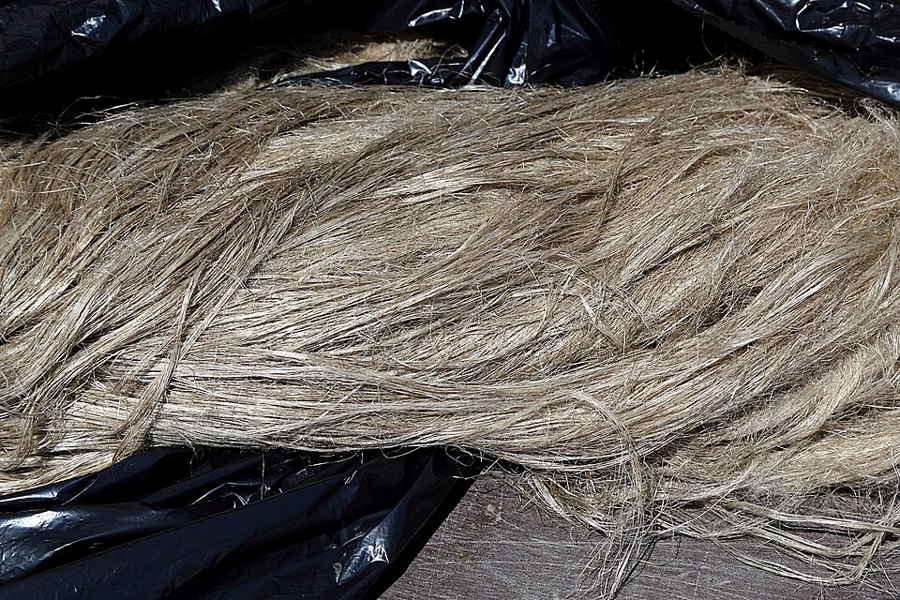
The published EXARC account of the Gislinge project identifies flax processing as a reason for considering linen sailcloth, while explicitly acknowledging the absence of definitive sailcloth finds in the archaeological evidence it discusses. The intended maritime application therefore requires a further argument.
This distinction is fundamental. Evidence that people could make a material establishes availability and technical capability. It does not show how much of the material went into clothing, household textiles, or sails. A field of flax, a processing installation, and a piece of woven cloth answer different questions. Linking them to a ship requires either direct association or a carefully labeled inference. The museum’s project is valuable partly because it starts with that uncertainty instead of hiding it behind a finished sail.
Sources for this section: 1
Why the museum chose to test flax
The Gislinge project offered a comparison with the museum’s existing experience of wool sails. Its stated aims included examining performance and durability. The reconstructed boat follows an early twelfth-century find, so both the boat’s date and the experimental character of the sail must remain visible when discussing Viking technology.
A hypothesis does not need to be certain before it can be tested. Indeed, the reason for the experiment is to investigate a plausible but incompletely documented option. The important limitation comes afterward: a successful voyage shows that the selected flax cloth and rig can work on that vessel. It cannot alone demonstrate that the original boat had an identical sail. Confusing feasibility with historical identification is especially easy when an experiment produces an attractive and convincing-looking object.
Sources for this section: 1

One sail, more than one experimental method
The EXARC project account describes a sail assembled from five panels. One was woven on a reconstructed warp-weighted loom, while four were woven by hand on modern looms by the collaborating Institute for the Blind and Partially Sighted. This was a mixed experimental process, not a claim that every stage reproduced an ancient workshop.
The distinction affects what can be inferred from the completed object. A sailing test can investigate the assembled cloth while leaving questions about ancient weaving equipment unresolved. A labor estimate from one panel should not silently become the measured labor for all five. Likewise, similar finished dimensions do not guarantee identical production histories. The project’s openness about these choices makes its evidence more useful: readers can distinguish the material being tested from the precise historical process that remains under investigation. These are methodological consequences of the mixed approach, rather than additional measurements reported by the project.
Sources for this section: 1, 2
The comparison is between finished sails
The museum’s general sail account contrasts the properties and processing demands of flax and wool, while emphasizing how little complete sail material survives. Such comparisons are useful, but broad descriptions cannot replace measurements of the actual cloth used. A light, tightly woven sail and a coarse one made from the same plant need not perform alike.
A fair test would record yarn, weave, panel construction, finishing, and changes during use. It would also distinguish dry weight from the condition of a sail after exposure. If the vessel behaves differently with another sail, the explanation might involve shape as well as material. This is why replacing the word wool with flax in a description does not specify the experiment. The complete manufactured object, not simply its biological origin, is what the crew has to handle.
Sources for this section: 3
Ottar shows that a reconstruction can change
The museum’s description of Ottar states that the reconstruction originally carried wool and later used flax. That is a history of the modern vessel’s equipment. It should not be read as an archaeological sequence in which Skuldelev 1 itself changed from one material to the other.
The distinction has practical consequences for interpreting photographs and performance reports. Two accounts of Ottar might concern different sails. They could therefore be poor evidence for a direct comparison unless dates and configurations are recorded. A reconstruction is not a fixed object that remains identical throughout its working life. Repairs, substitutions, and research choices change it. Those changes are informative when documented, but misleading when the modern vessel’s name is treated as a complete description of every experiment it has carried out.
Sources for this section: 4
What absence can and cannot decide
The missing archaeological sailcloth leaves room for several possibilities. Flax sails may have existed without surviving in the material reviewed; other fibers may have been more common; preservation and recovery may have favored some contexts over others. The absence alone does not choose among these explanations. Nor should it be dismissed as irrelevant, because direct material would constrain the argument much more closely.
The appropriate conclusion has two parts. Flax processing and modern sail-making experiments support a technically plausible maritime use. The precise distribution, frequency, and construction of Viking Age flax sails remain less securely established. This is not a failure of the experiment. It is a clear account of what the experiment answers. A reader can appreciate the accomplishment of making and sailing the cloth while keeping the original archaeological question open.
Sources for this section: 1, 3, 4
For the introductory context, read Before the Voyage: Making a Sail.
The Evidence
The sources below support this article. Interpretations and limits are explained in the text; this is not an exhaustive research review.