
Journeys & Encounters · Introduction
Settling Iceland: Building Lives Across the Atlantic

In Brief
Iceland's settlement was a movement of households, animals, skills, and traditions across the sea. Archaeological remains let us look beyond the moment of arrival to the practical work of establishing a society.
Iceland, including Reykjavík and Mývatnssveit · Late ninth–tenth centuries CE
More than a voyage
The National Museum of Iceland places the main beginnings of settlement around 870 CE, with arrivals from Norway and Norse communities in Britain. Settlers brought livestock including cattle, sheep, goats, pigs, and horses, as well as seed grain and equipment for fishing. A voyage had to carry the means of making a living after landfall.
Agriculture was central, supported by resources from rivers, lakes, and the sea. The museum also describes the use of local bog iron for making tools. Settlement therefore involved both imported resources and learning how to work within a new environment.
A house beneath Reykjavík
Reykjavík City Museum's Settlement Exhibition preserves an excavated longhouse beneath a modern building. It was occupied approximately between 930 and 1000. Nearby, archaeologists found part of an older wall dated to around 871. These remains distinguish an early phase of activity from the later house; they should not be collapsed into one founding moment.
Preserving the longhouse in its original position gives the site unusual value. Visitors encounter the location of an actual building, while interpretive displays explain how such structures may have worked. Reconstruction and surviving fabric play different roles: one helps us imagine; the other anchors the interpretation.
From scattered arrivals to society
A University of Iceland research record, drawing on investigations at more than thirty sites around Mývatn in the northeast, distinguishes presence before 870 from widespread occupation afterward. This provides a more useful picture than assuming that all Iceland was settled in a single year.
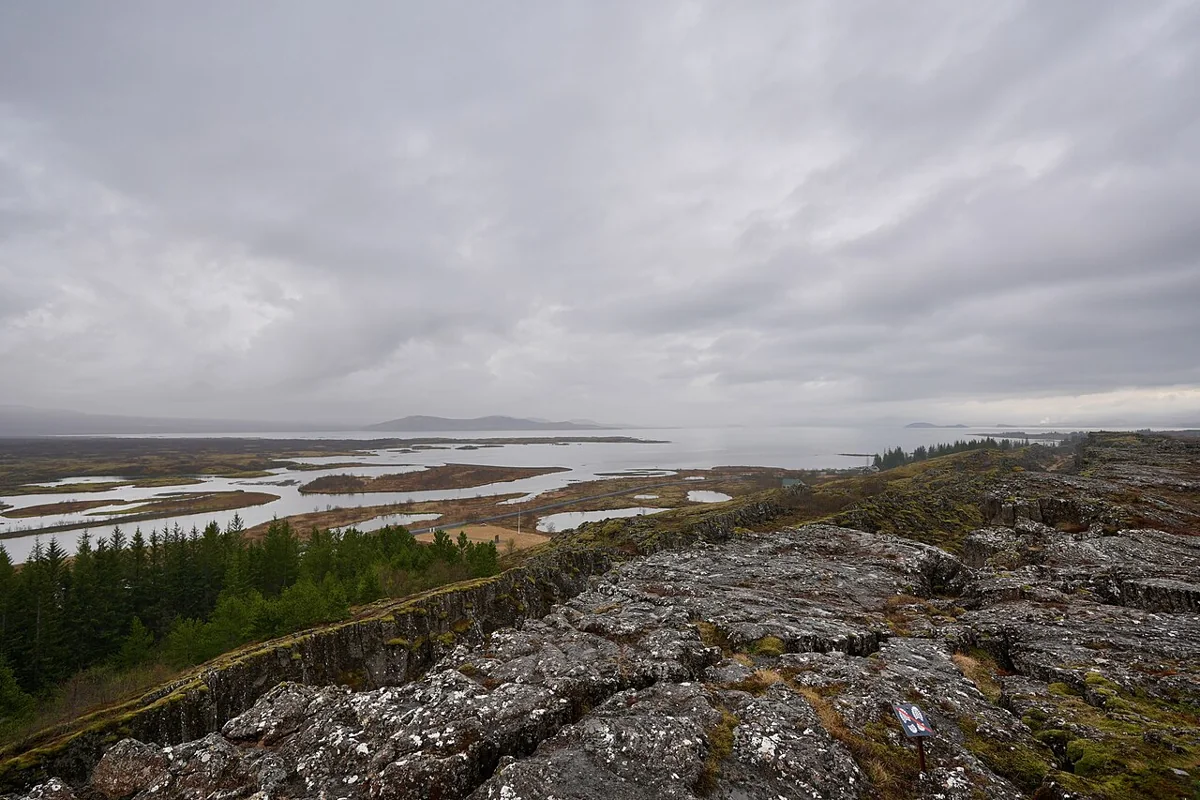
By 930, the Alþingi had been established at Þingvellir, according to the National Museum. Farms and households were becoming part of an island-wide framework. The settlement story is therefore also about institutions and relationships, not simply successful navigation.
The Evidence
The sources below support this article. Interpretations and limits are explained in the text; this is not an exhaustive research review.