
Journeys & Encounters · Deep dive
Uppåkra: A Hall Estate Across the Iron Age
In Brief
Successive floors, working surfaces, animal remains, and a human jaw at a doorway expose the practical archaeology behind an influential center.
On this page
An estate with a long historyExcavating downward through successive buildingsPaths and objects between the buildingsA jaw at the thresholdA bear bone changes the questionThe size of the bone archiveFrom a powerful place to a testable historySourcesAn estate with a long history
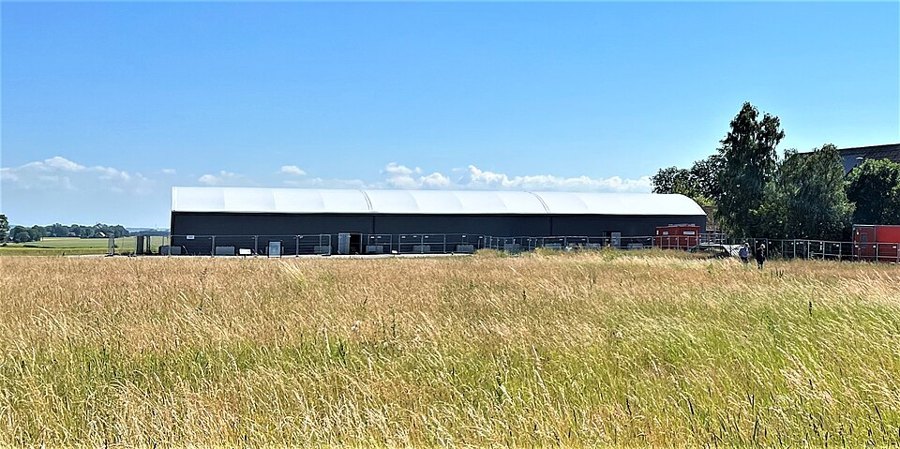
Uppåkra, south of Lund, was a major settlement over much of the Iron Age. Lund University’s hall project focuses on a building more than forty meters long within this extensive complex. The research asks how the central estate sustained power and adapted over time, rather than assuming that one ruling family occupied an unchanged residence for a millennium. The hall’s position beside a separate ceremonial building is significant, but the entire settlement cannot be reduced to ritual. Animal husbandry, cultivation, skilled work, and the movement of materials supported its central activities. The project therefore combines architectural investigation with the study of everyday and unusual objects, animal bones, and plant remains. These sources allow elite power to be examined through the resources and recurring work that made it possible.
Sources for this section: 1
Excavating downward through successive buildings
The April 2023 field report describes substantial postholes associated with a hall and possible hearth traces on clay surfaces. At that stage, the excavators provisionally placed the building in the Migration or Vendel period while awaiting radiocarbon results. That provisional wording is essential to the sequence: an excavation diary records knowledge at a particular moment. It is not a final date for every structure on the site. Large posts reveal how the roof was supported, while floors and hearths help separate interior activities. When buildings repeatedly occupied the same location, their traces could overlap. The archaeologist must therefore establish which post settings, surfaces, and deposits belong together before reconstructing a room or assigning a historical event to its destruction.
Sources for this section: 2

Paths and objects between the buildings
In October 2023 the team reported another stone surface between the hall’s eastern end and the ceremonial building. Carefully laid smaller stones would have improved footing. A brooch of the Haraldsted type provided a chronological clue associated with a much earlier part of the settlement’s history, approximately 310–450. A decorated antler comb fragment and a quartzite fire-lighting stone added evidence of personal equipment. Earlier discoveries of antler waste south of the hall raised the possibility of local comb production. The important relationship is between a finished item and evidence for manufacture. Neither a comb nor a fire-lighting tool automatically identifies a warrior. The field report itself distinguishes the objects recovered from the more imaginative reconstruction of who might once have carried them.
Sources for this section: 3
A jaw at the threshold
A May 2024 update described a human jaw beside an entrance in the hall’s southeastern area. The doorway led from the south into a small room that may have been separated from the larger gathering space. Several stone-and-clay surfaces had stabilized the floor. Recording the jaw in three dimensions preserved its relationship with these features. The excavators explicitly considered alternatives: was it deliberately placed, or did it arrive with other bone material incorporated into a surface? Its visibility at some stage made the question particularly interesting. The location is a firm observation; intentional ritual placement is a proposition to test. This case shows why the position and surrounding deposits of a human fragment can be more historically informative than the dramatic fact that human bone was found.
Sources for this section: 4
A bear bone changes the question
Analysis reported in February 2024 identified part of an adult bear’s forearm with chopping marks. Previously recognized bear remains included teeth and claws, elements that can remain attached to transported skins. A forearm bone raises a different set of possibilities about which parts of an animal reached Uppåkra and how they were handled. The researchers discussed further provenance work rather than announcing that the animal had certainly lived locally. This distinction helps connect the estate with its wider supply networks. A skin might travel after the animal’s death; a worked bone might move independently; a carcass would imply another form of transport and processing. Identifying the anatomical part and its modification is therefore the beginning of reconstructing the movement of resources, not a decorative detail in a story about elite hunting.
Sources for this section: 5
The size of the bone archive
The university’s osteological overview records roughly two tonnes of bone collected after modern investigations resumed in the 1990s. Only part had received detailed analysis when that overview was compiled. This difference between recovery and completed study matters: a large excavated collection is a resource for future research, not a single finished result. Earlier work had already identified cut antler, combs, and needles, while later studies addressed animal husbandry and concentrations of human remains. Some fragments showed injury, but the archive brings together deposits from different contexts and periods. Its value lies in comparison between those groups. Food waste, craft debris, disturbed burials, and deliberate deposits may all contain bone, yet they result from different activities and need different explanations.
Sources for this section: 6
From a powerful place to a testable history
Taken together, the hall project’s questions and field observations replace an image of uninterrupted splendor with a more demanding account of renewal. Floors were maintained, structures changed, objects circulated, and deposits accumulated. A single dramatic find becomes useful when it is assigned to that sequence. The bear bone opens a question about supply; the jaw opens one about deposition and access; the stone surfaces connect movement with construction. None requires the entire site to have one function. Uppåkra’s importance as a regional center is supported by the scale and concentration of its archaeology. Explaining how that importance endured requires the slower work of distinguishing phases and comparing the central buildings with the labor and resources of the surrounding estate.
Sources for this section: 1, 3, 4, 5
The Evidence
The sources below support this article. Interpretations and limits are explained in the text; this is not an exhaustive research review.