
Beliefs & Stories · Deep dive
Uppåkra: The Evidence for a Long-Lived Ceremonial Building
In Brief
Uppåkra’s exceptional timber building is interpreted through architecture, repeated rebuilding, deposited vessels, and its relationship with an elite hall. These clues reveal a durable ceremonial place while leaving its exact rites and participants uncertain.
On this page
An exceptional building within a much larger settlementRepeated rebuilding maintained a place across generationsA beaker links technical analysis with ceremonial contextThe deposition was an action within the buildingThe hall and ceremonial building formed a connected settingNamed participants remain more difficult to recoverSourcesAn exceptional building within a much larger settlement
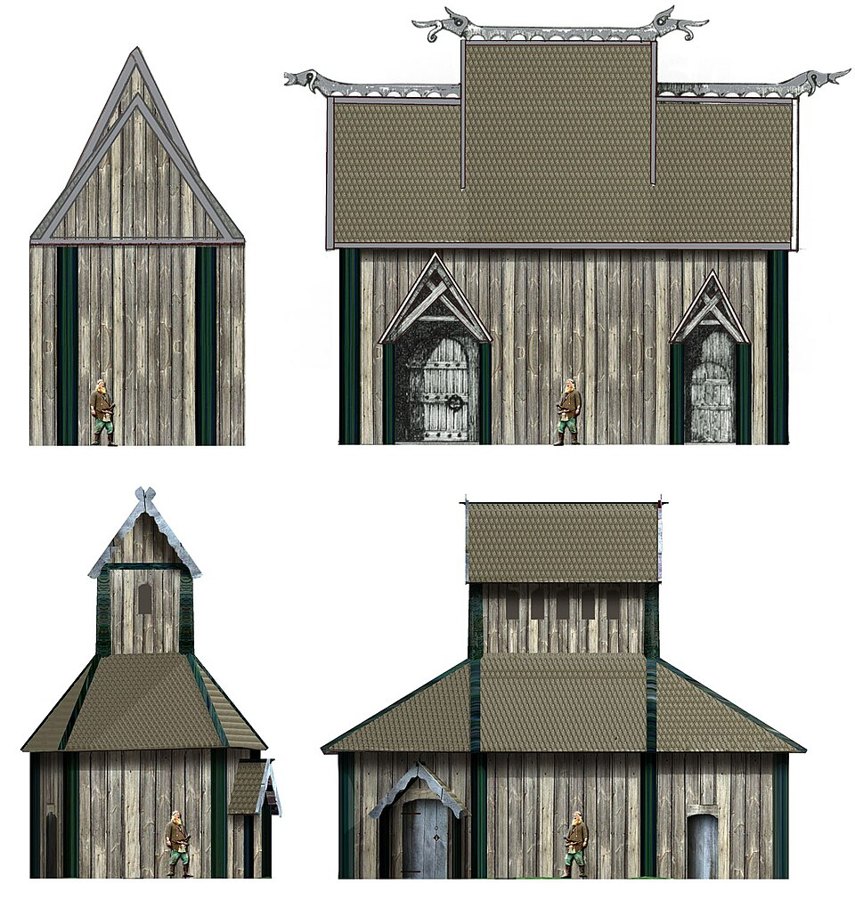
Uppåkra in southern Sweden was a major Iron Age center, not merely the location of one isolated religious structure. Lars Larsson's 2007 account describes how investigation of the extensive settlement revealed a building whose reconstructed height and exceptional finds supported interpretation as an elaborate timber cult house. The argument depended on the combination of architecture and contents.
Calling it a temple is therefore an archaeological interpretation, not a name supplied by an inscription on its doorway. The term can communicate its exceptional ceremonial role, but it should not import every feature of a later church or a classical stone sanctuary. The surviving evidence belongs to a timber building in a Scandinavian settlement. Understanding that setting requires asking how the building related to neighboring structures and activities, rather than imagining it as a self-contained monument detached from political and domestic life.
Sources for this section: 1
Repeated rebuilding maintained a place across generations
Larsson's later discussion of the ceremonial building describes seven major construction stages spanning approximately AD 200–950. The basic form was maintained through successive rebuilding. It also contrasts the ceremonial structure's history with repeated burning of large buildings nearby. These are long-term patterns, extending well before the conventional beginning of the Viking Age.
Continuity of place does not mean that every belief or ceremony remained unchanged for seven centuries. It means that successive communities repeatedly invested in a particular location and recognizable form. That repeated choice may have helped connect present occupants with earlier generations, but the motives still require interpretation. The archaeological sequence is stronger evidence for material continuity than for an unaltered spoken liturgy. Keeping those claims separate allows Uppåkra to illuminate inherited authority without turning the entire first millennium into a single timeless religious scene.
Sources for this section: 2

A beaker links technical analysis with ceremonial context
Birgitta Hårdh's study of the metal beaker identifies embossed gold bands decorated in early Style I, probably produced around AD 500. The beaker's body might be contemporary with those bands or older, with the ornament added later. Comparisons connect its decoration with southern Scandinavian brooches and gold bracteates, supporting a regional manufacture hypothesis rather than a securely identified workshop.
The distinction between an object's parts is important. A vessel can be assembled, embellished, repaired, and retained over time, so a decorative style need not date every component or its final deposition. Nor does the find spot necessarily identify the place of manufacture. The beaker provides unusually rich evidence because technical form, ornament, and archaeological context can be considered together. Its ceremonial interpretation rests on that combination; gold alone does not explain precisely how it was handled or who controlled its use.
Sources for this section: 3
The deposition was an action within the building
The later architectural study describes the beaker and a glass bowl deposited beneath the floor near the hearth. The floor had been opened for the deposit and then repaired. This sequence gives more information than the simple fact that valuable objects were found inside a building: it indicates deliberate placement while the structure was still part of an active setting.
Such a deposit raises questions about withdrawal from use, remembrance, protection, or ritual commitment. It does not, on its own, tell us which of those meanings the participants intended. The position, the paired objects, and the repaired floor help distinguish the action from an accidental loss on a trampled surface. They also connect the vessels with the building's history. A museum display can separate objects for viewing, but interpretation needs to restore the relationship between their placement and the structure surrounding them.
Sources for this section: 2, 3
The hall and ceremonial building formed a connected setting
The Lund University project's explanation of the neighboring hall describes successive floors, replaced posts, hearths, and entrance surfaces. It identifies an area between the hall's end and the ceremonial building's entrances where bone deposits support discussion of communal meals and ritual activity. The important spatial unit is therefore larger than the interior of either building.
Movement between those spaces could matter as much as activity within a room. Entrances direct access; hearths organize gathering; repeated rebuilding preserves or modifies familiar paths. These are architectural observations that can frame questions about social participation without identifying every person's status. A hall could support feasting, negotiation, and demonstrations of authority, while nearby ritual activities reinforced relationships among participants. The evidence encourages study of how those functions interacted, rather than imposing a rigid modern separation between religious life and the exercise of power.
Sources for this section: 4
Named participants remain more difficult to recover
A scholarly interpretation of female leadership at Uppåkra connects the deposited drinking vessels with ceremonial hospitality, gift giving, and the possible position of an elite woman. It compares the archaeological arrangement with literary and pictorial evidence for women's roles in aristocratic settings. This is a proposed social reading of the material, not an identification of a particular woman whose name or seat survives directly.
The distinction illustrates both the possibilities and limits of the site. Architecture and objects can constrain where people gathered and what kinds of actions were possible. Comparisons can suggest who might have acted and why. But a reconstructed social scene should remain open to revision where the evidence permits several arrangements. Uppåkra's importance does not require a fully recovered cast of participants. Its carefully documented structures and deposits already demonstrate a sustained relationship between ceremonial investment, valuable objects, and an elite center over many generations.
Sources for this section: 5
The Evidence
The sources below support this article. Interpretations and limits are explained in the text; this is not an exhaustive research review.
- Lars Larsson 2007: The Iron Age ritual building at Uppåkra, abstract ↗
- Lars Larsson: A ceremonial building as a home of the gods, research text ↗
- Birgitta Hårdh 2004: The metal beaker with embossed foil bands ↗
- Lund University Uppåkra project: What is a hall? ↗
- Lund University research record: Female leadership in Iron Age Uppåkra ↗