
Beliefs & Stories · Deep dive
Sacred Groves: How Archaeologists Investigate a Place Without a Temple
In Brief
A grove can matter religiously without leaving standing architecture. The challenge is to connect names, deposits, trees, and later disturbance without allowing any one clue to decide the interpretation in advance.
On this page
The problem begins with what can surviveNames can direct a search without completing itLunda brings buildings and an outdoor area into comparisonAn archive reveals the texture behind the interpretationFrösö shows why bones need their own analysisA sacred landscape should remain a testable interpretationSourcesThe problem begins with what can survive
The Swedish History Museum identifies several kinds of evidence for pre-Christian religion: objects interpreted as offerings, possible cult buildings, graves, and place-names associated with sacred locations. These categories do not preserve the same information. A structure may leave postholes, while a grove can lose its trees and retain only deposits or a name.
This difference affects how a site becomes visible to archaeology. A conspicuous building plan invites investigation even when its function is uncertain. An outdoor place may look ordinary until repeated patterns of material or unusual treatment of remains become apparent. The absence of monumental construction therefore cannot settle whether a location mattered ritually. Conversely, an unusual patch of woodland is not automatically a sanctuary. The task is to identify activities and their sequence, then ask which interpretation best accounts for their combination.
Sources for this section: 1
Names can direct a search without completing it
The museum notes names ending in elements such as lund, lunda, and vi, sometimes combined with a divine name, as potential evidence for former sacred places. Torslunda and Ullevi illustrate how names can preserve associations not immediately visible in modern buildings or land use. Such evidence belongs alongside archaeology rather than replacing it.
Several questions must remain separate. What did the recorded name mean? How early can its form be traced? What area did it originally designate? And is the material being excavated contemporary with the activity implied by that name? A modern signpost does not answer all four. A persuasive identification needs more than a familiar word attached to a promising hill. The name can provide a hypothesis, while the excavated context tests whether the proposed religious association fits the actual history of the place.
Sources for this section: 1

Lunda brings buildings and an outdoor area into comparison
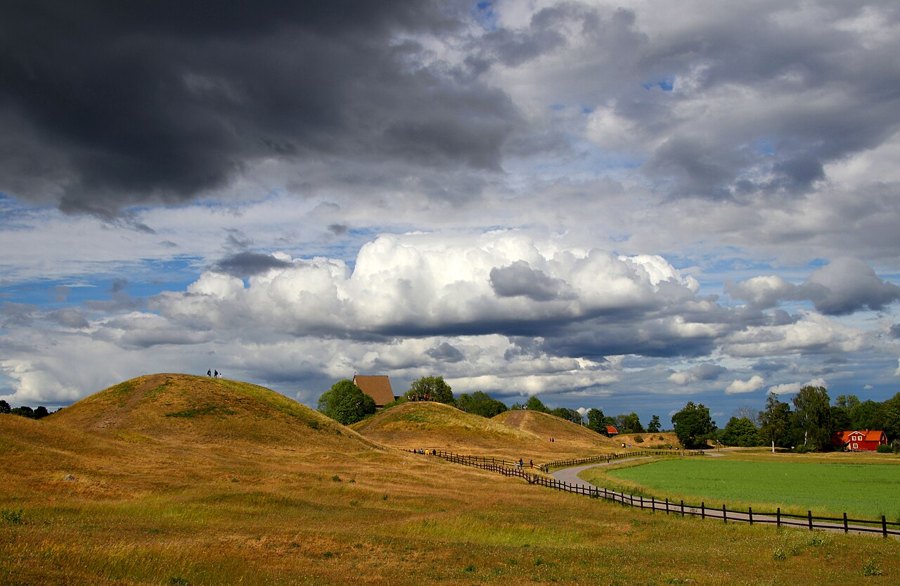
At Lunda near Strängnäs, investigations before construction of the E20 road examined both a hill and an area of large buildings. Sörmland Museum describes different groups of finds in the two locations. The hill produced beads, resin, and scattered burnt and crushed bones, including pig remains. The building area contained evidence of domestic and craft activity alongside small exceptional figurines.
The comparison matters more than treating either group as an isolated curiosity. It suggests that different actions occurred in different spaces within the same broader locality. The outdoor deposits have been interpreted as evidence of ritual activity, but that interpretation must be tied to their distribution and treatment. The figurines were not simply found scattered through the same supposed grove. Keeping the locations distinct prevents a compelling story from flattening the excavation into one undifferentiated sacred zone.
Sources for this section: 2
An archive reveals the texture behind the interpretation
The Swedish History Museum's accession record for Lunda's excavated area E lists thousands of find entries, dominated by burnt bone and burnt clay, with resin and slagged clay also prominent. It records a range of archaeological contexts and dates, with the Iron Age especially important. The record is less dramatic than the phrase sacred grove, but it preserves the material basis for further questions.
An entry count is not the number of ceremonies, animals, or participants. Fragmentation can turn one object or bone into many recorded pieces, and excavation or registration practices affect how material is grouped. Likewise, several periods in one area must not be combined into a single event. The archive allows researchers to revisit those distinctions. Its value is precisely that it resists the smoothness of a finished narrative: it records categories, quantities, contexts, and missing items that a general account may compress.
Sources for this section: 3
Frösö shows why bones need their own analysis
At Frösö Church in Jämtland, a published reanalysis of animal and human remains investigated a late Viking Age ritual context associated with a tree. Brown bear and pig were particularly important in the animal assemblage. Butchery traces supported processing and feasting, and the authors argued that bones rather than whole carcasses had been deposited on the ground.
The human remains required a different explanation: their treatment differed from the animal material, and disturbed burials were considered more likely than human sacrifice. This is a crucial example of analysis changing the story that a mixed deposit might initially suggest. Finding human and animal bones near one another does not prove they arrived through the same action. Species identification, marks, preservation, and context must be examined together. The site supports investigation of outdoor ritual without making every bone an identical kind of offering.
Sources for this section: 4
A sacred landscape should remain a testable interpretation
Lunda and Frösö do not provide a universal plan for all sacred groves. One investigation emphasizes a patterned outdoor deposit within a settlement landscape; the other includes a tree-associated bone assemblage later affected by a church setting. Their differences are part of the evidence, rather than obstacles to be removed in pursuit of a standard sanctuary.
A sound interpretation states what was found, how it was dated, and why ritual is preferred over alternatives such as refuse disposal, burial disturbance, or mixed activity. It also identifies what remains unknown: the exact ceremony, the participants, the divine recipient, and the original appearance of the trees may all be uncertain. That approach does not make the sites less meaningful. It locates the meaning in repeated human actions and their surviving traces, while allowing new environmental or contextual evidence to refine the reconstruction of the place.
Sources for this section: 2, 3, 4
The Evidence
The sources below support this article. Interpretations and limits are explained in the text; this is not an exhaustive research review.