
Journeys & Encounters · Introduction
Gotland: Silver Networks and Older Stone Traditions
In Brief
Hoards and carved monuments illuminate different parts of the island’s history—and must be dated separately.
Gotland, Sweden · Viking Age, with sixth–seventh-century context
On this page
An island rich in hidden silverA hoard with many originsPicture stones have their own chronologyFrom visible carving to interpretationSourcesAn island rich in hidden silver
The Swedish History Museum records more than 700 silver hoards from Gotland. Their abundance makes the island central to discussions of Viking-age exchange, wealth, and deposition. The Sigsarve hoard alone weighed more than six kilograms and contained 1,391 coins alongside jewelry and cut metal. Its mixture is important: whole ornaments and fragments could carry different uses and meanings even when they were buried together.
A hoard with many origins
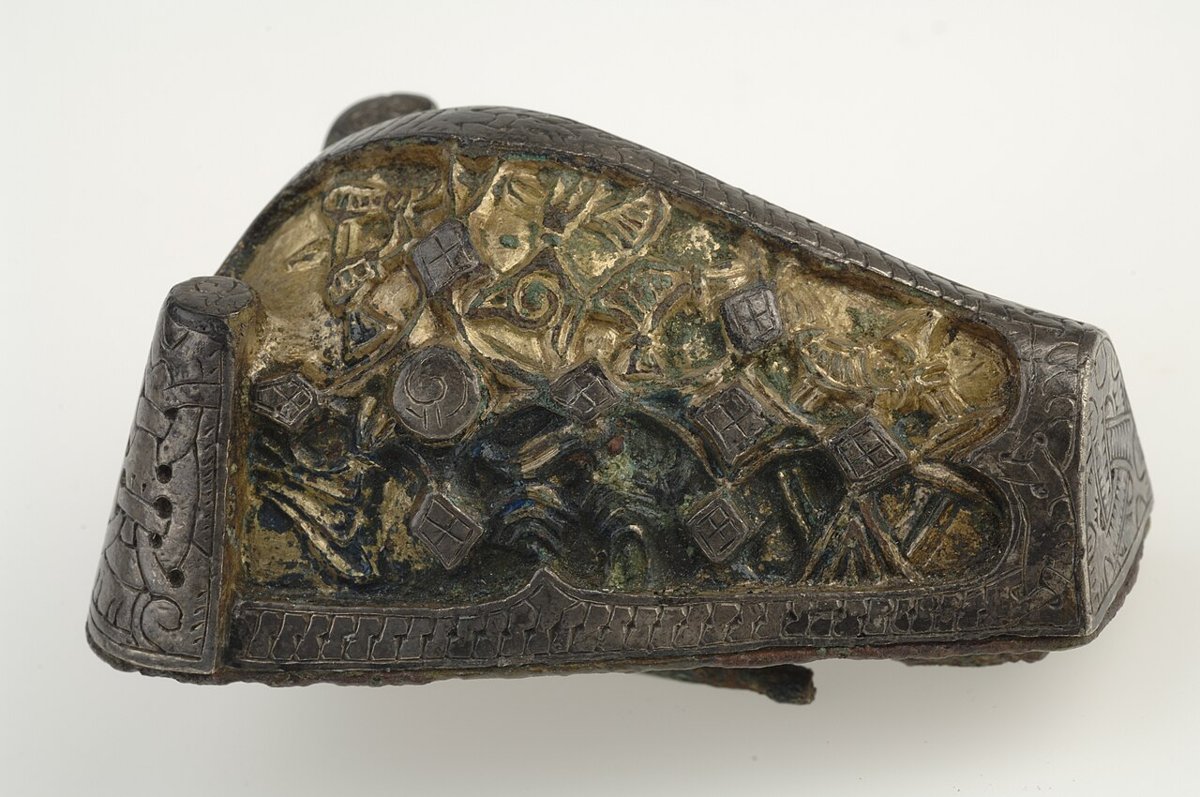
More than half of Sigsarve’s coins were Islamic; others were English, German, and Byzantine. One was struck for the Swedish king Olof Skötkonung. Some jewelry was probably Scandinavian, while a decorated silver-bowl fragment carried Arabic lettering. These connections do not establish that the owner traveled to every place represented. Objects can move through several exchanges. Nor does burial necessarily mean that an owner fled an attack: researchers consider economic, social, and ritual explanations for hoards.

Picture stones have their own chronology
Gotland’s carved stones belong to a longer history than the Viking Age alone. The museum catalog dates the small När Rikvide I stone to approximately 500–700, before the conventional Viking period. It depicts a vessel with a small sail and a pair of long-necked waterbirds. It has no runic inscription. This specific example prevents a common mistake: a ship image from Gotland is not automatically a Viking-age image, and a picture stone is not automatically a runestone.
From visible carving to interpretation
The stone was recorded over a cremation burial and probably came from a large cemetery south of Rikvide farm. Much of that cemetery remains unexcavated. Its imagery has been compared with continental Christian monuments, but borrowed visual forms do not prove that the original users held the same beliefs. Reading Gotland well means keeping several questions separate: when was an object made, where was it found, what can actually be seen, and what meaning is inferred? Silver and stone become more informative when their differences remain visible.
The Evidence
The sources below support this article. Interpretations and limits are explained in the text; this is not an exhaustive research review.