
Research & Sources · Deep dive
Translation Choices That Change a Viking Story
In Brief
A saga translation interprets vocabulary, grammar, names, and poetic language. Comparing those decisions can change the historical picture a reader takes away.
On this page
An English word brings its own associationsA dictionary gives contexts rather than a magic equivalentA translated medieval work can test a proposed meaningA translation policy can preserve or smooth variationNames can conceal the relationship between map and textPoetry introduces another order of wordsDo not turn a glossary choice into a social institutionCompare the decision that matters to the argumentSourcesAn English word brings its own associations
The modern word berserker immediately suggests uncontrolled fury. Ruarigh Dale’s research, presented by the University of Nottingham, argues that the Old Norse term had a wider range of literary uses, including champions, retainers, and duelists. His proposed emphasis is an interpretation to examine, not a universal replacement rule. It nevertheless demonstrates a real translation problem: an English word borrowed from Old Norse can acquire associations that later readers project backward. When a saga introduces such a figure, the useful question is what the character actually does in that episode before a familiar modern label supplies a ready-made psychological portrait.
Sources for this section: 1
A dictionary gives contexts rather than a magic equivalent
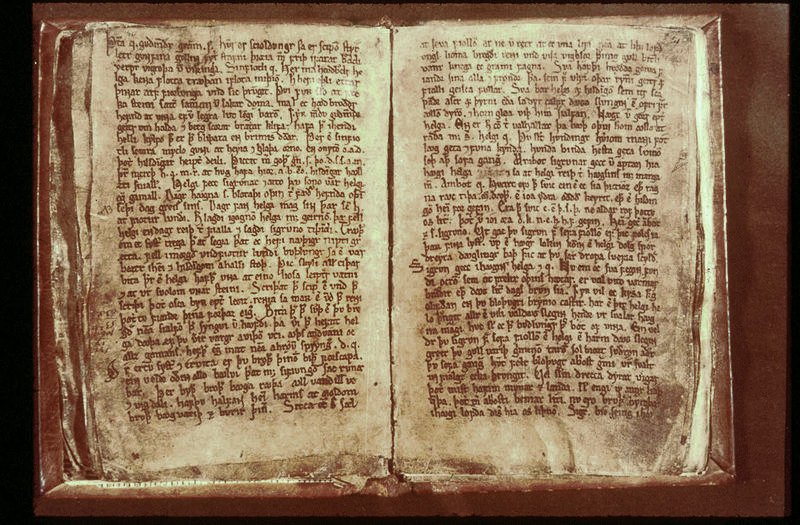
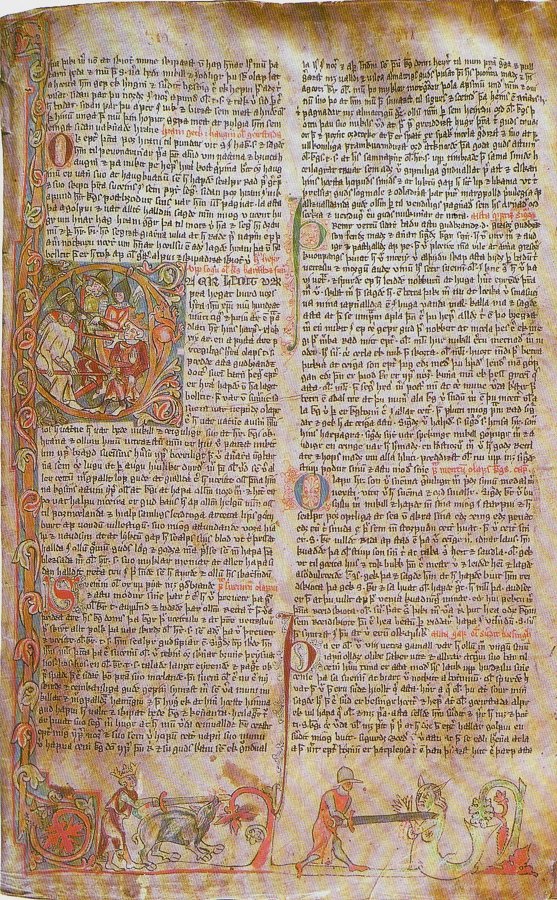
The University of Copenhagen’s Dictionary of Old Norse Prose collects citations from medieval Norwegian and Icelandic prose and links them to their manuscript witnesses. This structure matters more than a simple list of English glosses. A word can have several senses, and selecting among them requires attention to its sentence and comparable uses. For a reader checking a saga translation, the practical procedure is to identify the Old Norse form, locate the relevant dictionary headword, and examine examples rather than choosing the first definition. The dictionary’s corpus is medieval prose; its entries are not direct recordings of every Viking Age conversation.
Sources for this section: 2


A translated medieval work can test a proposed meaning
Dale discusses Ívens saga, a Norse translation of a French romance, as a particularly useful comparison. A term for a champion in the French text is rendered with berserkr in the Norse version. This does not establish that every saga occurrence means precisely the same thing. It does show that a medieval translator could use the word in a context of fighting on another person’s behalf. The comparison changes the question from whether an English label sounds dramatic to whether a proposed sense fits an attested use. Medieval translation itself can therefore become evidence for interpreting the vocabulary of later modern translations.
Sources for this section: 1
A translation policy can preserve or smooth variation
Christine Peel’s edition of Guta saga explains its treatment of tense, mood, names, punctuation, and idiomatic expressions. Where possible, the translation retains changes of tense and mood in the legal sections, while replacing idioms with workable English equivalents. This illustrates why fluency is a decision rather than a neutral setting. A translator who smooths every shift may produce an easier narrative but obscure changes in register. One who retains every feature may make ordinary original language seem awkward or exotic. Readers can assess these choices more fairly when the edition states its policy and provides the original text for comparison.
Sources for this section: 3
Names can conceal the relationship between map and text
Peel also distinguishes between modern English and Swedish equivalents when presenting place-names and regularizes personal names into a consistent nominative form. Those choices help readers follow the story, but they change how the words appear. If someone then uses a translation to investigate historical spelling or name forms, the convenient English text is no longer sufficient evidence. The solution is not to demand that all translations reproduce unfamiliar inflections. It is to match the source to the question. A translation can guide a geographical discussion while the original wording and commentary remain necessary for an argument about a particular name.
Sources for this section: 3
Poetry introduces another order of words
The Skaldic Poetry project presents edited stanzas, translations, manuscript readings, and explanatory notes through linked views. Its interface distinguishes verse order from reconstructed prose word order. This is a valuable warning for readers encountering a stanza embedded in a saga: the smooth sequence of an English translation may depend on a syntactic interpretation that rearranges the original presentation. A literal sequence of English words would not automatically be more faithful. The scholarly task is to explain how the grammar is understood and where alternatives remain, so that a historical argument based on the poem does not conceal the interpretive work behind its readable form.
Sources for this section: 4
Do not turn a glossary choice into a social institution
The citation-based dictionary offers a way to check whether a proposed translation is supported across contexts. Imagine a saga term rendered as an English military rank. That choice may help a sentence flow, but it can also imply a standardized office, hierarchy, or duty that the original passage does not establish. This hypothetical case shows why repeated glosses need scrutiny. Before building an account of Viking society around one translated word, compare the relevant uses and ask which institutional claims come from the text itself. Lexical consistency in a modern book should not be mistaken for evidence that an institution was equally uniform across time and place.
Sources for this section: 2
Compare the decision that matters to the argument
The Skaldic project links individual words to variant readings, notes, and kennings where relevant, allowing readers to trace an interpretation instead of treating a translation as an isolated quotation. The same habit is useful for prose. Choose the disputed phrase, identify the edition and manuscript basis, and inspect the translator’s explanation. Two English versions can differ because they use different witnesses, select different senses, or pursue different stylistic aims. A disagreement is therefore a starting point for investigation. The strongest historical use of a saga translation states which meaning the argument requires and how securely the underlying text supports it.
Sources for this section: 4
For the introductory context, read Who wrote the Viking story?.
For the introductory context, read Reading Icelandic Sagas Through Their Manuscripts.
The Evidence
The sources below support this article. Interpretations and limits are explained in the text; this is not an exhaustive research review.