
Research & Sources · Deep dive
After Excavation: Reburial, Museum Storage, and the Archaeological Record
In Brief
Preserving a Viking find means caring for its material, its identity, and the records that explain where it came from.
On this page
Excavation creates obligations that outlast the digReburial is a designed storage environmentMonitoring turns a hope into a testable strategyMuseum care also involves measured limitsA surviving object needs a surviving identityThe digital archive preserves information, not a deviceStorage decisions need a way to detect failureFuture research depends on connected forms of careSourcesExcavation creates obligations that outlast the dig
Historic England’s guidance on preserving archaeological remains begins with assessment of significance, condition, and likely impacts. For waterlogged sites, it emphasizes the quantity and quality of water needed to sustain preservation. These questions matter before a timber or leather fragment is exposed, not only after a striking object appears. Excavation changes the relationship between material and environment, while leaving remains in place also requires a defensible management plan. For a hypothetical Viking waterfront excavation, the decision cannot be reduced to whether the objects would look good in a museum. It must include the conditions needed to preserve them and the resources required over time.
Sources for this section: 1
Reburial is a designed storage environment
The Swedish RAAR project investigates reburial as an alternative approach to storing waterlogged archaeological remains. At Marstrand, its research encompasses wood, textiles, leather, metals, and silicate materials, along with packaging and labels. The project is not specifically a Viking excavation, but its design addresses practical problems relevant to comparable wet finds. Reburial does not simply mean returning material to any convenient patch of damp ground. It creates a storage situation whose environmental effects must be evaluated. Different materials can respond differently, so a favorable result for one class of object should not be assumed to protect an entire mixed collection.
Sources for this section: 2

Monitoring turns a hope into a testable strategy
An Isle of Wight reburial trial selected a wetland location after assessment and analysis, then retrieved test timbers after three years. Investigators monitored groundwater and evaluated the wood through several analytical techniques. The reported results broadly suggested limited deterioration over that relatively short interval. The time qualification is crucial. A three-year trial can support a judgment about conditions during the trial; it cannot directly demonstrate centuries of future stability. For someone evaluating a preservation proposal, the useful questions are what was monitored, how the objects were assessed, and what would trigger a change in management if conditions became less favorable.
Sources for this section: 3
Museum care also involves measured limits
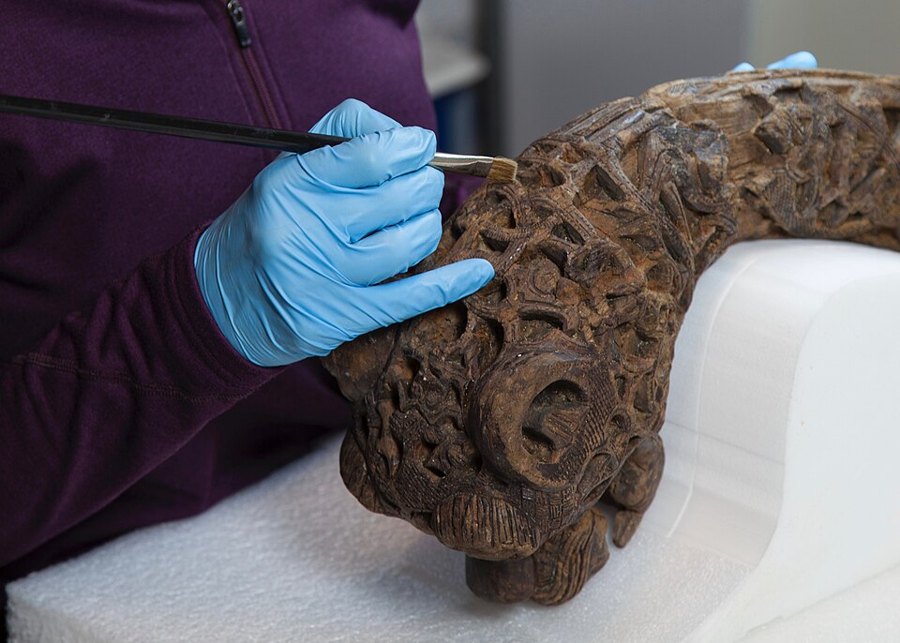
At Oslo’s Museum of Cultural History, David Hauer’s conservation responsibilities include the Oseberg, Gokstad, and Tune ships and the Oseberg sleds. The museum describes work on mechanical tolerance and threshold values for vibration and indoor climate, linked to safeguarding and relocation. This provides a Viking-specific reminder that a museum building is not automatically a safe environment merely because it is indoors. Large archaeological structures need support, handling plans, and environmental control appropriate to their condition. The relevant comparison with reburial is therefore between assessed preservation strategies, not between an unmanaged hole and an imagined museum with no risks or maintenance needs.
Sources for this section: 4
A surviving object needs a surviving identity
RAAR explicitly includes the behavior of packing and labeling materials because later identification depends on them. This apparently modest detail has major consequences. Imagine two similar wooden fragments whose labels have detached and whose locations in storage were never recorded reliably. The material may survive while its connection to the excavation becomes uncertain. Reburial planning therefore needs a way to preserve both the objects and the means of retrieving and identifying them. The same principle applies to museum boxes: a durable label, a documented container, and a clear relationship to the catalog are part of preservation, not an optional layer added after conservation.
Sources for this section: 2
The digital archive preserves information, not a device
The Archaeology Data Service explains that digital preservation differs from storing traditional physical records. The aim is to preserve information despite changing media, hardware, and software. Keeping the original disk is not enough if its files become unreadable or their meaning is undocumented. For a Viking excavation, photographs, survey data, sample lists, and context descriptions need to remain intelligible together. A folder of images without identifiers may contain beautiful views but little reusable evidence. The practical question is whether a future researcher can understand how the files relate to the site, the objects, and the decisions made during recording.
Sources for this section: 5
Storage decisions need a way to detect failure
The Isle of Wight trial combined environmental monitoring with examinations of the buried timber itself. That pairing is important because a favorable environmental measurement and a stable artifact are related but distinct observations. A management plan should identify which evidence will be collected and how changes will be interpreted. For example, monitoring a water level alone would leave other aspects of a proposed preservation environment unexamined. This is an illustrative management point rather than a universal measurement checklist. The appropriate variables depend on the material, location, and research question, and monitoring must remain linked to decisions that can actually be taken.
Sources for this section: 3
Future research depends on connected forms of care
The Archaeology Data Service notes the special urgency of archiving where fieldwork removes the original archaeological relationships. Once a deposit has been excavated, its records may be the only route back to the arrangement observed in the ground. Physical storage and digital preservation should therefore be planned together. A researcher revisiting a Viking object needs to know its context, treatment history, and relationship to samples or associated finds, not merely its current shelf. Preserving those connections allows later methods to ask new questions. Without them, even a well-conserved artifact can become a less informative witness to the past than the excavation originally made possible.
Sources for this section: 5
For the introductory context, read Reading a Burial: People, Objects, and the Funeral.
The Evidence
The sources below support this article. Interpretations and limits are explained in the text; this is not an exhaustive research review.
- Historic England: preserving archaeological remains under development ↗
- Studio Västsvensk Konservering: RAAR reburial research ↗
- Simpson and Lansley: monitored archaeological timber reburial trial ↗
- Museum of Cultural History: David Hauer and safeguarding Viking collections ↗
- Archaeology Data Service: what digital archiving preserves ↗