
Research & Sources · Introduction
Conservation Is Research: Oseberg and the Galloway Vessel
In Brief
Keeping an object intact and understanding its history are closely connected. Two major finds reveal why conservation choices matter.
On this page
An object keeps changingThe Oseberg problemLooking inside a wrapped vesselCleaning selectivelySourcesAn object keeps changing
Excavation changes the environment around an artifact. A surface that looks dirty may include fragile evidence, while an apparently solid wooden object may be chemically unstable. Conservation therefore begins with understanding materials and earlier treatments. Making a find look complete or bright is not the same as preserving its historical information. The decisions involve competing needs that must be recorded for later researchers.
The Oseberg problem
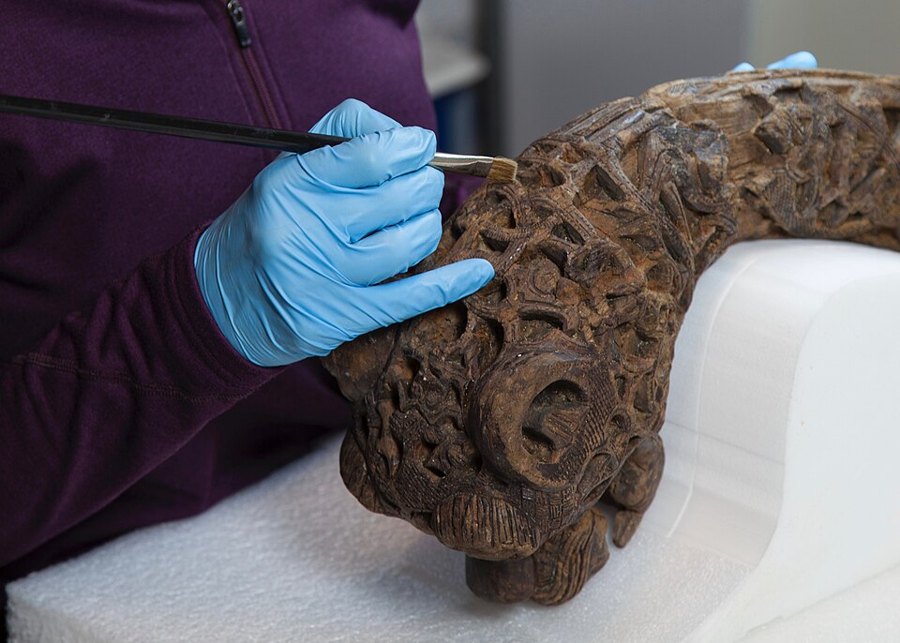
After the Oseberg excavation in 1904, some of the most degraded wooden objects were treated with alum salts. The Museum of Cultural History now identifies that treatment as a major cause of their alarming condition. Its Saving Oseberg project, launched in 2014, investigates stabilization and retreatment. Research includes neutralizing damaging chemistry, evaluating conservation materials, and improving preventive care. This is not a claim that every Oseberg object received the same treatment or faces an identical problem.

Looking inside a wrapped vessel
The Galloway Hoard’s lidded vessel preserved delicate textile wrappings along with metal objects. Conservators stabilized vulnerable material and used CT scanning and X-radiography to inspect the vessel without immediately removing those wrappings. The scans helped reveal both contents and decoration. Here, scientific imaging allowed questions to be asked before a physical intervention destroyed the arrangement that made the object informative.
Cleaning selectively
The vessel also carried copper corrosion over parts of its silver surface. Conservators sought to expose decoration while retaining original textiles. National Museums Scotland describes using laser cleaning in selected areas to reduce contact with fragile material. The result preserves evidence of how the vessel was wrapped while making more of its workmanship visible. Oseberg and Galloway together show why conservation is an ongoing research discipline: earlier solutions can create later difficulties, and the best treatment depends on the particular object. A useful display explanation should identify original material, surviving deposits, and modern conservation work rather than presenting a restored appearance as an untouched medieval surface.
The Evidence
The sources below support this article. Interpretations and limits are explained in the text; this is not an exhaustive research review.