
Research & Sources · Introduction
Underwater Archaeology: Recording Before Recovery
In Brief
Bringing a ship timber to the surface is only one stage in preserving its evidence. Sometimes the best decision is to leave it underwater.
On this page
Context comes firstThe seabed can remain the safest storeA second excavation in the workshopFrom fragments to a ship modelSourcesContext comes first
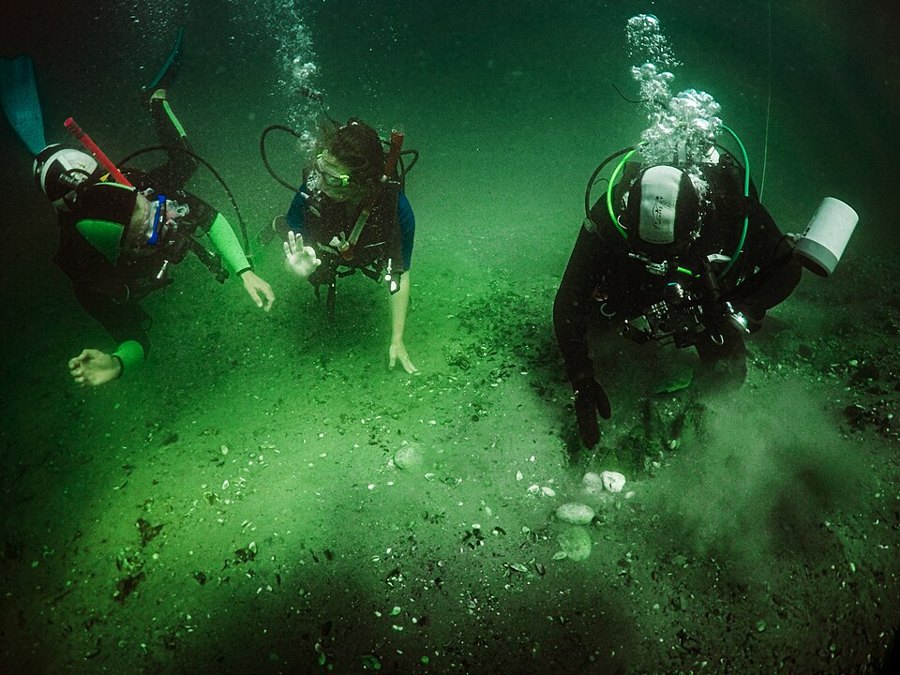
A shipwreck is a relationship between timbers, fastenings, sediments, and objects. Removing an attractive piece without recording its position loses part of that relationship. The Viking Ship Museum describes underwater excavation as careful sediment removal, often by hand, with suction equipment carrying loosened material away. Avoiding fresh scratches matters because original surfaces may preserve tool marks. Archaeological recovery is therefore a documentation process as much as a lifting operation.
The seabed can remain the safest store
The museum explains that unthreatened sites are not routinely excavated. Coverings and sandbags may help preserve remains in place, with continued inspection. Recovery creates a long and costly conservation commitment. The decision is consequently about threats, preservation conditions, and research value, rather than a rule that every discovery belongs immediately in a display case. Protection underwater is an active management choice, not necessarily a failure to investigate.

A second excavation in the workshop
Recovered timbers remain wet while specialists clean, photograph, measure, and describe them. Close views of rivet holes, caulking, and tool traces can reveal details that are hard to understand during a dive. The museum’s documentation process includes three-dimensional measurements linked to a database. These records allow researchers to compare separated pieces and develop a reconstruction without assuming that every missing part is known.
From fragments to a ship model
Digital measurements can support a computer reconstruction and a physical scale model. Samples may identify wood species, date growth rings, or characterize paint and sealing materials. Each stage answers a different question: the excavation records position; surface study examines workmanship; sampling adds material and chronological information. A reconstructed outline is the result of joining these observations with explicit decisions about absent evidence. When viewing a recovered Viking ship, ask how much original material survives, which parts were reconstructed, and where the supporting records can be consulted. Those distinctions make the vessel more understandable, rather than less impressive.
The Evidence
The sources below support this article. Interpretations and limits are explained in the text; this is not an exhaustive research review.