
Beliefs & Stories · Introduction
The Völva: Staffs, Graves, and Seiðr
In Brief
Elaborate staffs and unusual burials invite comparison with literary seeresses. Archaeology can support that comparison without recovering a complete ritual.
On this page
A title and a problemThe staff from KlintaAn unusual woman at FyrkatAvoid reconstructing more than survivesSourcesA title and a problem
The Old Norse term völva is commonly explained as “staff-bearer.” Preserved narratives associate such figures with supernatural knowledge and seiðr, a form of magic. That association has influenced how archaeologists understand unusual staffs in graves. The reasoning is comparative: a text describes a characteristic object, and excavations reveal objects that might fit. It is useful evidence, but it does not turn every iron rod into a securely identified religious implement.
The staff from Klinta
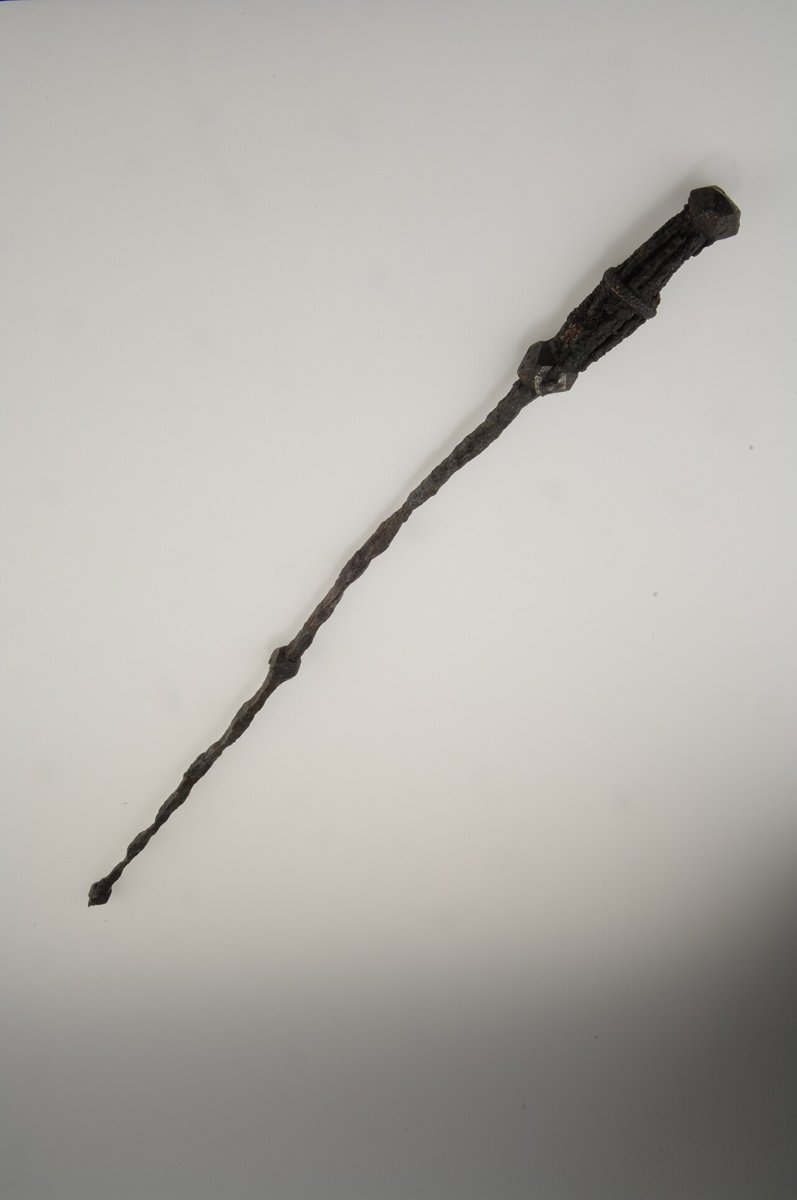
The Swedish History Museum’s Klinta staff came from a cremation grave on Öland. It is an elaborate iron object with bronze details, and its broken lower end shows that it was originally longer. The museum also explains that similar objects have been called roasting spits, measuring rods, or scepters at different points in the history of research. These changing interpretations are not embarrassing footnotes. They show why shape, decoration, burial context, and comparison must be considered together.

An unusual woman at Fyrkat
A grave at the Danish fortress of Fyrkat contained a woman buried with rich clothing and varied objects. Among them were an iron staff with bronze fittings and henbane seeds in a small purse. The National Museum interprets the combination as possible evidence for a seeress. Neither item alone proves the case. The seeds establish the presence of a plant; they do not show exactly how it was used, whether the woman used it herself, or what a ceremony looked like.
Avoid reconstructing more than survives
A convincing interpretation can still leave major questions open. The staff may mark special authority, but a grave does not preserve a spoken performance. A richly equipped burial also reflects decisions by survivors, not only the deceased’s lifetime activities. Comparing Klinta and Fyrkat makes the evidence stronger by revealing recurring associations, while their differences discourage a standardized costume or ritual script. The völva is best approached through this combination of literary vocabulary, material patterns, and clearly stated limits rather than through a fully invented ceremony.
The Evidence
The sources below support this article. Interpretations and limits are explained in the text; this is not an exhaustive research review.