
Beliefs & Stories · Introduction
Ragnarök: Destruction, Renewal, and a Difficult Text
In Brief
The world’s ending is one of the most powerful Norse stories. Its manuscript forms preserve a more complicated vision than a list of final battles.
On this page
Listen to the prophetic voiceAn ending with an aftermathThe manuscripts are part of the storyHistory is not a prophecy checklistSourcesListen to the prophetic voice
Völuspá presents a prophetic speaker addressing Odin and recounting a vast sequence of origins, conflicts, and catastrophe. The National Museum of Denmark uses this encounter as the narrative foundation for its exhibition about the völva. The choice draws attention to a crucial feature of the poem: the future is mediated through a voice with extraordinary knowledge. It is not delivered as an impersonal timetable. Remembering the speaker changes how the threatening images are read.
An ending with an aftermath
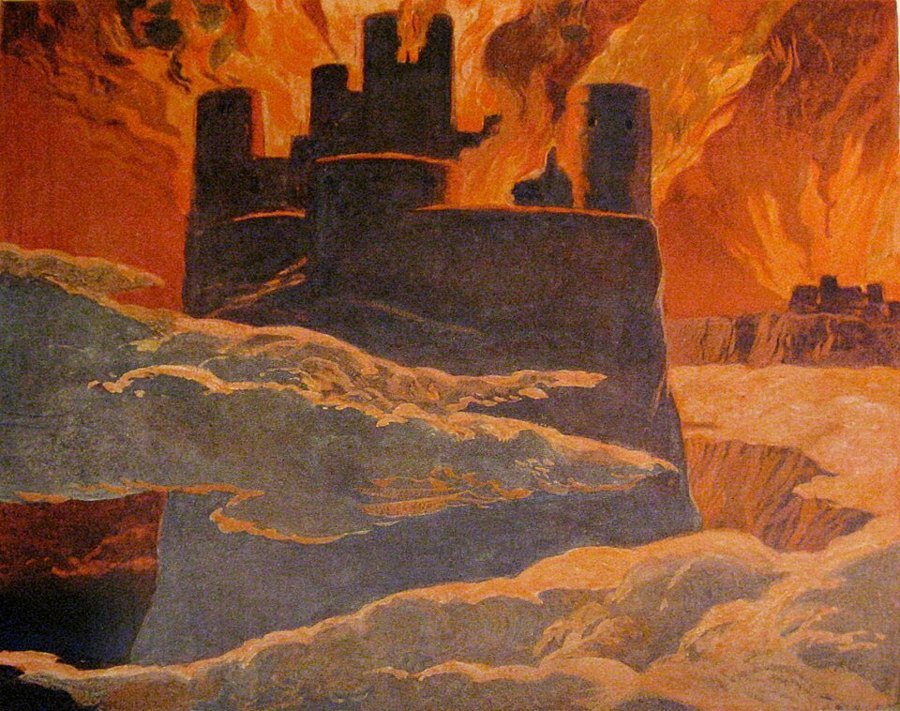
The poem’s vision moves through violent disorder and destruction before describing a world that emerges again. Its later scenes include renewed fields and the return of Baldr. Renewal therefore belongs inside the surviving narrative, rather than being an optimistic modern addition to it. At the same time, the final imagery is not simply a reassuring closing paragraph. Reading the whole sequence gives a different impression from extracting only the most spectacular clashes between gods and monsters.

The manuscripts are part of the story
Völuspá is preserved in more than one medieval witness. The versions associated with Codex Regius and Hauksbók differ, including in the ordering and presence of particular stanzas. Henry Adams Bellows’s older translation makes these textual problems visible through its notes. Its proposed solutions should be read as editorial judgments, not as settled ancient facts. When a modern retelling seems unusually smooth, it may be combining witnesses and choosing an order without showing those choices.
History is not a prophecy checklist
The National Museum frames the story as an exploration of human dependence on nature and fear of a world falling out of balance. That is a useful interpretive approach, explicitly different from proving that one historical disaster caused every element of the myth. A poem can hold inherited images, religious argument, and artistic invention together. Its survival in a Christian manuscript environment also requires care when separating older traditions from later transmission. Ragnarök remains compelling partly because the evidence preserves both an immense narrative and unanswered questions about its formation.
The Evidence
The sources below support this article. Interpretations and limits are explained in the text; this is not an exhaustive research review.