
Beliefs & Stories · Introduction
Loki: Read the Argument Before the Biography
In Brief
Loki can be an ally, an accuser, or a source of disaster. The surviving stories preserve these tensions rather than resolving them into a simple character profile.
On this page
An uncomfortable companionInsults are not neutral testimonyThe face on the Snaptun stoneKeep the layers visibleSourcesAn uncomfortable companion
The National Museum of Denmark describes Loki as a figure of giant ancestry who nevertheless lives among the gods. His cunning can create trouble and help solve it. In the story of the gods’ treasures, his dealings with dwarven craftsmen are connected with the making of extraordinary objects, including Thor’s hammer. The same talent for maneuvering between groups makes him useful and dangerous. A single label such as “evil god” conceals the dependence of other characters on his abilities.
Insults are not neutral testimony
In the eddic poem Lokasenna, Loki confronts gods and goddesses at a feast. The exchanges consist largely of accusations and hostile replies. They allude to stories an audience may have recognized, including events not fully explained in the poem itself. That makes the work valuable, but also easy to misuse. A taunt spoken in an argument should not automatically become an undisputed fact in a modern divine biography. Its purpose inside the scene is to provoke, expose, humiliate, or defend.
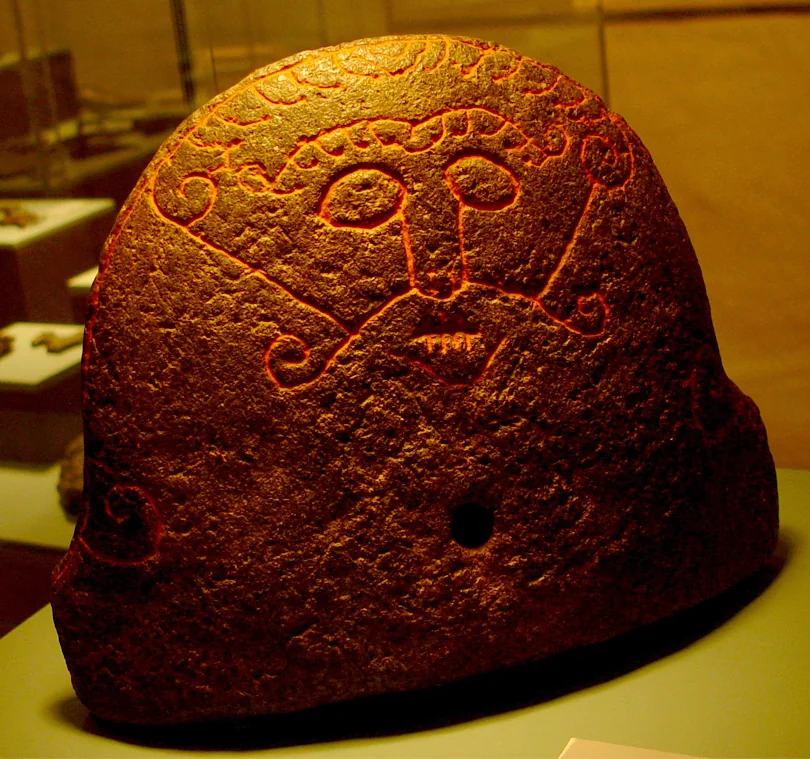

The face on the Snaptun stone
A face on the Snaptun stone is commonly interpreted as Loki because marks around its mouth recall the story in which his lips are sewn together after a wager. The National Museum uses that comparison in its presentation of the gods. The resemblance creates a link between an image and a preserved tale. It does not provide a written caption identifying the face. The narrative makes the image intelligible, while the image suggests that a recognizable motif circulated outside the manuscripts that preserve the fuller story.
Keep the layers visible
Lokasenna survives through medieval manuscript transmission, and its prose framing should be distinguished from the verse dialogue. An older translated edition can help readers follow the poem, but its editorial guesses about composition and interpolation are not themselves ancient testimony. The productive question is therefore not simply “What was Loki really like?” It is how different storytellers and images used the figure. His shifting position between helper and antagonist is part of the evidence, not a problem that needs to be edited away.
The Evidence
The sources below support this article. Interpretations and limits are explained in the text; this is not an exhaustive research review.