
Beliefs & Stories · Introduction
Thor and the Small Hammers People Carried
In Brief
A tiny pendant from Lolland helps identify a familiar symbol. Burial rings from Sweden show that its uses were more varied than a modern necklace suggests.
On this page
A pendant that names its shapeProtection beyond the battlefieldRings around the deadStart with the find contextSourcesA pendant that names its shape
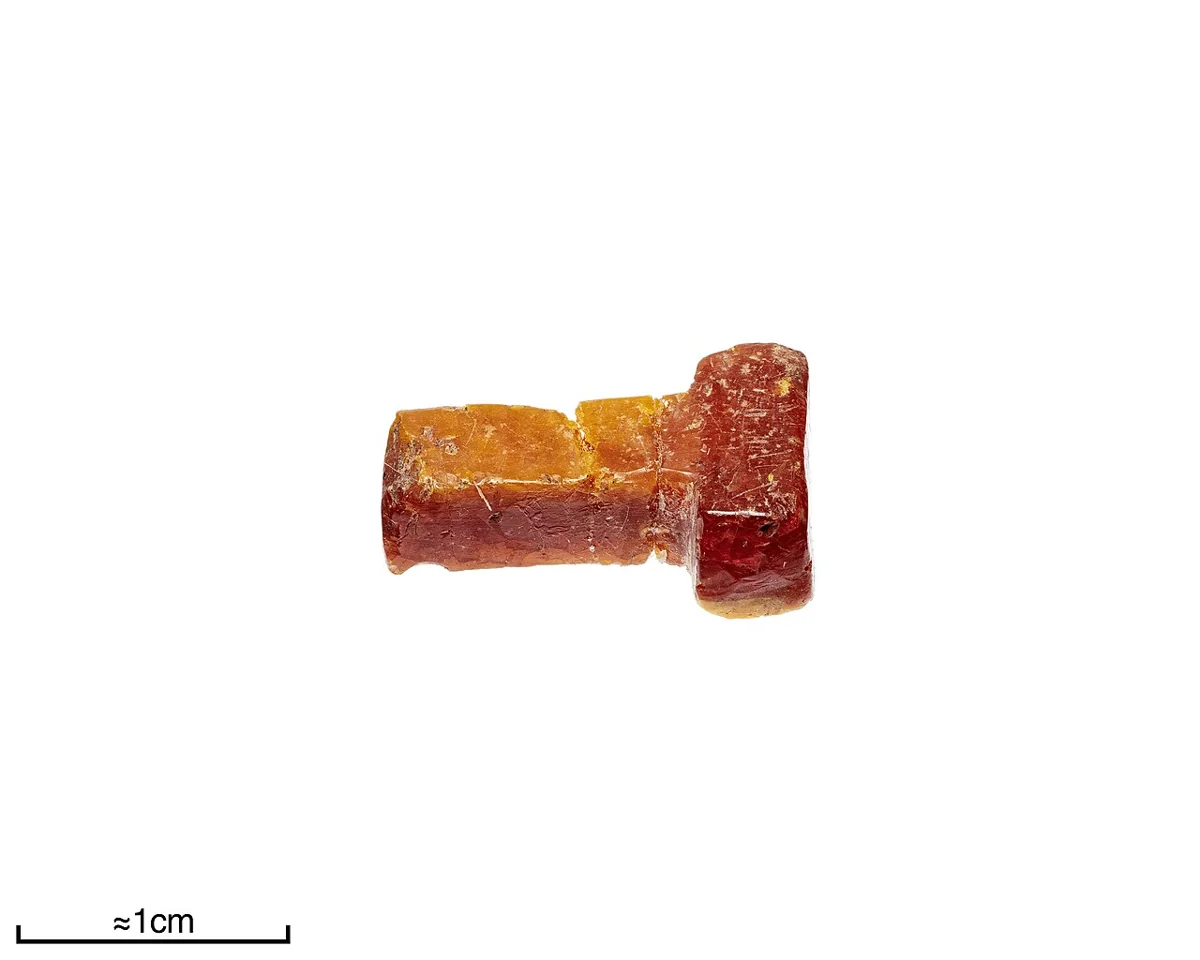
In 2014, the National Museum of Denmark reported a small pendant found at Købelev on Lolland. Dated to the tenth century, it carries a short runic inscription identifying the object as a hammer. The inscription matters because identifying an ancient shape is not always as straightforward as it looks. A modern viewer recognizes a familiar emblem; an inscription supplies evidence from the period itself. It supports the interpretation of these pendants as hammers associated with Thor’s weapon, Mjölnir.
Protection beyond the battlefield
Hammer pendants occur in women’s graves as well as other contexts. They should not be treated simply as badges of male warriors. The National Museum interprets them as protective objects, while also noting that hammers and Christian crosses could occur together. That combination warns against assigning a complete, exclusive religious identity to someone from a single ornament. Wearing a symbol, inheriting it, and placing it in a burial are different acts, even when the object looks identical.

Rings around the dead
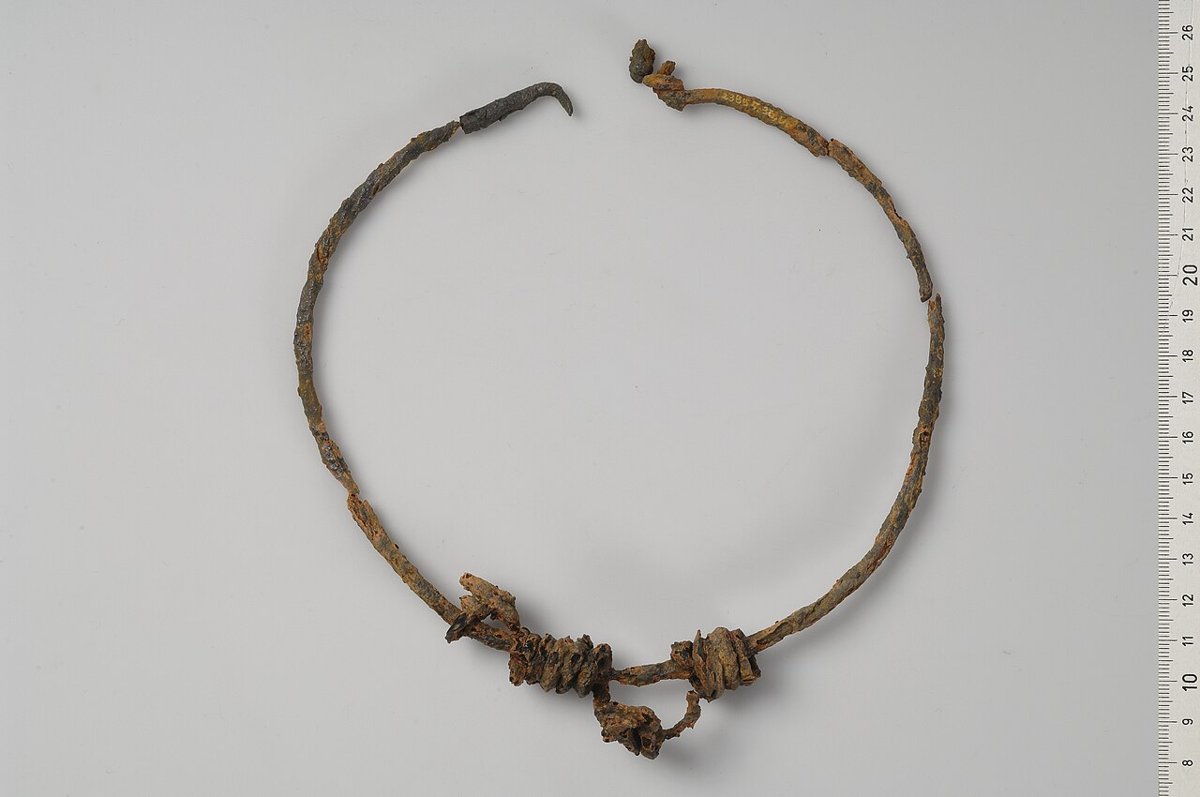
The Swedish History Museum describes another form: miniature iron hammers suspended from larger rings. In the Mälaren Valley these occur in cremation graves, sometimes at the top of the burial urn. Their position suggests a role in funerary practice. Similar rings also occur at settlements. One from Viby Gård in Sollentuna was found among everyday settlement debris, while examples from the neighboring cemetery were more fragmentary. The same broad symbol therefore appears in different archaeological settings.
Start with the find context
When looking at a hammer, ask what it is made of, whether it has a suspension loop, and where it was found. A silver pendant in a hoard and an iron ring laid over cremated remains cannot automatically explain each other. Thor’s association with thunder and protection helps frame an interpretation, but the precise prayer, ceremony, or intention behind a particular deposition usually remains unknown. The strongest account combines the recognizable shape with the circumstances of its recovery.

The Evidence
The sources below support this article. Interpretations and limits are explained in the text; this is not an exhaustive research review.