
Beliefs & Stories · Introduction
Small Objects and the Search for Protection
In Brief
Miniature tools, weapons, rings, and pendants show how religious meaning could be carried close to the body. Their exact purposes are often less certain than their shapes.
On this page
Miniatures in a groupTools can become divine attributesAn exceptional collectionWhat does protection mean archaeologically?SourcesMiniatures in a group
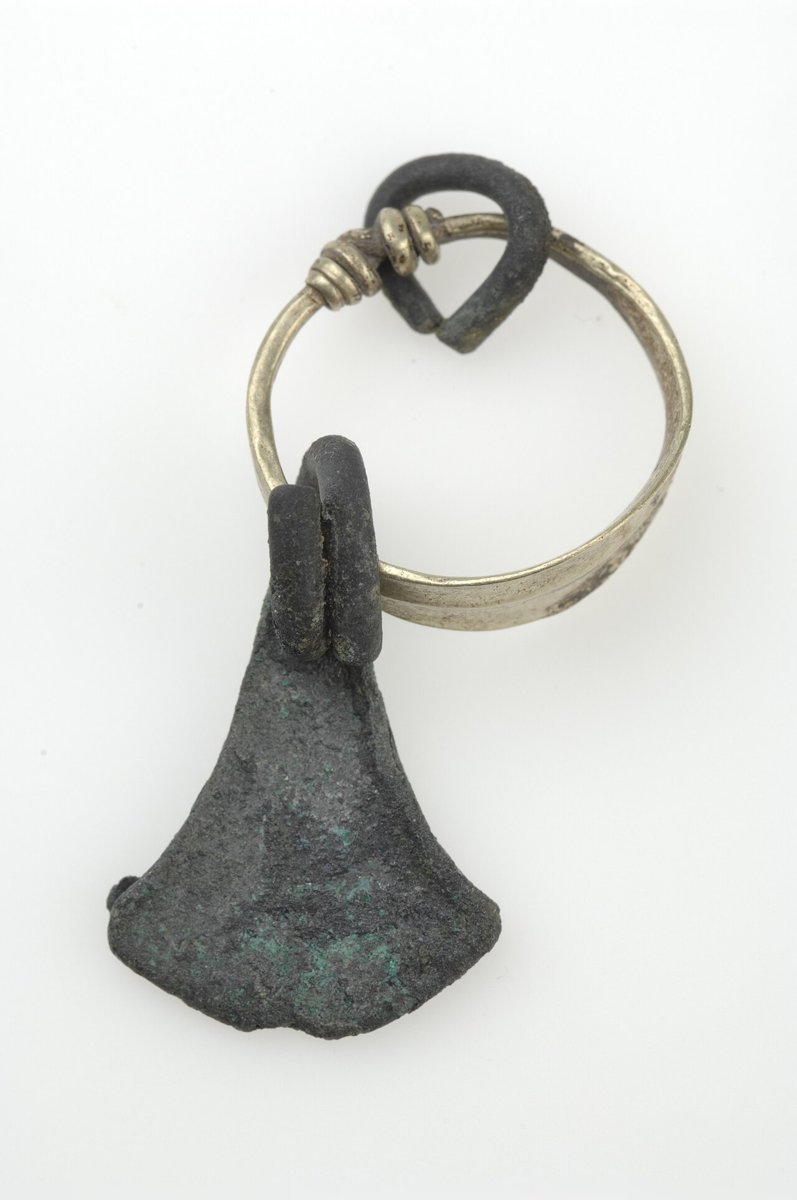
One Birka settlement find cataloged by the Swedish History Museum combines nine small bronze rods, a miniature shield, and a miniature sword on a larger ring. Its form is striking because the objects are grouped rather than presented as a single emblem. The collection record identifies it as an amulet pendant. That classification gives a useful starting point, while leaving open the original owner, the circumstances in which it was carried, and the significance of the particular combination.
Tools can become divine attributes
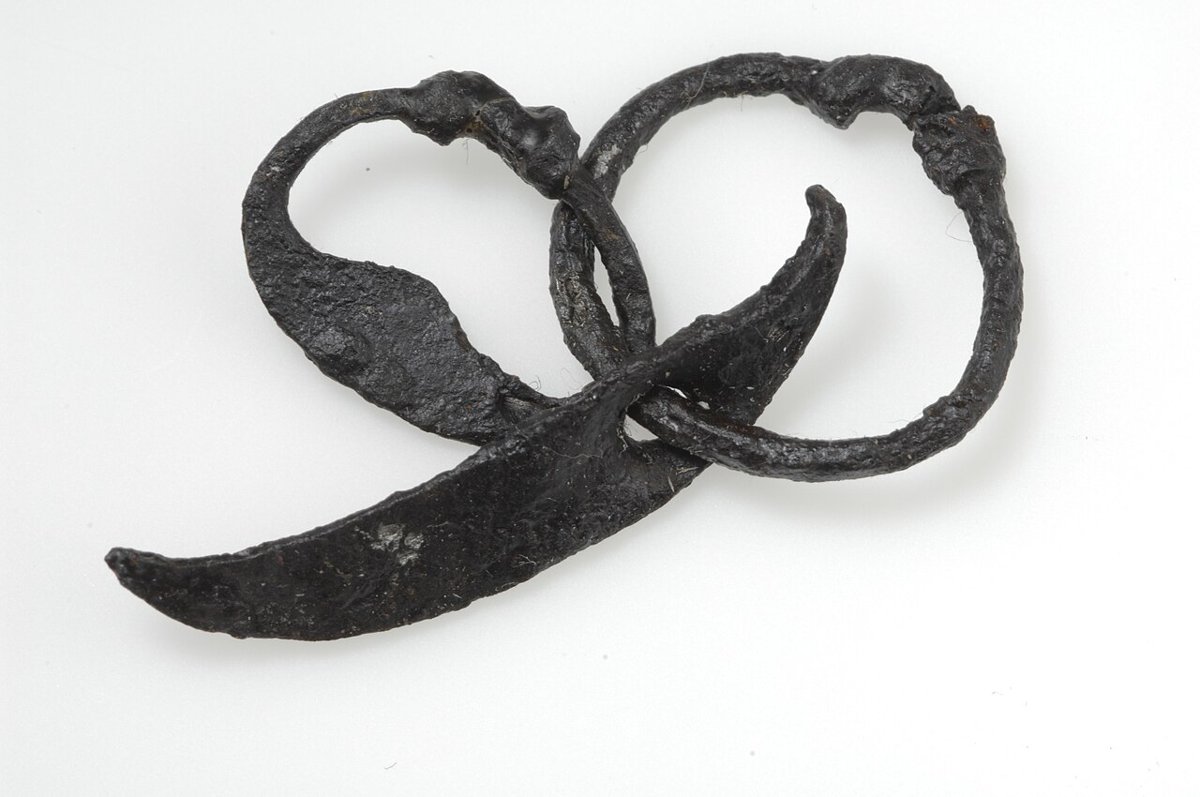
The museum compares miniature sickles with Freyr and objects shaped like fire strikers or axes with Thor. Such interpretations connect recognizable everyday forms with divine associations. They should still be described as interpretations: an implement reduced to pendant size does not automatically identify the words spoken over it or the benefit expected from it. A sickle may suggest growth or harvest, but the object itself does not supply a complete explanation of that relationship.

An exceptional collection
The National Museum of Denmark describes the Lille Karleby hoard as containing a remarkable group of amulets alongside beads, precious materials, and larger objects. Its unusual composition has prompted suggestions that it belonged to a ritual specialist, perhaps a völva. This is a hypothesis about a collection, not a documented biography. The distinction matters because a hoard can combine objects with different histories, and burial in the ground is only the last surviving stage of their use.
What does protection mean archaeologically?
Archaeologists cannot test a past owner’s expectation directly. Instead, they examine repeated shapes, suspension arrangements, combinations, and find contexts. Those observations can support an amulet interpretation without identifying a single fear or desired outcome. A miniature weapon could concern protection without proving that its wearer fought; a valuable material could matter without revealing why it was chosen. Treating these objects as evidence of human hopes and decisions, while separating observation from explanation, produces a more convincing account than assigning each pendant a fixed dictionary meaning.

The Evidence
The sources below support this article. Interpretations and limits are explained in the text; this is not an exhaustive research review.