
Beliefs & Stories · Deep dive
Crosses and Older Symbols: Reading Religious Change in Objects
In Brief
A casting mold, a decorated hammer, and carved crosses show different kinds of coexistence. They do not all tell the same story about belief.
On this page
One workshop could make different signsTwo signs can share a single pendantA cross could include a Norse storyGosforth makes comparison unavoidableA precious cross does not date a whole conversionCompare practices as well as symbolsSourcesOne workshop could make different signs
A stone casting mold from Trendgården in Denmark contains forms for crosses and a Thor’s hammer. The National Museum identifies it as object C24451. It is unusually direct evidence that the manufacture of these signs could belong to the same technical setting. The craft process did not require each religious symbol to have an entirely separate workshop tradition.
That observation is narrower than a claim about everyone who bought the products. A maker could supply different customers, one customer could request different signs, or patterns of demand could change during the mold’s use. The tool itself does not identify its owner’s convictions. It also does not tell us how often each cavity was used. Begin with production capacity, which is visible, and then distinguish possible patterns of consumption. This preserves the mold’s importance without making it carry an entire model of Scandinavian conversion.
Sources for this section: 1
Two signs can share a single pendant
The Swedish History Museum records a Thor’s hammer pendant with a Christian cross above the hammer’s head. The object came from a hoard at Stens Prästgård in Västra Stenby, Östergötland. A silver suspension ring and punched dot decoration are also noted in the catalog. Here the combination is on one object, rather than represented by separate cavities in a workshop tool.
That difference matters. The pendant offers evidence for a designed relationship between forms. It still cannot reveal exactly how its wearer explained them. Nor should the contents of a hoard be treated as a complete set of objects worn together by one person: hoarding is a depositional act, and an object’s earlier use may have a different history. The combination invites questions about protection, display, familiarity, and changing interpretation. Those are avenues of inquiry, not alternative biographies that can be confidently assigned to an unnamed owner.
Sources for this section: 2


A cross could include a Norse story
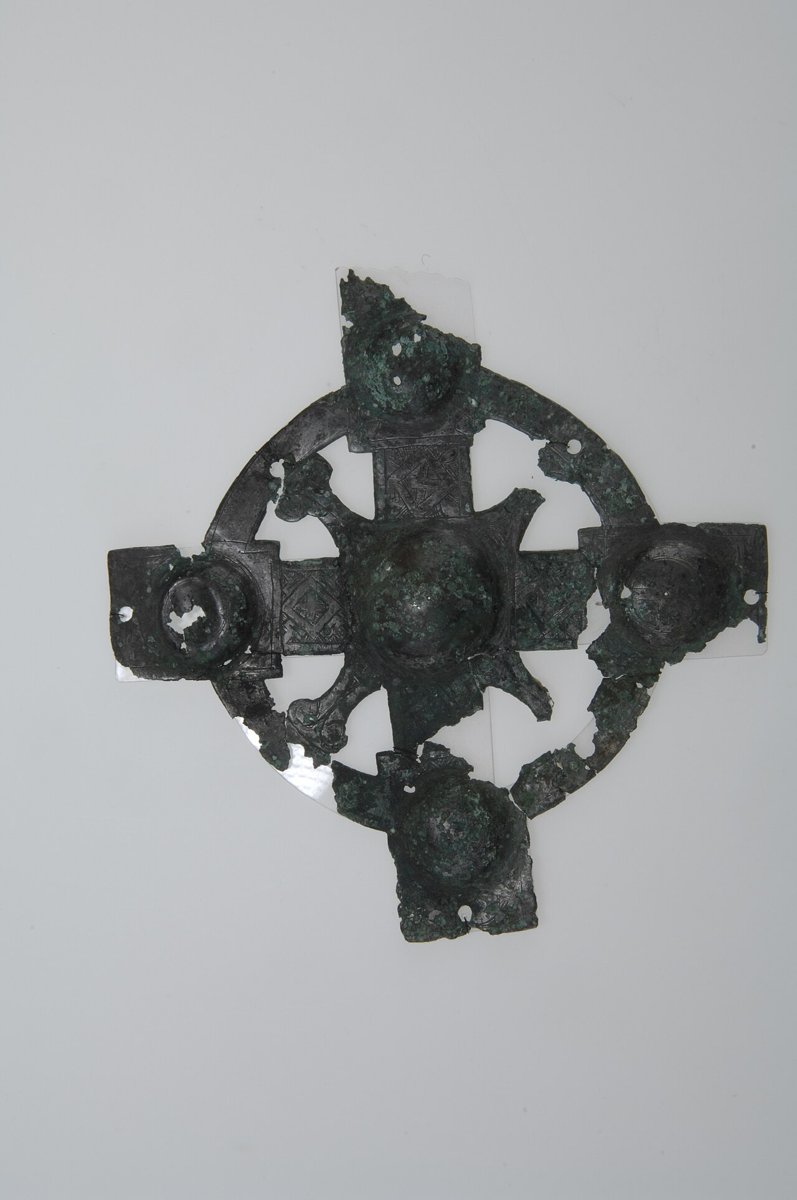
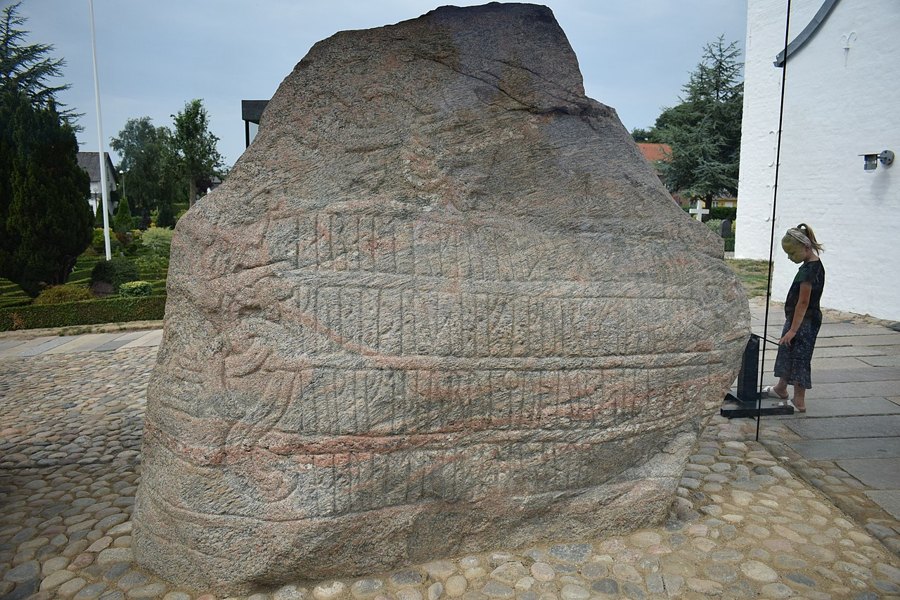
Thorwald’s cross slab on the Isle of Man combines a cross form with imagery interpreted as Odin and the wolf at Ragnarök. The Nara to Norwich research exhibition describes a Christian scene on the other face involving a figure, fish, and serpent. Its account places the tenth-century fragment within both Norse memorial practice and the island’s Christian tradition of carved crosses.
A surviving fragment is not a complete visual program. What remains may support identification of individual scenes while leaving their original relationship uncertain. Even so, the cross setting is essential: the imagery was not simply copied onto a neutral picture board. It could have drawn comparisons, established differences, or made familiar stories useful in a new religious argument. The presence of a recognizable Norse figure does not by itself turn the whole monument into a declaration of devotion to that deity.
Sources for this section: 3
Gosforth makes comparison unavoidable
Historic England dates the Gosforth cross in Cumbria to the early tenth century. Its description identifies a Crucifixion scene alongside imagery associated with Scandinavian mythology, including the bound Loki and a nearby woman interpreted as Sigyn. The monument survives as a tall carved cross, so its overall Christian form remains part of every encounter with the individual panels.
The interpretive challenge is not solved by counting Christian and Norse figures as if they were votes for separate religions. A composition can use stories in relation to one another. A viewer might be invited to compare suffering, rescue, destruction, or victory across scenes. Such thematic readings require attention to placement and detail; they cannot be demonstrated merely by finding a similar episode in a later text. The safest description separates the carved features from the names supplied through comparison, then explains why a particular identification has been proposed.
Sources for this section: 4
A precious cross does not date a whole conversion
Viking Museum Ladby identifies the gold crucifix known as Christ from Aunslev as a find from the first half of the tenth century, discovered in 2016. It provides a concrete example of Christian imagery in Denmark before the later royal claims commonly used to summarize the country’s conversion. The object contributes to chronology without serving as a national census of religious allegiance.
A date for a pendant establishes a period in which that type of object existed, subject to the dating evidence. Its find place establishes where it eventually entered the archaeological record. Neither automatically supplies the wearer’s birthplace, a baptism date, or the proportion of Christians nearby. Conversely, an individual find should not be dismissed because it cannot answer those larger questions. It shows that personal display and possession need to be studied alongside royal monuments and written mission accounts, each at the scale its evidence supports.
Sources for this section: 5
Compare practices as well as symbols
The Swedish History Museum describes Scandinavian Christianization as multiple regional processes, with different starting points and rates of change. In southern and central Sweden, it places the establishment of church organization in the twelfth century, while emphasizing earlier contacts and the varied routes by which Christian ideas arrived. This framework avoids making a single ruler’s action the explanation for every community.
Objects can then be compared with changes in burial, worship, patronage, and institutions. A pendant, a workshop mold, and a churchyard monument illuminate different activities and audiences. Their coexistence may reveal accommodation, contested meanings, or practical continuity, but it does not prove that transition was equally peaceful everywhere. The stronger historical account preserves these differences. Symbols are evidence of choices made visible in material form; recovering the full beliefs behind those choices requires more than recognizing their outline.
Sources for this section: 6
For the introductory context, read Becoming Christian: change across generations.
For the introductory context, read Small Objects and the Search for Protection.
The Evidence
The sources below support this article. Interpretations and limits are explained in the text; this is not an exhaustive research review.
- National Museum of Denmark — Trendgården casting mold C24451 ↗
- Swedish History Museum — hammer pendant with a cross ↗
- Nara to Norwich research exhibition — Thorwald’s cross slab ↗
- Historic England — Gosforth high cross ↗
- Viking Museum Ladby — Christ from Aunslev ↗
- Swedish History Museum — When Scandinavia became Christian ↗