
Beliefs & Stories · Deep dive
Urnes: Animal Carving in a Christian Building

In Brief
An older portal reused in a medieval church shows why artistic continuity and religious continuity are different historical questions.
On this page
Separate the building from its reused woodFollow the animals rather than the labelThe doorway supplied a religious settingLook beyond the famous exteriorA reconstruction must choose a momentNew documentation can sharpen old questionsSourcesSeparate the building from its reused wood
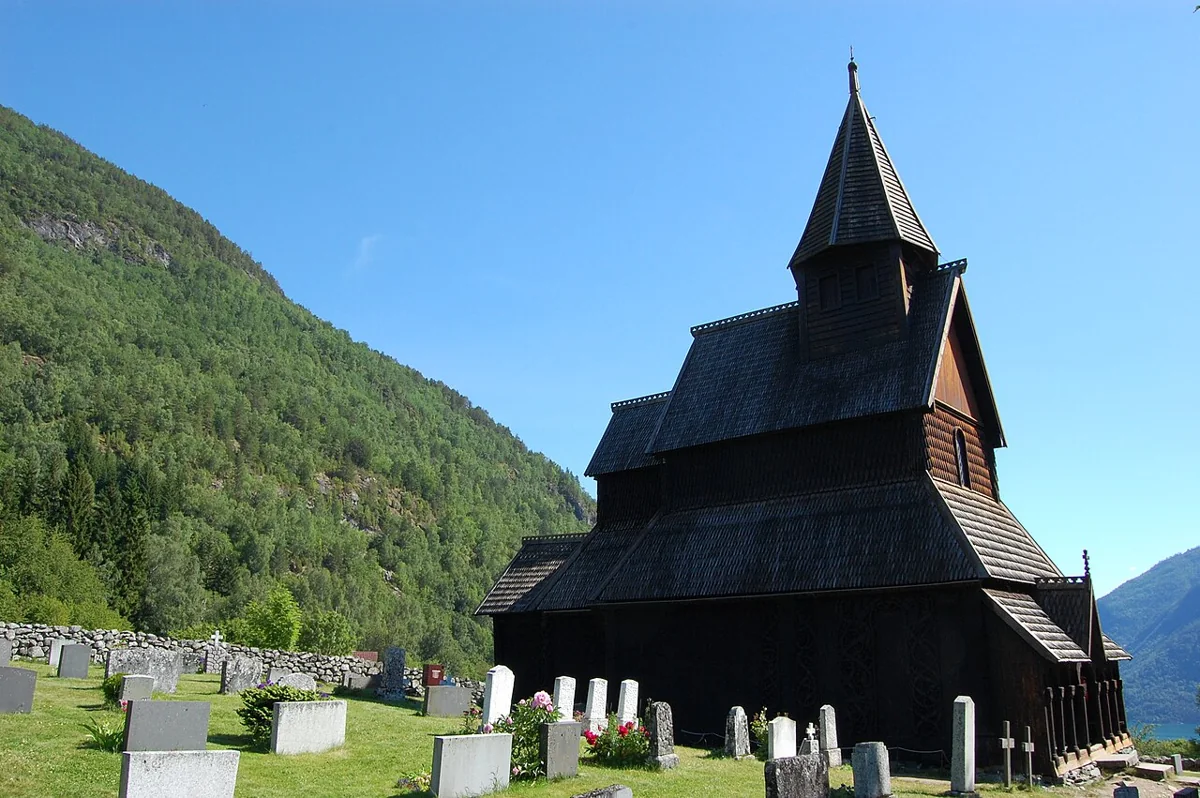
Urnes stave church in western Norway dates to the 1130s, while its celebrated exterior carving includes material from a predecessor of around 1070. Norway’s Directorate for Cultural Heritage describes evidence for three earlier churches on the site. The standing structure is therefore one phase in a longer sequence, not a Viking Age building preserved without alteration.
This distinction is essential when the portal appears in an account of Viking art. A late Viking artistic vocabulary survives within material already associated with a church, and that material was subsequently fitted into another church. Its age does not turn the present building into a pagan sanctuary. The reused pieces also changed position and dimensions. A label that gives only one date can hide both the earlier carving and the later architectural decisions. Read the date of a component, the date of its installation, and the history of the site as related but separate evidence.
Sources for this section: 1
Follow the animals rather than the label
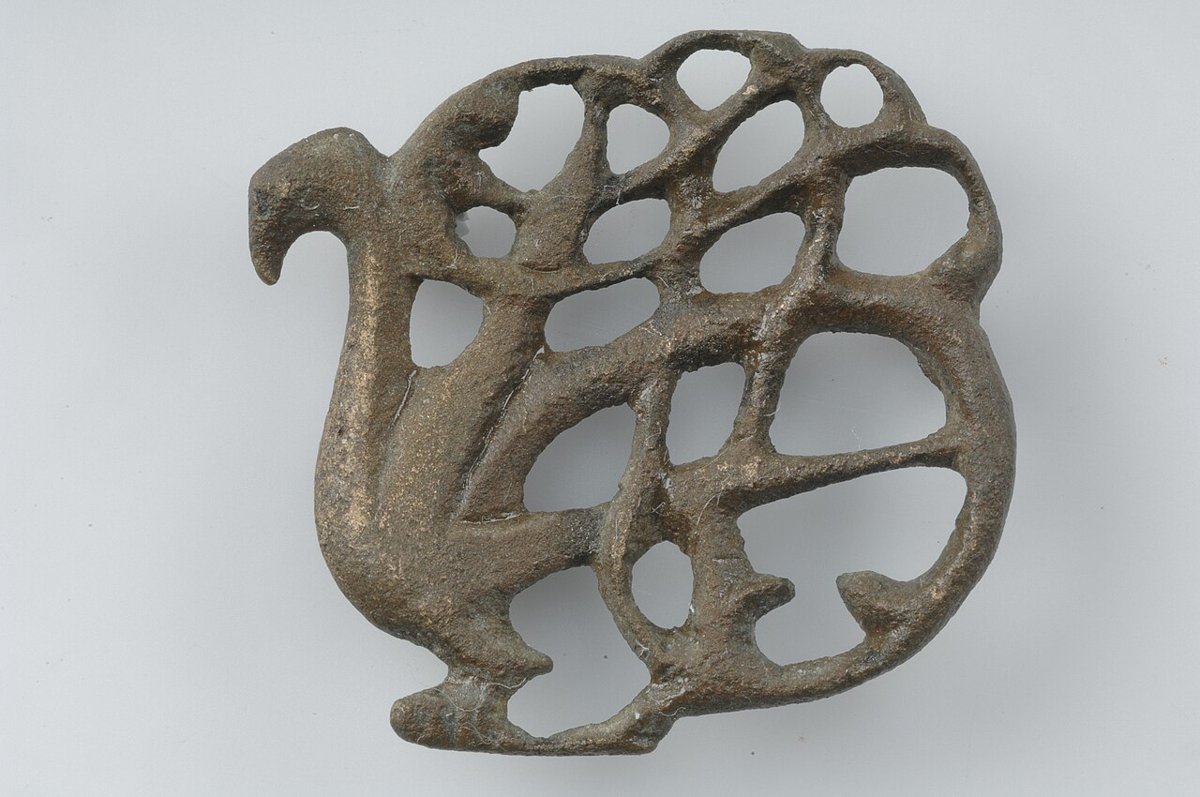
The Directorate characterizes the Urnes style through intertwined animals, threadlike serpents, loops, flowing outlines, and contrasts between broad and narrow forms. These features provide a practical starting point for looking. Trace one body through the composition before deciding where another begins. The visual difficulty is deliberate: the carving creates a controlled tangle rather than a simple row of isolated creatures.
The Norwegian World Heritage association describes the larger animal as possibly a lion and presents a Christian reading involving the struggle between good and evil. Its cautious wording matters. Identifying a species and identifying a theological meaning are not the same operation. The long, stylized body is not a zoological illustration. A sensible first description records what can be seen—interlacing, bites, limbs, and changes in line width—before moving to the interpretive question of what the arrangement meant to its audience.
Sources for this section: 1, 2

The doorway supplied a religious setting
Research presented by NTNU’s Urnes Project argues that the portal should be understood within Christian medieval visual culture. Margrete Syrstad Andås connects its lion and struggling creatures with the religious significance of a church entrance. The project also draws attention to forms that change from serpents into lilies. Within that interpretation, the transformation contributes to an argument about salvation and the overcoming of evil.
This approach asks how imagery functioned where people entered a church, rather than treating the carving as a detached illustration of a Norse myth. It does not mean that every viewer necessarily understood every element in the same way. Nor must an inherited artistic technique retain an unchanged religious meaning. A carver could work with familiar patterns in a Christian commission. The location, the actions performed there, and comparisons with contemporary religious art help test an interpretation that style alone cannot settle.
Sources for this section: 3
Look beyond the famous exterior
UNESCO’s account emphasizes the relationship between the church’s wooden construction and the spatial language of Romanesque stone architecture. Cylindrical columns, capitals, and arches contribute to that relationship. The twelfth-century interior carvings belong beside the older exterior in an explanation of the building, even though a photograph of the north portal often stands for the whole monument.
The combination complicates any story of a completely isolated northern tradition. Urnes represents highly skilled woodworking in conversation with wider architectural and artistic forms. It is useful to compare the work done by a capital and the work done by a portal: one marks and articulates supports within the room, while the other frames a passage into it. Similar animals do not make these settings interchangeable. Following the visitor’s movement through the building restores a dimension that a collection of close-up photographs can miss.
Sources for this section: 4
A reconstruction must choose a moment
The church’s own woodcarving project describes the practical difficulty of reconstructing the older portal. When material was reused in the twelfth century, pieces were shortened, removing parts of the ornament. The project distinguishes several possible targets: the carving as first made around 1070, its modified state around 1130, or the weathered object surviving today. Each target requires different choices.
A copy of surviving grooves is not the same undertaking as restoring missing design. The latter involves inference from the remaining traces and from assumptions about the composition. The project’s discussion makes that decision visible instead of presenting a single reconstruction as self-evident. For a visitor, the useful question is what the copy reproduces and what it supplies. A completed animal body can look convincing while containing a modern solution to a genuine gap. Reconstructions become better historical tools when their chosen date and uncertain areas are explained.
Sources for this section: 5
New documentation can sharpen old questions
The Urnes World Heritage Center reports three-dimensional scanning of the portal and the carved capitals by the Museum of Cultural History. It also describes methods for investigating pigment traces without damaging the wood. Such work can preserve measurements and reveal details that are difficult to compare through ordinary photographs. It does not automatically identify the original meaning of a creature or reconstruct an absent part.
The most useful account holds material and interpretation together. Ask which timber belongs to which phase, how carving changed during reuse, what forms survive, and which comparisons support a proposed meaning. Urnes offers evidence for continuity in craft and for change in setting at the same time. Its importance lies partly in that combination: a Christian building could preserve, reshape, and display a visual language with roots in earlier Scandinavian art. The surviving wood lets us examine that process without pretending that artistic tradition froze at conversion.
Sources for this section: 6
For the introductory context, read How to Read Viking Animal Ornament.
The Evidence
The sources below support this article. Interpretations and limits are explained in the text; this is not an exhaustive research review.
- Norwegian Directorate for Cultural Heritage — Urnes stave church ↗
- Norwegian World Heritage — Urnes ↗
- NTNU research presentation — animals in stave-church ornament ↗
- UNESCO World Heritage Centre — Urnes Stave Church ↗
- Urnes carving project — reconstructing missing portions ↗
- Urnes World Heritage Center — research and documentation ↗