
Beliefs & Stories · Introduction
Freyja Beyond a Single Role
In Brief
Love and fertility belong to Freyja’s stories, but so do magic and the slain. Her overlapping roles resist tidy modern categories.
On this page
A goddess with several associationsThe dead at FólkvangrObjects invite cautious comparisonsHow to read a divine biographySourcesA goddess with several associations
Museum introductions associate Freyja with love, fertility, beauty, and seiðr, while placing her within the family of Njord and Freyr. These labels offer a useful starting point, but they are not separate departments in a religious administration. A story can connect desire, wealth, rivalry, and supernatural knowledge at once. Reading only the label “fertility goddess” risks overlooking what a particular text actually makes her do. The surviving material presents relationships and episodes rather than a single systematic definition.
The dead at Fólkvangr
The eddic poem Grímnismál associates Freyja with Fólkvangr and assigns her half of those killed in battle, with Odin receiving the other half. This passage complicates the familiar claim that all fallen warriors simply went to Odin’s Valhalla. It is a statement within a particular poem, however, rather than a complete account of funerary beliefs across Scandinavia. The distinction is essential when comparing literary descriptions of the dead with actual graves.

Objects invite cautious comparisons
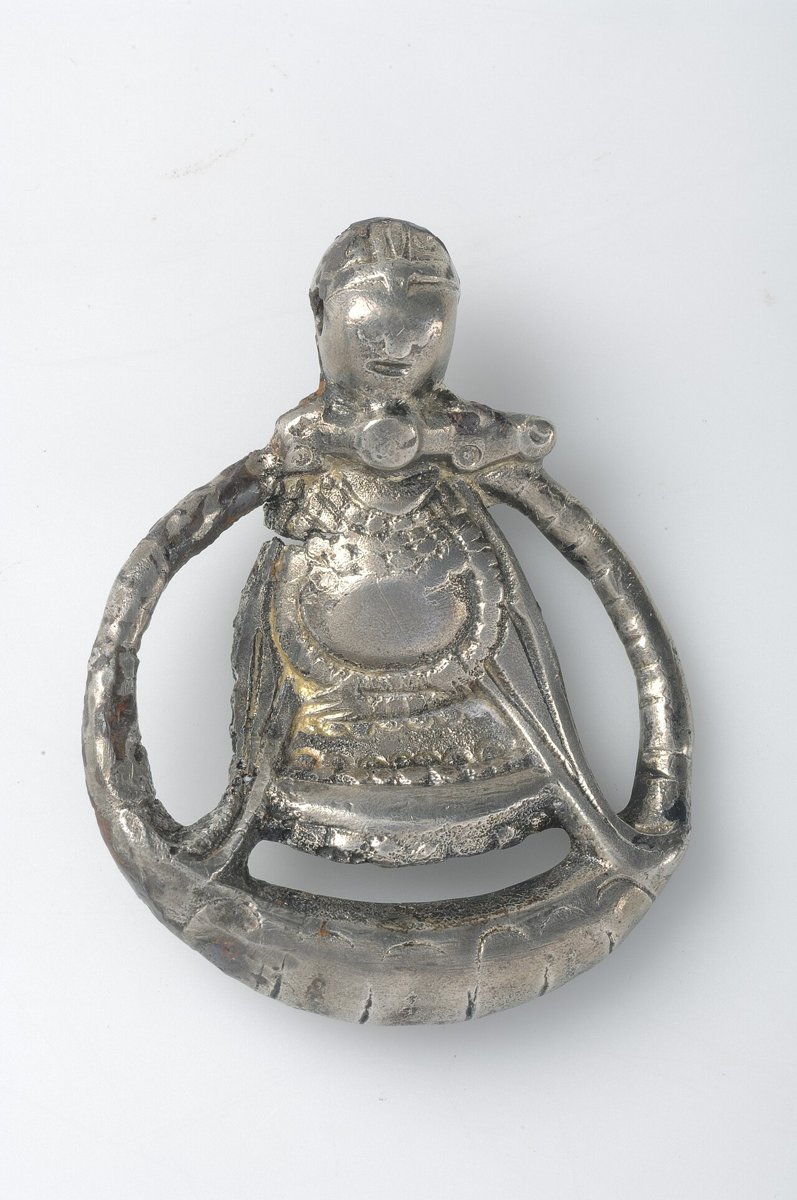
The Swedish History Museum discusses an amber cat figurine from Birka alongside Freyja’s association with cats. It also presents a silver pendant from Aska showing a female figure, interpreted as pregnant, as a possible representation of the goddess. These are comparisons between images and traditions, not objects labeled with Freyja’s name. A cat can be identified more securely than the religious intention behind carving it. A richly dressed female figure likewise does not come with a surviving explanation from its maker.
How to read a divine biography
Modern summaries often assemble a smooth life story from material preserved in different texts. A careful reader can instead ask which source supplies each feature: a poem, a later narrative, or an archaeological interpretation. Freyja’s connection with the slain has explicit poetic support; the identification of a particular pendant is a different kind of claim. The result is a richer portrait without pretending that every detail is equally secure. Her importance lies partly in the way the evidence crosses boundaries that modern readers expect to remain separate.
The Evidence
The sources below support this article. Interpretations and limits are explained in the text; this is not an exhaustive research review.