
Beliefs & Stories · Introduction
Odin in Stories and Small Objects
In Brief
Ravens, a throne, and the pursuit of knowledge connect Odin’s stories with archaeological interpretation. The connection is informative without making every identification certain.
On this page
Knowledge carries a priceA throne in miniatureWhat the object does not tell usRead the image and the narrative separatelySourcesKnowledge carries a price
In the surviving mythological tradition, Odin seeks knowledge rather than possessing it without effort. The Swedish History Museum’s account brings together his sacrificed eye, his association with runes, and the animals that help him perceive the world. His ravens Huginn and Muninn travel and return with information. These stories make wisdom costly and dependent on journeys, exchanges, and intermediaries. They also show why reducing Odin to a straightforward god of battle leaves out much of his literary character.
A throne in miniature
A silver figurine found at Lejre in 2009 offers a different kind of evidence. It depicts a seated figure with birds beside the chair. Lejre Museum interprets the arrangement as Odin on his high seat with his ravens. The object is only 1.75 centimeters high and weighs about nine grams. Its scale is easy to miss in enlarged photographs: this was a carefully made miniature, not a statue intended to dominate a great hall.

What the object does not tell us
The figurine is hollow, and its original use remains uncertain. The museum discusses possibilities including an amulet or an attachment to another object. Its recovery in the area of Lejre’s great halls places it within a landscape associated with power, but does not identify its owner or prove the details of a ceremony. Calling it “Odin from Lejre” is a convenient way to name the find while remembering that the identification rests on the throne, birds, and comparison with stories.
Read the image and the narrative separately
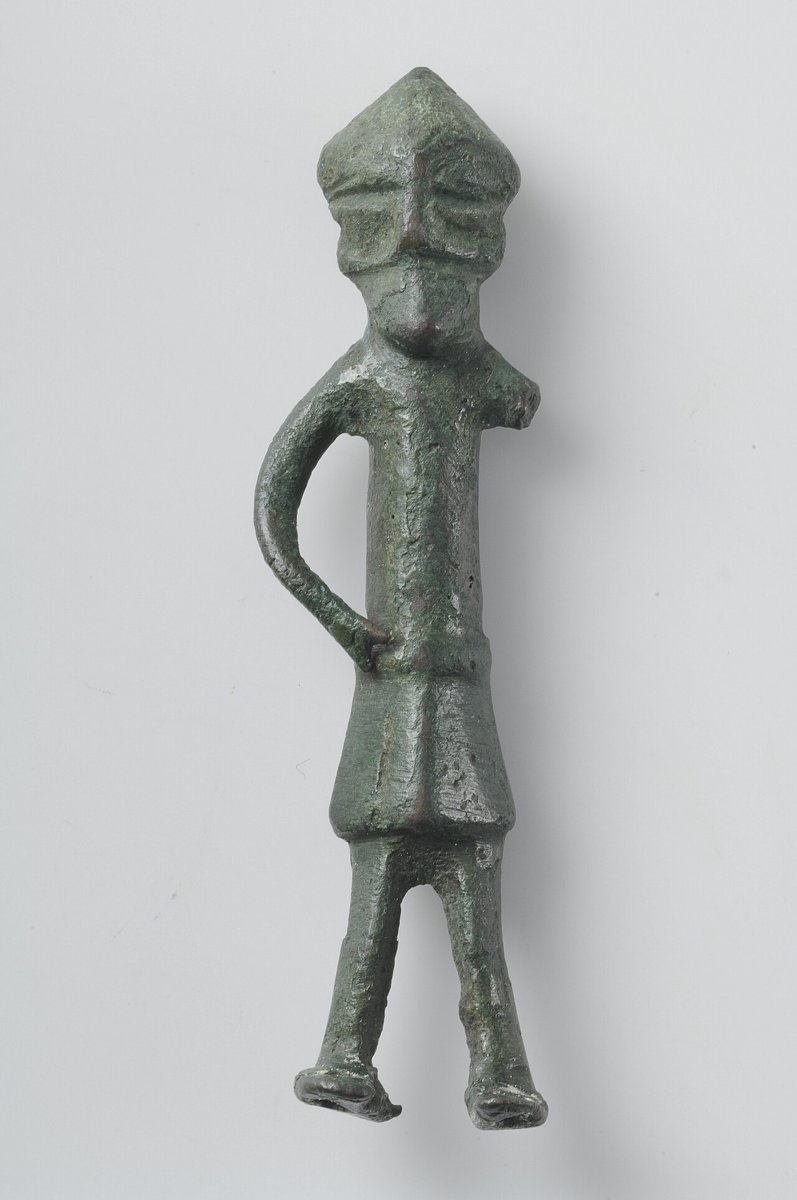
A useful exercise is to describe an object before naming its subject. “Seated figure beside two birds” records visible features; “Odin with Huginn and Muninn” interprets them. The interpretation may be persuasive, but it adds a further step. Likewise, literary accounts reveal how Odin was represented in preserved traditions, not what every household believed. Keeping these distinctions makes the miniature more interesting: it becomes a meeting point between material evidence, remembered stories, and the difficult task of recognizing a god.
The Evidence
The sources below support this article. Interpretations and limits are explained in the text; this is not an exhaustive research review.