
Beliefs & Stories · Deep dive
Hávamál: Hospitality, Judgment, and an Unreliable Teacher
In Brief
The poem’s advice is memorable because it tests judgment in difficult situations. Its changing voices also complicate the idea that every stanza delivers one consistent code.
On this page
The guest arrives in uncertaintyA useful silence is not an empty mindThe structure changes the teaching relationshipOdin’s authority is deliberately uncomfortableComparison can clarify without proving borrowingA translation can conceal a difficult detailSourcesThe guest arrives in uncertainty
Hávamál opens with the problem of entering an unfamiliar household. In the early stanzas, a traveler needs warmth, food, clothing, welcome, and the ability to judge other people. Hospitality is therefore both material and social. The guest depends on a host’s resources while trying to understand the relationships inside the room. The advice does not describe an effortless world of generous warriors; it repeatedly places people in situations where carelessness may expose them.
The contrast between home and travel sharpens this point. Familiar surroundings protect a person from some uncertainties that appear on the road. Intelligence becomes something portable, useful when wealth or an established position cannot settle the encounter. Read in sequence, the opening counsels are less like decorative sayings than a study of vulnerability. The traveler must participate in company without assuming that every invitation, appearance, or expression of friendship means exactly what it seems.
Sources for this section: 1
A useful silence is not an empty mind
Carolyne Larrington’s study treats the poem’s observations as precise social wisdom rather than a pile of obvious maxims. This distinction helps explain its recurring interest in self-command. Advice about silence, moderation, and caution becomes meaningful because its application depends on circumstances. Saying little may preserve a reputation; failing to understand what is happening may still expose a person as foolish. The poem is interested in judgment, not merely in a mechanical rule to remain quiet.
That reading also prevents a misleading use of isolated quotations. A maxim can appear universally applicable when detached from its neighboring stanzas. Within a sequence of social situations, it becomes one tool among several. The reader has to decide what the counsel addresses and where its limits might lie. A wisdom poem can invite that work rather than eliminating it. Its authority rests partly on recognizable experience and partly on the listener’s willingness to test the observation.
Sources for this section: 2

The structure changes the teaching relationship
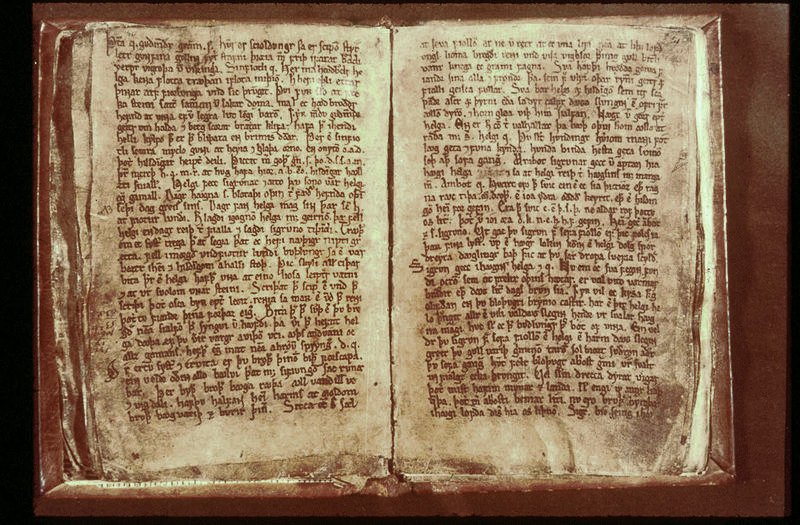
Edward Pettit’s edition describes the long debate over Hávamál’s composition and arrangement. The surviving poem moves among general counsels, narrative episodes, an address to Loddfáfnir, and material concerning extraordinary knowledge. In the Loddfáfnir section, recurring invitations to receive advice give the teaching a more explicitly staged relationship: someone speaks, someone is addressed, and the value of listening is repeatedly asserted.
These transitions are worth noticing before accepting any reconstruction of an original poem. A modern editor can identify differences in form or subject without recovering the precise occasions on which passages were first composed or combined. The variation also affects reading. General advice can sound collective; a narrated experience can make wisdom personal; an address to a named listener can turn instruction into a scene. Treating all three as the same kind of utterance loses much of the poem’s texture and makes apparent contradictions harder to understand.
Sources for this section: 3
Odin’s authority is deliberately uncomfortable
Brittany Schorn’s research asks how the words of a speaker such as Odin can be trusted when the wisdom tradition itself depicts him as deceptive. Hávamál does not simply place moral perfection behind a divine name. Its account of acquiring the mead of poetry includes injury to people who trusted the speaker, creating tension between successful knowledge-seeking and reliable conduct. The teacher’s experience may explain his insight without making his behavior exemplary.
This produces a more demanding reading than identifying every first-person statement as a command to imitate Odin. A speaker can understand deception because he practices it. He can warn about vulnerability while exploiting it in others. The poem therefore allows practical wisdom and ethical unease to coexist. Paying attention to who is speaking, what experience is being claimed, and who suffered in that experience makes the teaching less comfortable but more revealing. Divine status does not remove the need to evaluate a voice.
Sources for this section: 4
Comparison can clarify without proving borrowing
Lilah Grace Canevaro compares Hávamál with Hesiod’s Works and Days. Her study notes their combinations of practical counsel, mythological passages, and catalog-like material, along with shared concerns about intellectual and material self-sufficiency. The comparison is valuable precisely because it does not require a direct line of borrowing from one poem to the other. Similar problems can encourage comparable ways of organizing advice.
This offers a way out of an unhelpful choice between perfect unity and accidental disorder. A work of wisdom literature may shift between example, maxim, story, and enumeration because those forms perform different teaching tasks. The comparison does not prove that every transition in Hávamál is original or intentional. It does show why a modern expectation of continuous argument may be the wrong standard. Before removing a passage as irrelevant, ask what kind of knowledge it offers and how its form changes the encounter between speaker and listener.
Sources for this section: 5
A translation can conceal a difficult detail
A review of Jackson Crawford’s translation discusses the expression á brǫndum in the opening hospitality sequence. Crawford renders it through the familiar idea of a threshold while explaining in commentary an interpretation involving firewood. The example shows how a seemingly simple English line can contain a decision about an uncertain physical setting. A readable translation may solve the immediate difficulty for the reader while moving the uncertainty into a note.
For close reading, compare a few stanzas rather than collecting isolated inspirational lines. Check how translators handle the guest, the speaker’s pronouns, and repeated formulas of advice. Read the commentary where a concrete object or social custom seems unusually precise. Hávamál offers extraordinary access to a tradition of thinking about conduct, but it is not a transcript of a single household’s rules. Its insights survive through manuscript transmission, interpretive scholarship, and translations that must continually choose how much strangeness to preserve.
Sources for this section: 6
For the introductory context, read Odin in Stories and Small Objects.
The Evidence
The sources below support this article. Interpretations and limits are explained in the text; this is not an exhaustive research review.
- Hávamál — Henry Adams Bellows translation, opening stanzas ↗
- Carolyne Larrington — Hávamál and gnomic wisdom ↗
- Edward Pettit — Hávamál, introduction and edition ↗
- Brittany Schorn — speaker and authority in wisdom poetry ↗
- Lilah Grace Canevaro — Hesiod and Hávamál ↗
- The Medieval Review — The Wanderer’s Hávamál ↗