
Life & Society · Deep dive
Bread, Hearths, and the Work Before Baking
In Brief
Charred loaves and carefully sampled grain reveal both household work and the unequal distribution of staple food.
On this page
Begin with the grain, not the loafCleaning and selecting a harvestWhat Danish evidence contributesBirka and the bakery questionTwo bread finds at close rangeIngredients and the setting of consumptionWhy the oven is only one part of the storySourcesBegin with the grain, not the loaf
A loaf is the last visible stage in a much longer sequence. Crops had to be harvested, cleaned, selected, reduced to meal, mixed, and heated. Archaeological evidence rarely preserves all these stages together. Charred grain can identify crops, while a finished bread fragment may preserve ingredients after they have been combined. A hearth or oven belongs to the heating stage but need not have served only one purpose. Reading these materials together therefore means reconstructing connections rather than treating every discovery as a complete recipe. The distinction also changes our picture of household labor: baking depended on earlier work that could be separated from the moment when the bread was needed.
Sources for this section: 1, 2, 3
Cleaning and selecting a harvest
Research at Uppåkra in southern Sweden explains how processing changed the composition of grain deposits. Threshing, winnowing, sieving, and hand sorting separated usable grain from other material. However, charred waste is not a faithful miniature of the original harvest because different components survive heating differently. The study also measured barley grains from Uppåkra and nearby settlements. Larger grain was particularly associated with certain hall contexts, while craft areas and neighboring sites often contained smaller grain. The interpretation is that selection after processing helped channel better grain toward particular households. This was agricultural wealth expressed through an ordinary staple, rather than through jewelry alone. The pattern covers much of the first millennium and should not be assigned exclusively to the Viking centuries.
Sources for this section: 1


What Danish evidence contributes
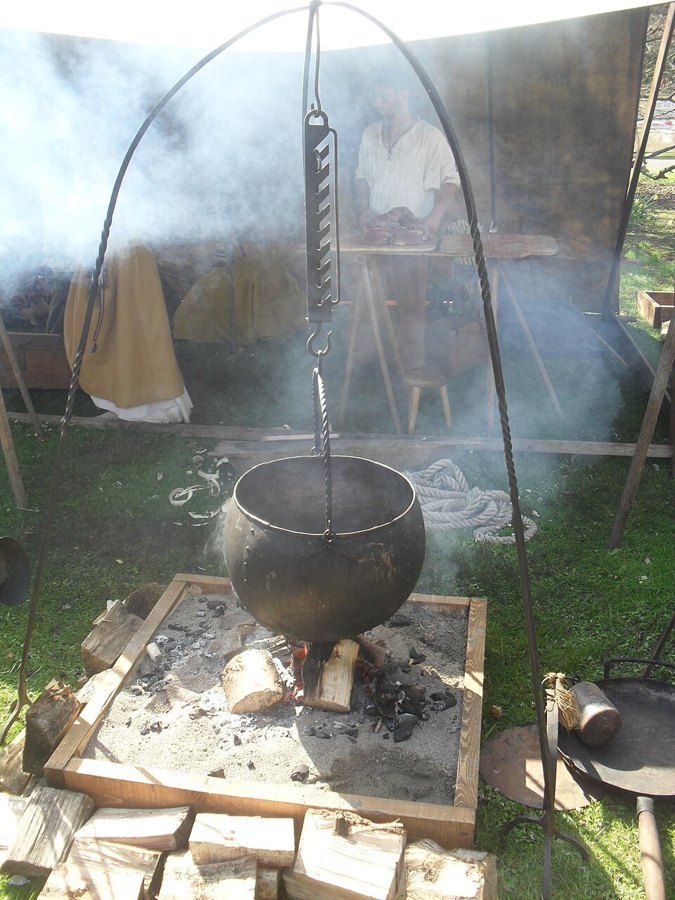
The National Museum of Denmark identifies barley and rye as major cereals, with other grains also cultivated. Its Danish account notes the concentration of wheat at affluent estates, including Tissø. It also discusses the literary contrast between coarse food and elite white bread in Rígsþula. The archaeological distribution and the poem are different kinds of evidence: a crop concentration is a material finding, whereas a poetic meal helps construct a social hierarchy. Their comparison is useful without making the poem a household inventory. The museum describes flatbread cooked on a pan or iron grid. This provides an alternative to imagining every baking operation inside a large enclosed oven.
Sources for this section: 2
Birka and the bakery question
Ann-Marie Hansson’s study of bread from Birka and other cemeteries on Björkö considered whether funerary loaves were prepared in individual homes or a town bakery. She emphasized their varied forms and the lack of identified baking ovens in the evidence available to her. On that basis, she favored preparation at domestic hearths. This is an argument from a particular assemblage and research context, not a permanent proof that no specialized baker ever worked in the town. It demonstrates how a question about production can be asked of finished food: regularity might indicate repeated manufacture under similar conditions, while diversity may support a less centralized explanation. Other explanations must still be considered.
Sources for this section: 3
Two bread finds at close range
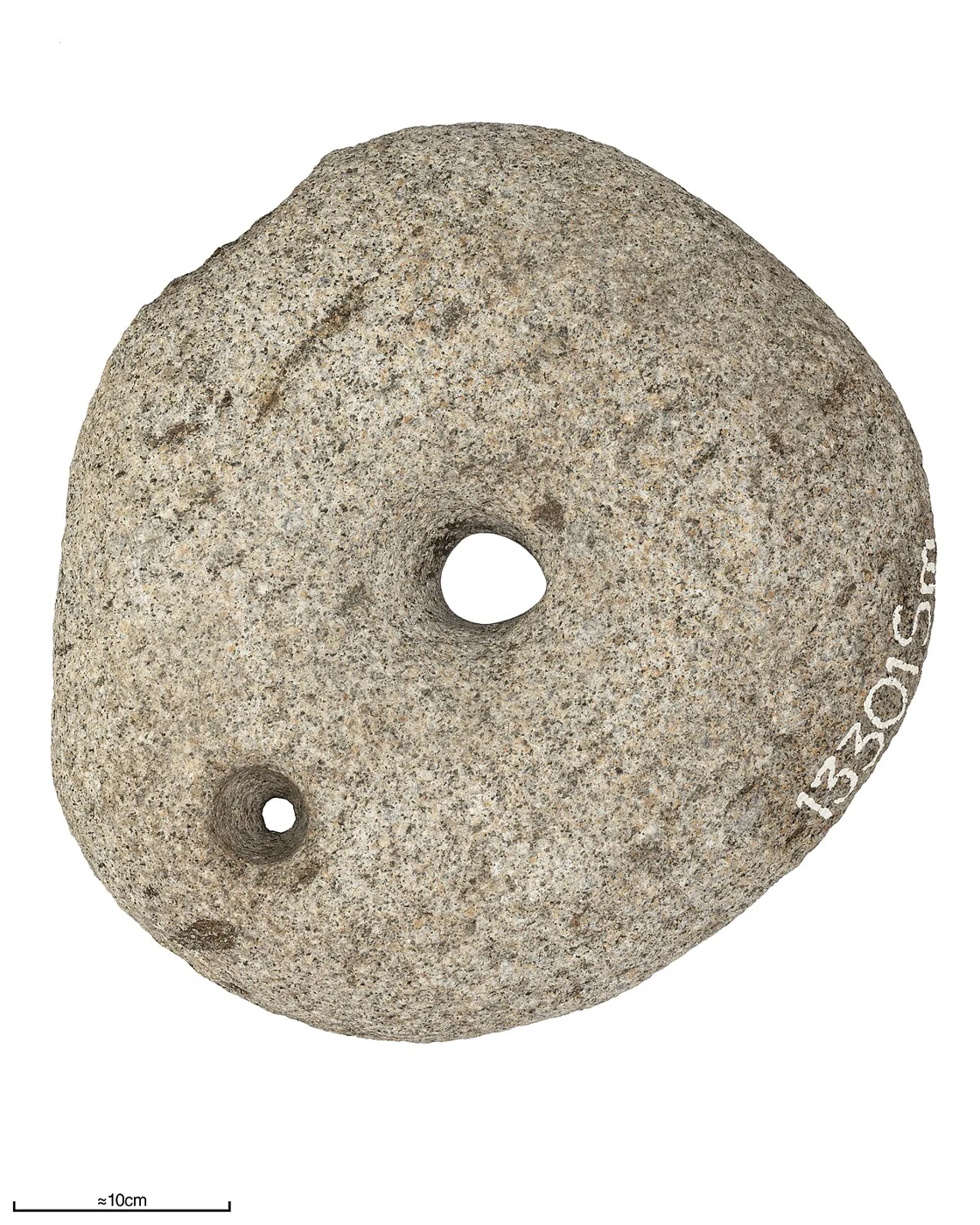
The Swedish History Museum catalogs two small round buns from Helgö as finely ground barley bread, probably cooked on a pan. Another entry, from Knivberga in Östergötland, describes pieces of a thicker round, flat loaf, probably made from barley and oats and heated on a pan or baking stone. These small records preserve meaningful differences in shape and proposed ingredients. They also retain uncertainty about the cooking surface. Neither object establishes one standard “Viking bread.” Together they show why comparing actual finds is more informative than selecting one modern reenactment recipe and presenting it as universal. A proposed pan-baking method is an interpretation of the remains, not a surviving instruction left by the cook.
Sources for this section: 4, 5
Ingredients and the setting of consumption
The Swedish History Museum’s broader food display discusses cereal breads with additions that could include flaxseed, honey, and dropwort tubers. These possibilities broaden the story beyond flour and water, but they are not a compulsory ingredient list for every loaf. The same display places bread in ordinary meals, feasts, and graves. Context matters because food deposited with the dead may have been selected for reasons different from a weekday meal. A funerary loaf can establish that a type of food existed and was considered appropriate for that event. It cannot by itself tell us how frequently people ate it during life or whether all households could obtain its ingredients.
Sources for this section: 6
Why the oven is only one part of the story
The combined evidence supports several levels of explanation. Grain studies can reveal preparation and distribution; individual loaves can reveal form and ingredients; heating installations can suggest ways of cooking. None should automatically substitute for the others. A settlement without a recognized oven might still have produced bread at hearths. A fine-grained loaf is evidence of preparation, even if the quern that made its meal has disappeared. An affluent food assemblage can reveal unequal access without identifying the person who did the grinding. Looking across the sequence restores the work behind the finished object. Bread emerges as a product of agricultural choices, household routines, and social occasions, with regional and chronological differences that a single idealized kitchen cannot capture.
Sources for this section: 1, 2, 3, 4, 5, 6
The Evidence
The sources below support this article. Interpretations and limits are explained in the text; this is not an exhaustive research review.