

TRY IT AT HOME · MODERN INTERPRETATION
Barley & wheat skillet bread
Barley and wheat belong to the period’s cereal evidence. This mixed-flour dough and its proportions are our modern cooking interpretation; wheat was not equally accessible to everyone.
Get cooking ↓By Nordic Viking History · Reviewed 22 October 2026
Estimated time. This recipe has not yet been kitchen-tested.
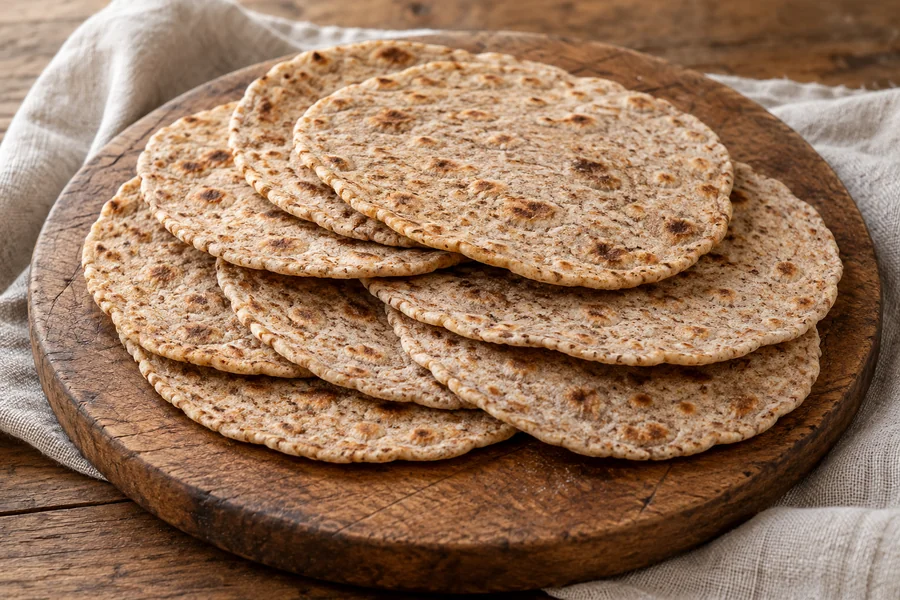
Ingredients
- 200 g barley flour
- 100 g wholemeal wheat flour, plus a little for rolling
- 200 ml water, plus extra if needed
- ½ tsp salt
Allergens: Gluten (barley, wheat)
Method
- Mix both flours and salt. Add the water gradually to make a soft dough; different flours absorb different amounts.
- Cover and rest for 20 minutes. Divide into eight pieces and roll on a floured surface to about 3 mm thick.
- Heat a heavy, dry skillet over medium heat. Cook each bread for about 2–3 minutes per side, until browned in places and cooked through. Reduce the heat if it scorches before the middle cooks.
- Keep the breads under a clean cloth and eat warm with soup.
What connects it to the Viking Age?
Barley and wheat belong to the period’s cereal evidence. This mixed-flour dough and its proportions are our modern cooking interpretation; wheat was not equally accessible to everyone.
Archaeological bread provides evidence for cereals, but not these proportions. The modern skillet method uses barley flour and wheat flour; other flours are not direct replacements.
National Museum of Denmark: Bread and porridge ↗ · Swedish History Museum: Food for the poor and the rich ↗
Use safe modern ingredients and equipment. Read the kitchen safety notes.
Back to the Viking pantry →Recipe quantities and instructions are modern editorial adaptations; no surviving Viking-Age Scandinavian cookbook supplies this recipe.