
A Norse story · 2 min read
How the world was made
Ice, heat, a primordial being, and the first humans
Several Eddic passages explain beginnings. Snorri combines them into an account in which the world is fashioned from Ymir’s body.
Before earth and sky
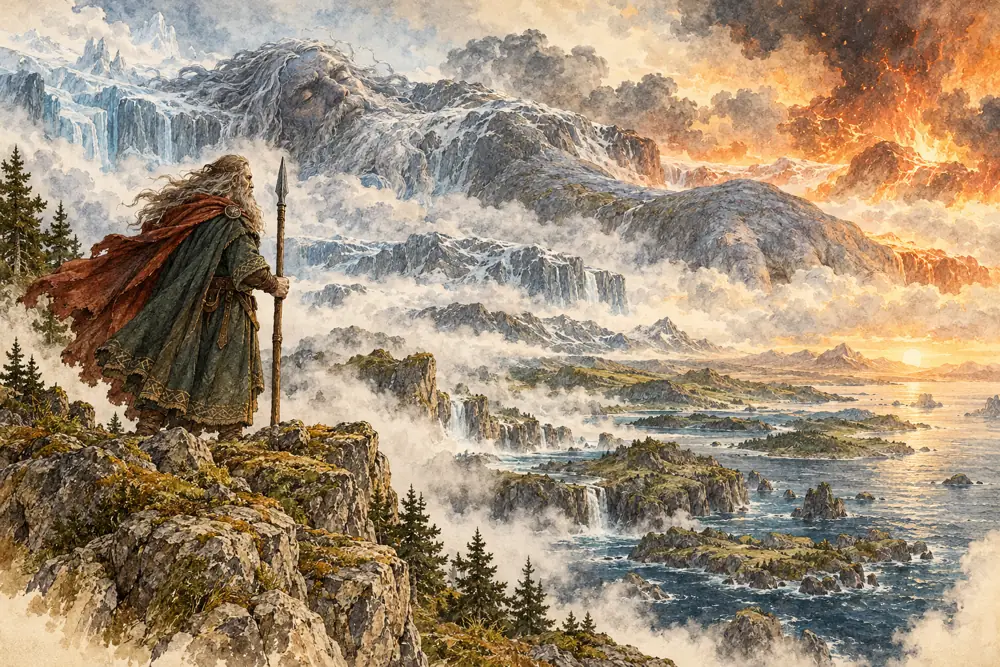
The familiar Norse creation account begins without the landscape people know. Völuspá recalls a time before earth, sky, grass, and sea. Snorri develops a more connected geography: cold and ice lie in one direction, heat and sparks in another, with Ginnungagap between. Where the frozen material meets warmth, life takes shape. Ymir emerges, and other beings arise from him. The cow Audhumla nourishes him with streams of milk. As she licks salty ice, she uncovers Buri. Buri’s son Borr becomes the father, with Bestla, of Odin, Vili, and Ve. The world’s beginnings thus include both the ancestry of gods and that of their opponents.
A world made through violence
Odin and his brothers kill Ymir. Snorri describes a flood of blood from which Bergelmir and his household escape, continuing the giant lineage. The brothers make the earth from Ymir’s flesh, the sea from his blood, mountains from his bones, and the sky from his skull. His eyebrows become a protective enclosure for human beings: Midgard. The transformation is not creation from nothing. A living being becomes the material of the inhabited world. Poetic passages in Vafthrúðnismál and Grímnismál also preserve this bodily geography, although they do not present every part of Snorri’s narrative in the same sequence.
Ordering the world and making people
The gods establish lights and the measures of time. Creation involves making a world intelligible as well as furnishing it with land and water. Snorri then tells how Odin, Vili, and Ve find two pieces of wood beside the sea and give them life and human faculties. They become Ask and Embla. Völuspá tells a related episode with Odin, Hoenir, and Lodur as the three givers. That difference should not be silently removed. The sources agree on beings who initially lack the qualities of living people and receive them from divine figures, but the participants and descriptions vary.
One tradition, several accounts
The image of Ymir’s body makes the natural world intimate and unsettling: stone, water, and sky are remnants of a primordial life. It also places violence near the beginning of cosmic order, long before Ragnarok threatens that order. These are medieval records of inherited mythic material, not a single scripture with a fixed creation chapter. Snorri writes in thirteenth-century Christian Iceland and organises poetry for his own literary purposes. Reading his account alongside the poems lets us enjoy the narrative while recognising where a later author has joined separate pieces into a coherent explanation.
Read behind the retelling
Sources & limits
The divine trio differs between Völuspá and Snorri. This is a comparison of surviving accounts, not a claim that every Viking believed an identical creation story.
- Snorri, Gylfaginning IV–IX: beginnings and the first people
- Völuspá, especially stanzas 3–6 and 17–18
- Vafthrúðnismál, stanzas 21 and 29–35
Retold in contemporary English. Dialogue is summarized, not presented as a translation. How to read our sources and versions.
Another thread to follow
2 min read
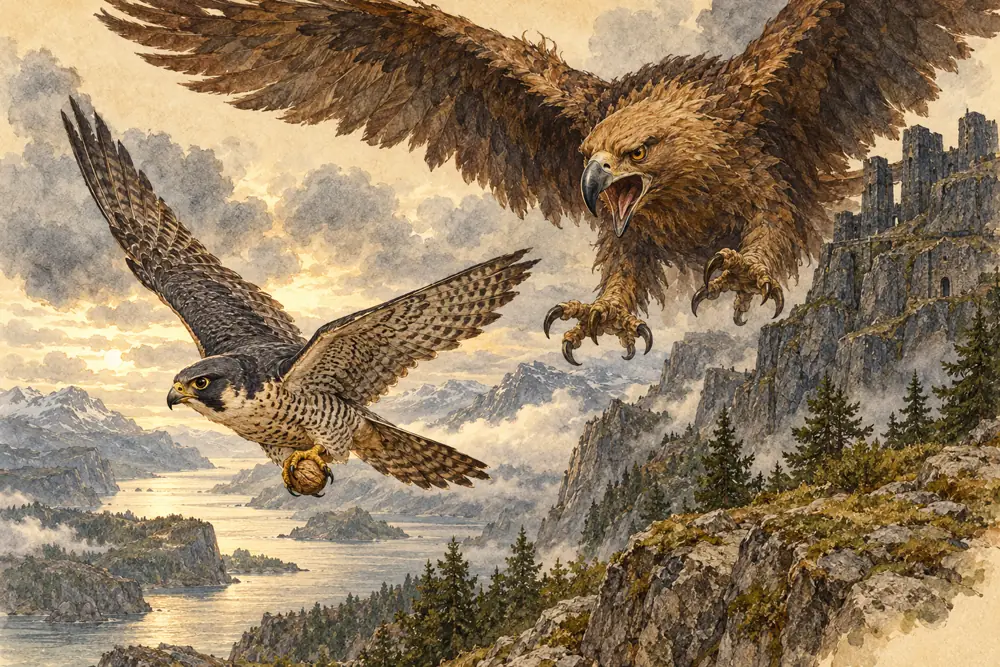
Idunn and the stolen apples
A bargain forced from Loki delivers Idunn to Thjazi. Without her, the gods discover that their youth is not secure.
Read the story ↗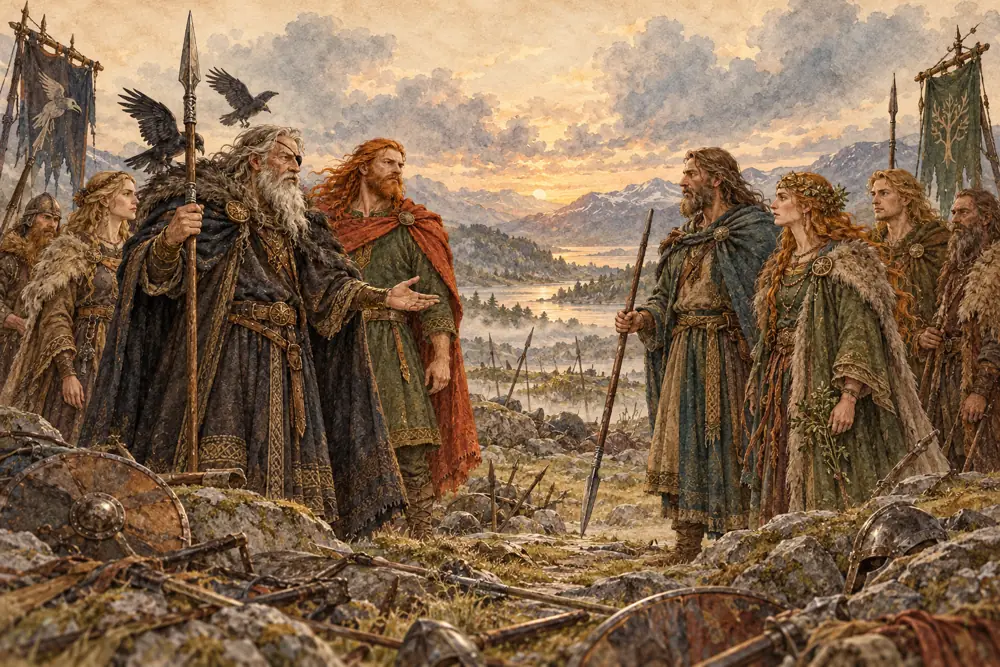
2 min read
The war between the Æsir and Vanir
An early war, a mysterious woman and an uneasy peace survive in accounts that do not fit together neatly.
Read the story ↗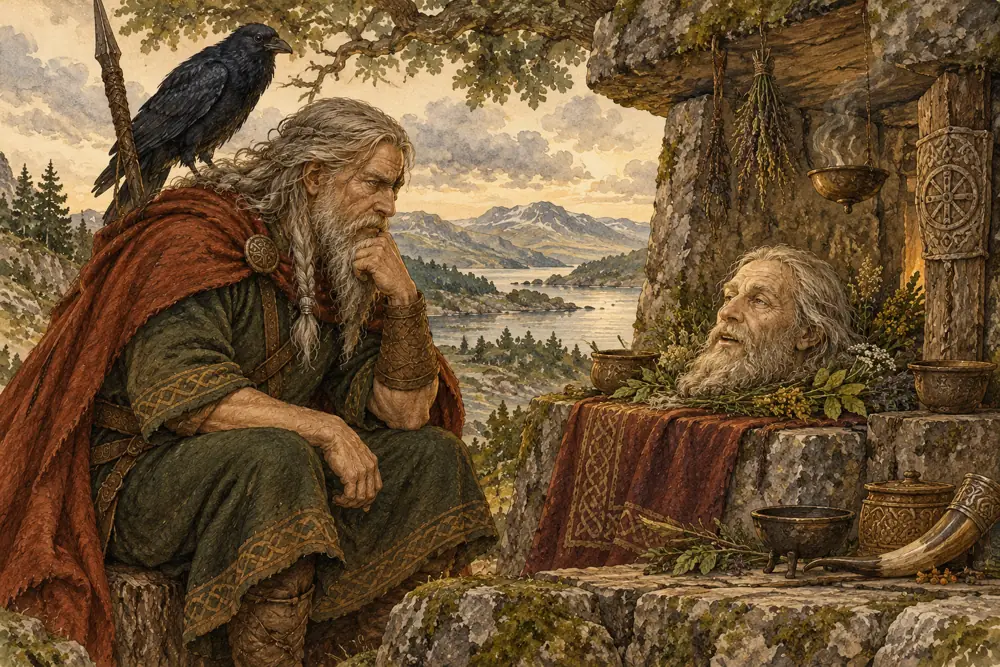
2 min read
Mimir’s speaking head
A hostage exchange ends in murder, but Odin preserves the counsellor whose advice remains indispensable.
Read the story ↗