
Jötnar & kin
Bestla
Odin’s mother in the surviving genealogies
Bestla is named as the mother of Odin and his brothers Vili and Ve in Gylfaginning. She is the daughter of the giant Bolthorn and the partner of Borr. Her position in the genealogy is brief but consequential.
Explore the stories ↓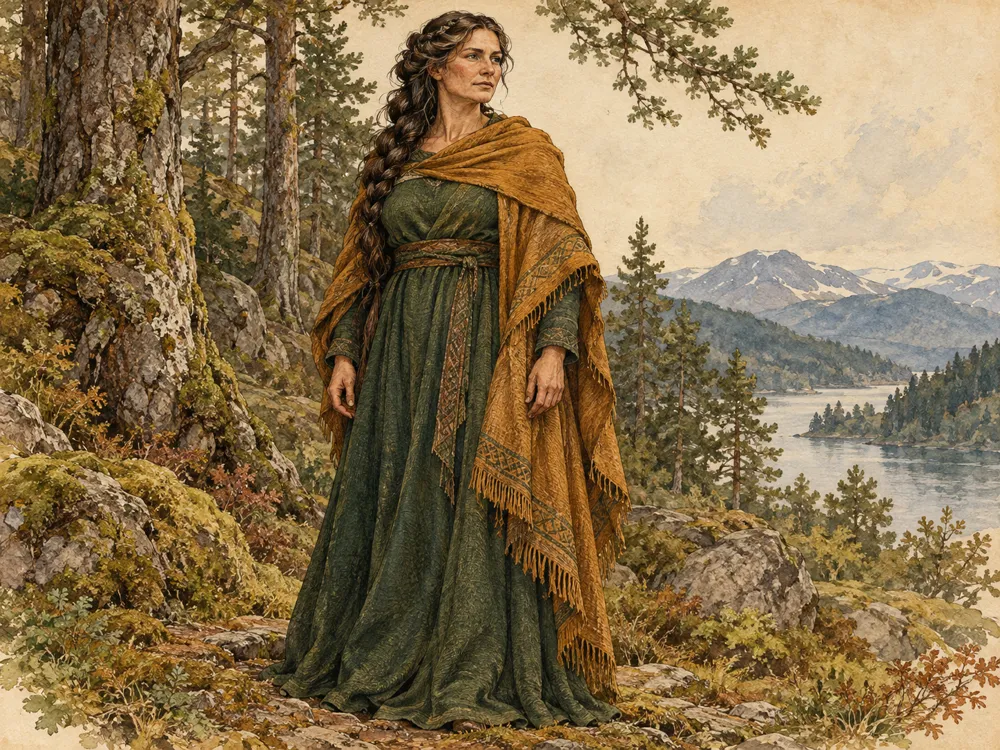
Kinship across boundaries
The gods’ ancestry already crosses the categories often simplified into “gods against giants.” Bestla’s place in the family means that Odin’s maternal ancestry belongs to the giant kindred. This does not make every god and giant interchangeable; it shows that antagonism and kinship coexist in the surviving stories.
A name without a surviving adventure cycle
Hávamál also names Bestla in the passage where Odin describes learning powerful songs from a son of Bolthorn. The teacher is not named there. The sources do not preserve a separate sequence of Bestla’s deeds, her childhood or her own account of creation. A profile should make that limitation clear. Genealogical importance is real evidence; a modern narrative filling all the silences would be a new work of imagination.
A mother in the creation genealogy
Snorri introduces Bestla when Borr takes a wife, before their sons kill Ymir and shape the world. This position matters: a woman of giant ancestry belongs within the divine family before the acts that establish the inhabited cosmos. Bestla herself is not said to join the killing or carry out a separate part of the construction. Her importance in this passage is genealogical, not an independently narrated adventure.
The unnamed brother in the wisdom verse
Hávamál’s reference to the son of Bölthorn identifies a teacher through Bestla’s father. Read alongside the family relationship, that makes the teacher her brother and Odin’s maternal uncle. The verse concerns nine powerful songs and a drink of precious mead; it does not name Bestla as the teacher. The family connection can be stated without supplying an otherwise unattested name or inventing lessons taught by Bestla herself.
Read behind the retelling
Sources & limits
The unnamed son of Bolthorn in Hávamál should not be confidently identified as Mimir without explaining that this is a proposal.
- Prose Edda: Gylfaginning (Brodeur, 1916)
- Poetic Edda: Hávamál (Bellows, 1923)
- Prose Edda: Gylfaginning, Brodeur translation (1916)
- Poetic Edda: Hávamál, public-domain Bellows translation
Retold in contemporary English. Dialogue is summarized, not presented as a translation. How to read our sources and versions.
Follow the thread
Stories & related reading: Bestla
2 min read
How the world was made
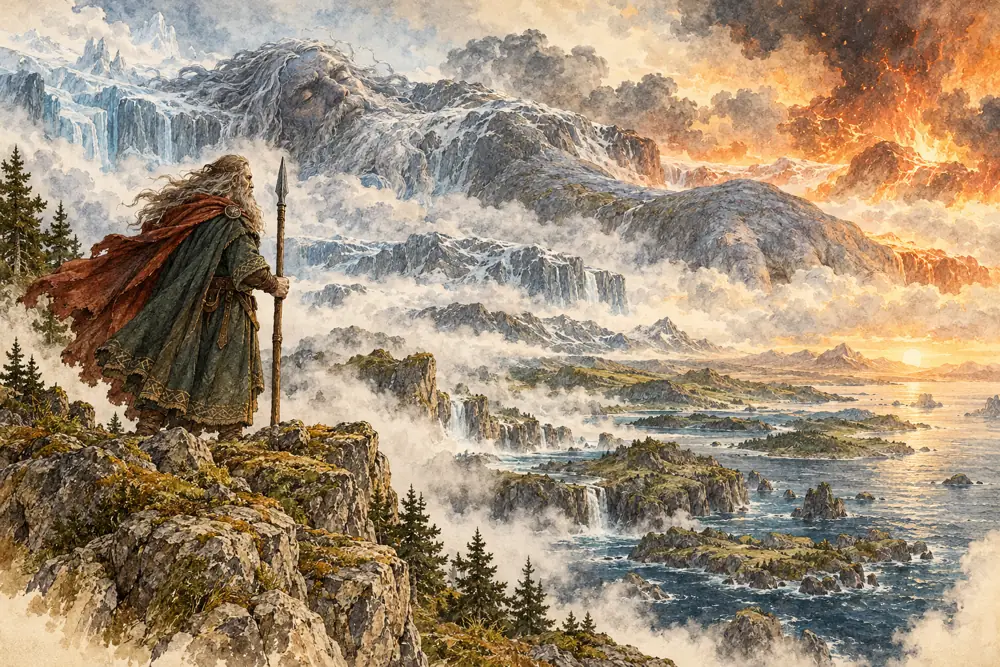
Several Eddic passages explain beginnings. Snorri combines them into an account in which the world is fashioned from Ymir’s body.
Read the story ↗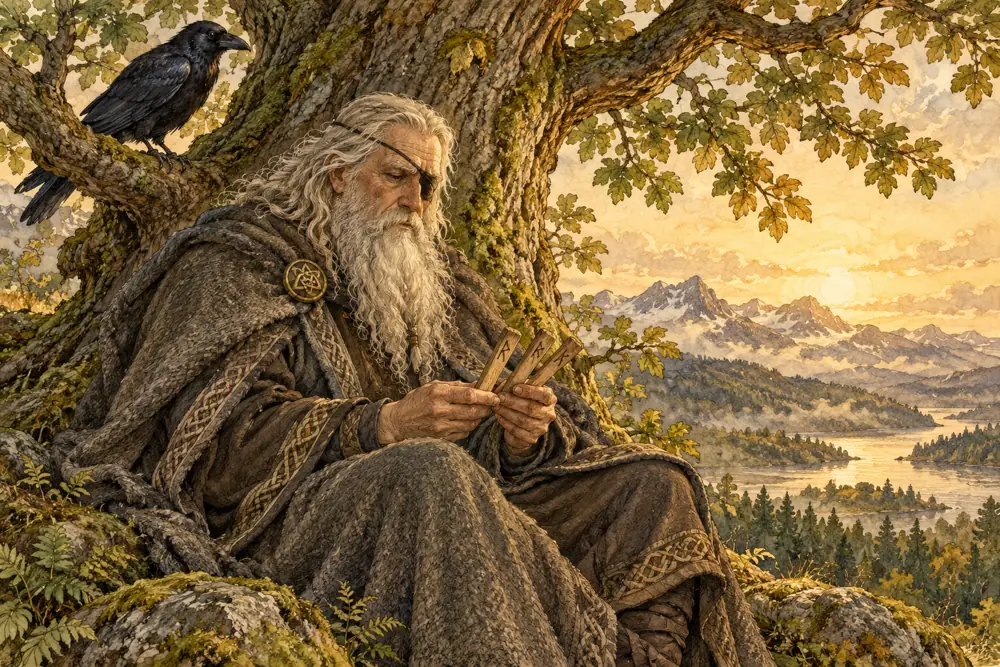
2 min read
Odin’s ordeal for the runes
Hávamál gives Odin a brief, disturbing account of sacrifice, deprivation and the gaining of runes.
Read the story ↗