
Gods & companions
Odin
Knowledge bought at a dangerous price
A ruler, wanderer, poet and seeker of hidden knowledge, Odin is never simply a kindly wise old man. His stories repeatedly ask what someone might sacrifice to see further than everyone else.
Explore the stories ↓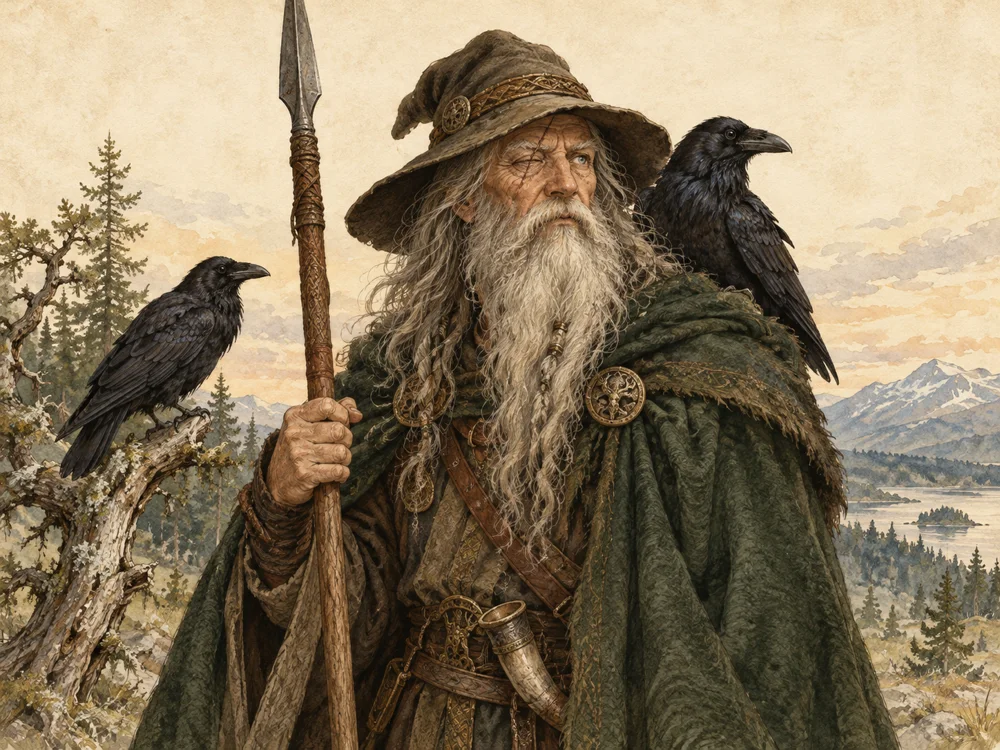
A god with many identities
Odin appears under many names, often concealing his identity while testing a host, questioning a giant or pursuing knowledge. In Snorri’s account he is the son of Borr and Bestla and the brother of Vili and Vé. Together the brothers kill the primordial being Ymir and shape the world from his body. Frigg is Odin’s wife, but divine genealogies connect him with several partners and many descendants. These relationships do not form one perfectly consistent family tree across every medieval source.
The eye, the tree and the mead
Three different stories are often blended into a single quest. At Mímir’s well, Odin leaves an eye as a pledge for a drink of wisdom. In Hávamál, he describes hanging for nine nights on a wind-swept tree, wounded by a spear and dedicated to himself, before taking up the runes. The poem does not name that tree in this passage, although it is commonly identified with Yggdrasil. The mead of poetry is another acquisition: Odin uses deception and an eagle transformation to carry it away from the giant Suttung. These are distinct narratives, not consecutive steps in a securely dated biography.
War, poetry and the dead
Odin’s hall Valhalla houses chosen battle-dead who prepare for the final conflict. His ravens Huginn and Muninn travel through the world and bring news; his eight-legged horse Sleipnir crosses boundaries inaccessible to ordinary travellers. His association with poetry belongs beside his connection to battle, rather than replacing it. The myths can show him granting victory, withholding it, breaking trust and using people for purposes they do not understand. A modern label such as “god of wisdom” captures only part of that unsettling combination.
Knowing the ending does not prevent it
At Ragnarök, Odin confronts Fenrir and is swallowed. His son Vidar avenges him, but the knowledge Odin has gathered does not make him invulnerable. Read his search for wisdom alongside that ending: the stories explore the tension between foresight and fate. Their drama depends on knowledge being costly and power having limits. They do not present a simple instruction that sufficient cleverness will always defeat death.
The guest whom a king puts between fires
In the framing story of Grímnismál, Odin and Frigg quarrel over the merits of their former fosterlings. Odin's boy Geirröd has become king, and Odin defends him against Frigg's charge of bad hospitality. Frigg sends a warning that a dangerous magician is coming. When Odin arrives disguised as Grímnir, the king arrests him and seats him between two fires. Eight nights pass. The king's young son Agnar brings the prisoner a drink, earning the god's favor. What follows is not an escape by brute force: Grímnir speaks about the worlds, divine dwellings and his many names. Only near the end does the king understand whom he has tortured. In the concluding prose, Geirröd rises to free his guest, stumbles and falls on his own sword. Agnar succeeds him. The boy's small act of kindness has mattered more than the king's power.
When Odin's own scheme fails
Hávamál also allows Odin to tell an embarrassing story about himself. He desires Billing's daughter, who tells him to return in the evening if he wants a private meeting. He believes the invitation. When he comes back, however, armed watchers and burning lights block the encounter. He tries again toward morning, when the household is asleep, and finds a dog tied in the woman's place. The woman has frustrated rather than rewarded his pursuit. This is a different Odin from the triumphant collector of wisdom: he has mistaken his own desire for knowledge of another person's intentions. The surrounding poem's generalizations about men and women are the voice of a particular literary passage, not a neutral guide to human nature.
Read behind the retelling
Sources & limits
Odin is not an all-knowing, morally perfect creator in the Christian sense. The medieval sources give overlapping, sometimes conflicting pictures.
- Gylfaginning, chapters 6–9, 15, 20, 38 and 51
- Hávamál, stanzas 104–110 and 138–145
- Skáldskaparmál, opening account of the mead of poetry
- Grímnismál, prose frame and closing stanzas; Henry Adams Bellows, 1923
Retold in contemporary English. Dialogue is summarized, not presented as a translation. How to read our sources and versions.
Follow the thread
Stories & related reading: Odin

2 min read
How the world was made
Several Eddic passages explain beginnings. Snorri combines them into an account in which the world is fashioned from Ymir’s body.
Read the story ↗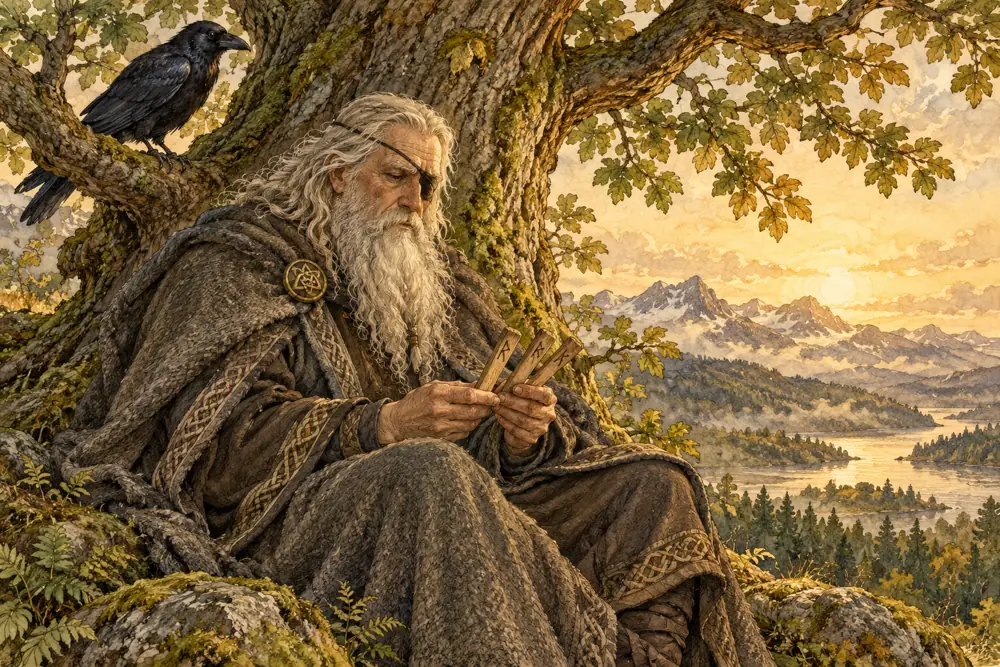
2 min read
Odin’s ordeal for the runes
Hávamál gives Odin a brief, disturbing account of sacrifice, deprivation and the gaining of runes.
Read the story ↗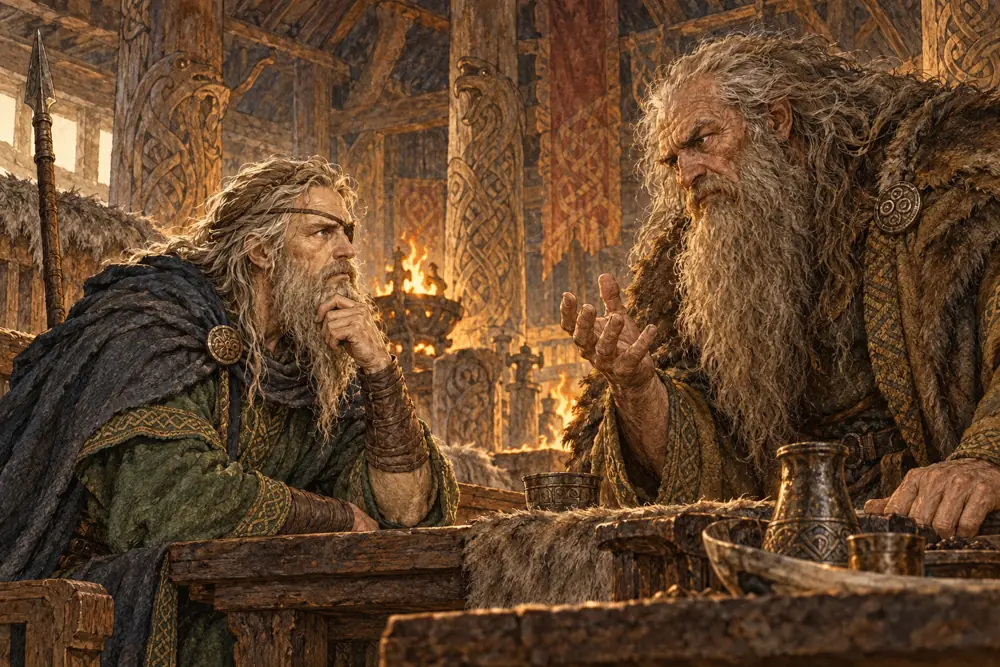
2 min read
Odin’s contest of wisdom
Odin tests Vafthrúðnir in a contest that moves from the structure of the cosmos to a secret only Odin can know.
Read the story ↗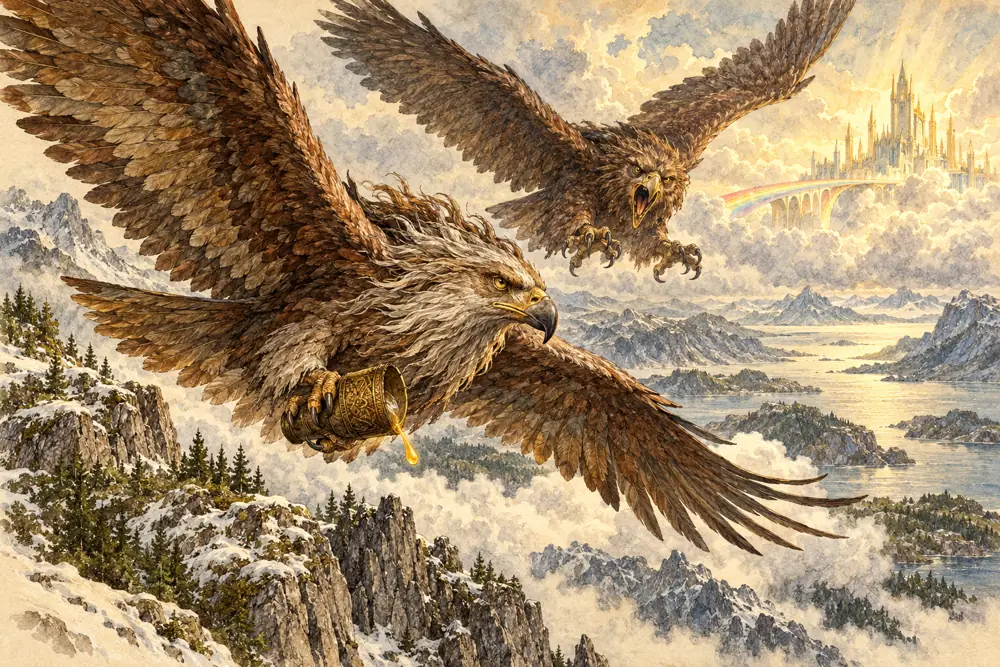
2 min read
The mead of poetry
The blood of Kvasir passes through murder, bargaining and deception before the poetic mead reaches the gods.
Read the story ↗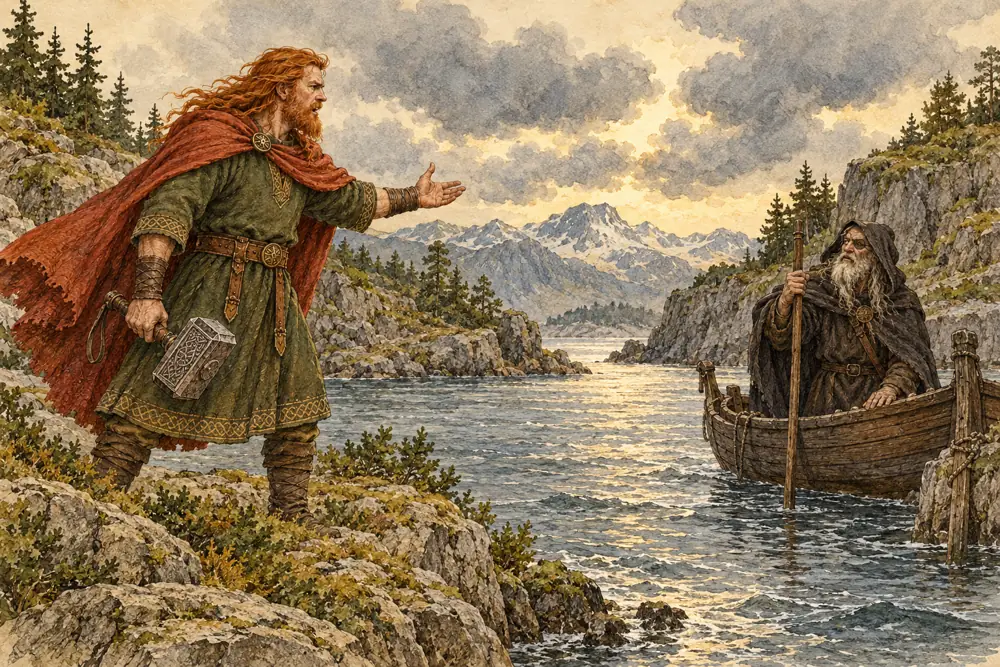
2 min read
Thor and the ferryman
Thor needs a ferry. Hárbarðr offers insults instead, and a verbal contest replaces the expected passage.
Read the story ↗
2 min read
The death of Baldr
Frigg tries to protect Baldr from every danger, but Loki finds the one promise she did not obtain.
Read the story ↗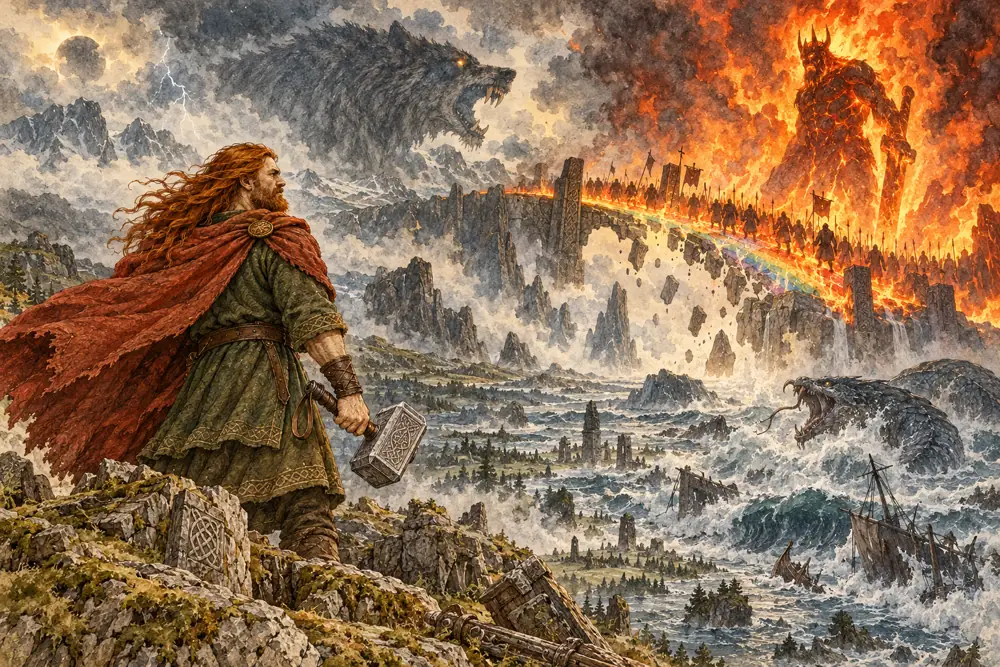
3 min read
Ragnarok: the breaking of the world
The end approaches through broken human bonds and broken cosmic restraints. The surviving texts also imagine a world that rises after the disaster.
Read the story ↗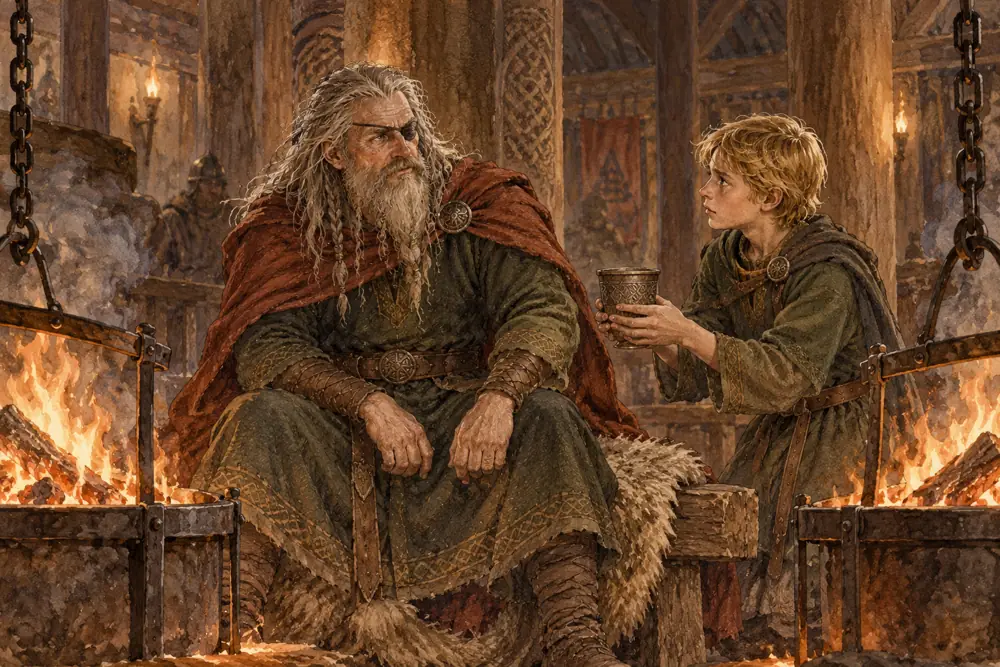
2 min read
Odin between the fires
Frigg’s warning, a cruel interrogation and a child’s kindness turn a royal hall into a place of revelation.
Read the story ↗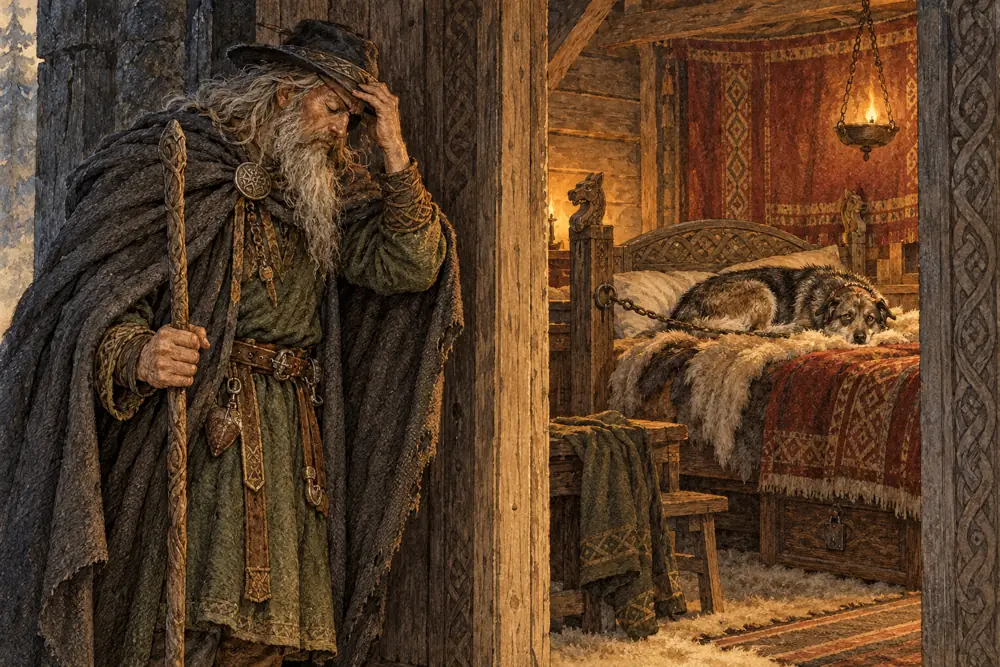
2 min read
Odin and Billing’s daughter
A brief episode in Hávamál shows Odin pursuing a woman who repeatedly frustrates his expectations.
Read the story ↗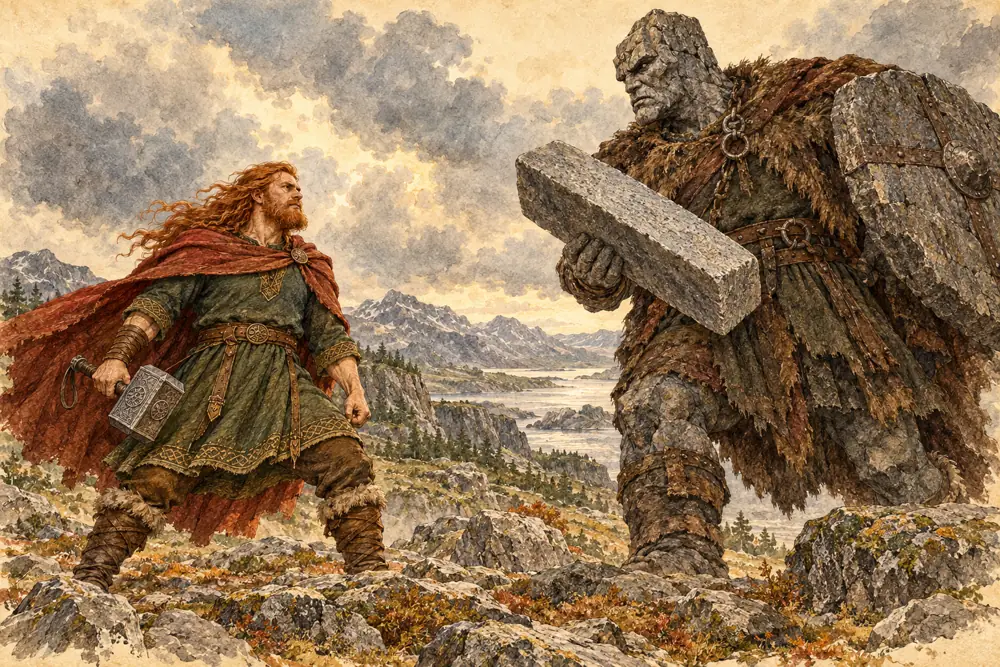
2 min read
Thor and the stone-hearted Hrungnir
Hrungnir pursues Odin into Asgard, boasts beyond hospitality, and challenges Thor to meet him armed.
Read the story ↗
2 min read
Loki’s quarrel at Ægir’s feast
Loki enters the gods’ feast and attacks one guest after another in a formal exchange of insults.
Read the story ↗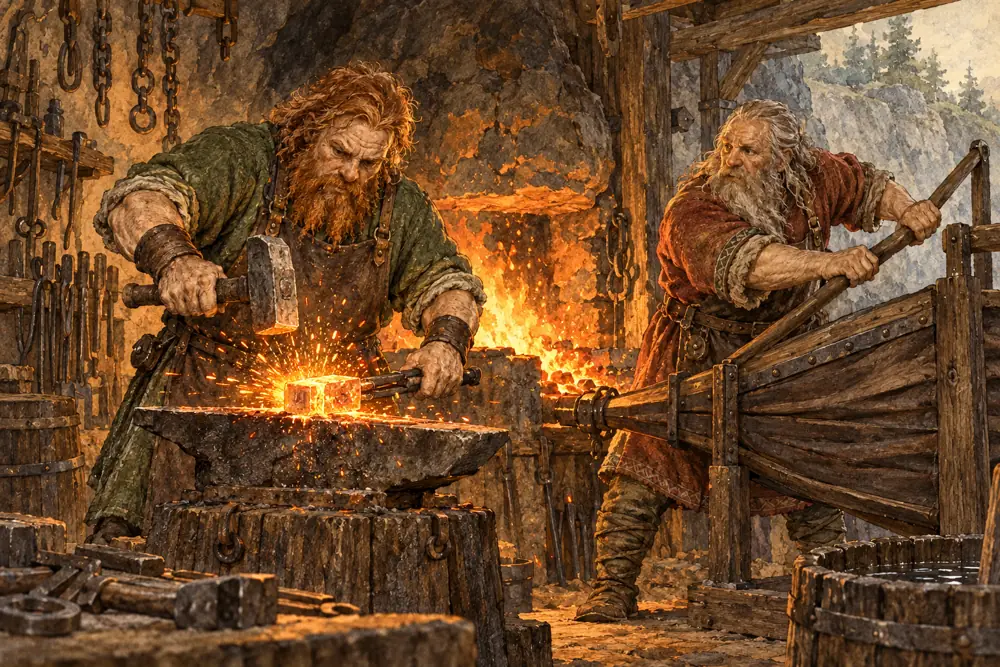
2 min read
The treasures of the gods
Loki’s attack on Sif’s hair sets two groups of dwarf craftsmen to work, bringing some of the gods’ most famous possessions into the story.
Read the story ↗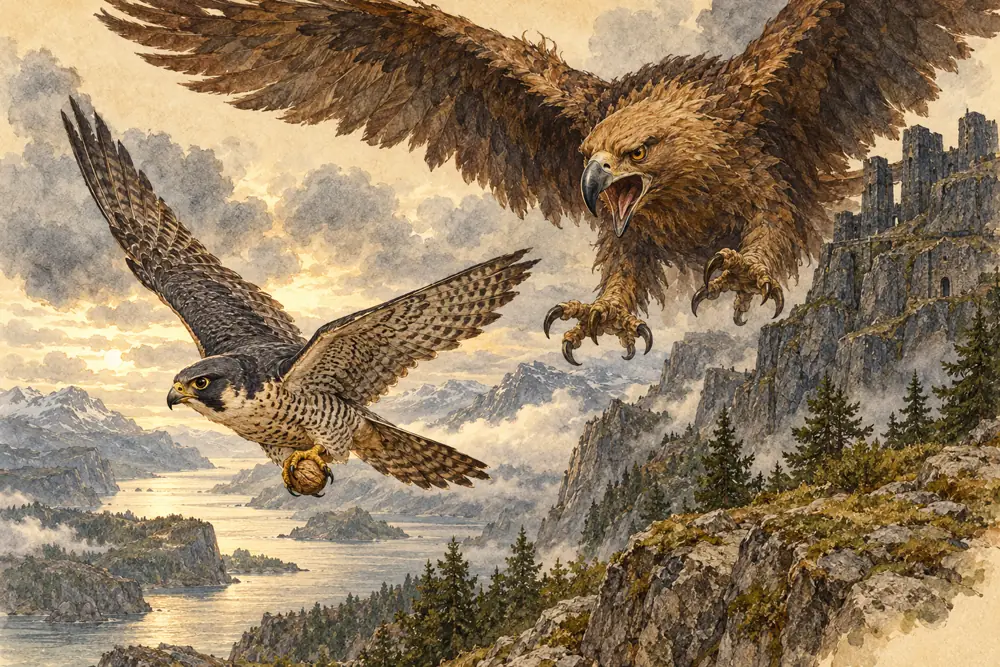
2 min read
Idunn and the stolen apples
A bargain forced from Loki delivers Idunn to Thjazi. Without her, the gods discover that their youth is not secure.
Read the story ↗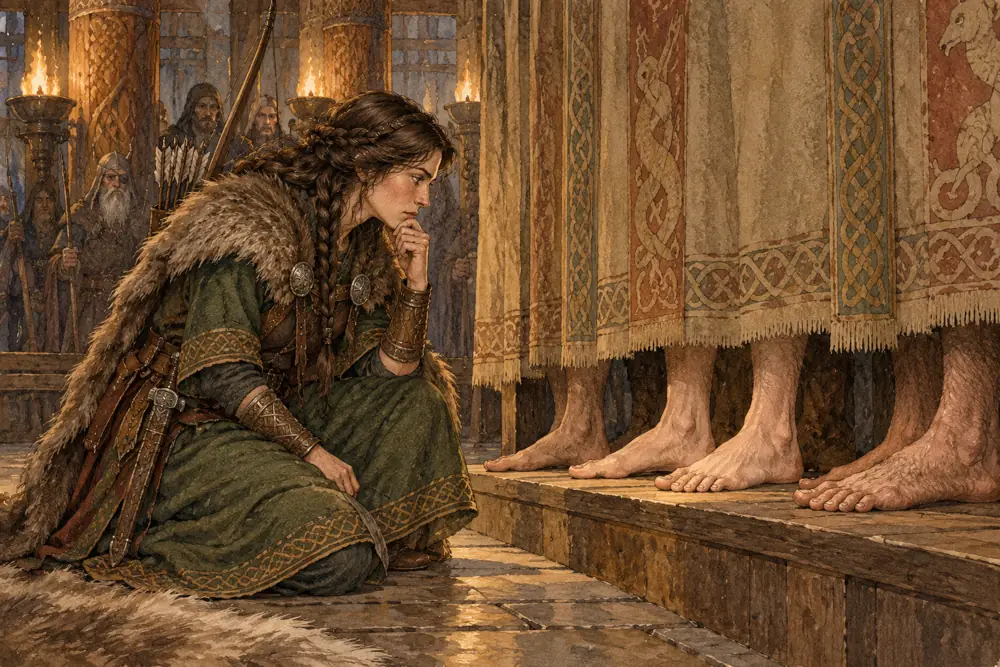
2 min read
Skadi chooses a husband
After Thjazi’s death, his daughter arrives armed at Asgard. The gods offer compensation, but the marriage that follows cannot reconcile two very different homes.
Read the story ↗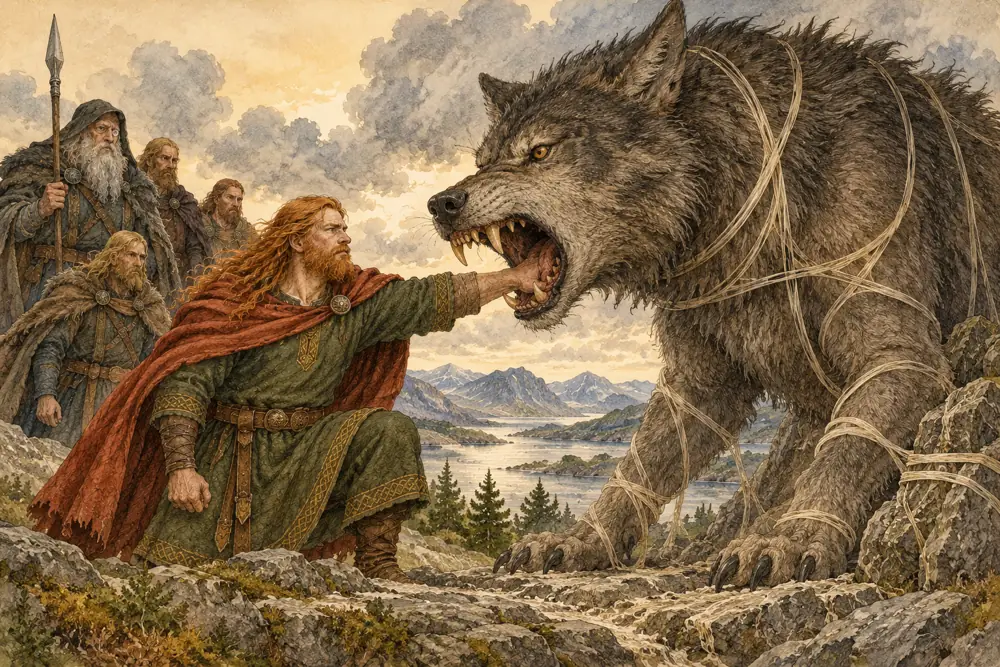
2 min read
The binding of Fenrir
The gods fear Fenrir’s future strength. Tyr places his hand in the wolf’s mouth while they test a restraint they never intend to remove.
Read the story ↗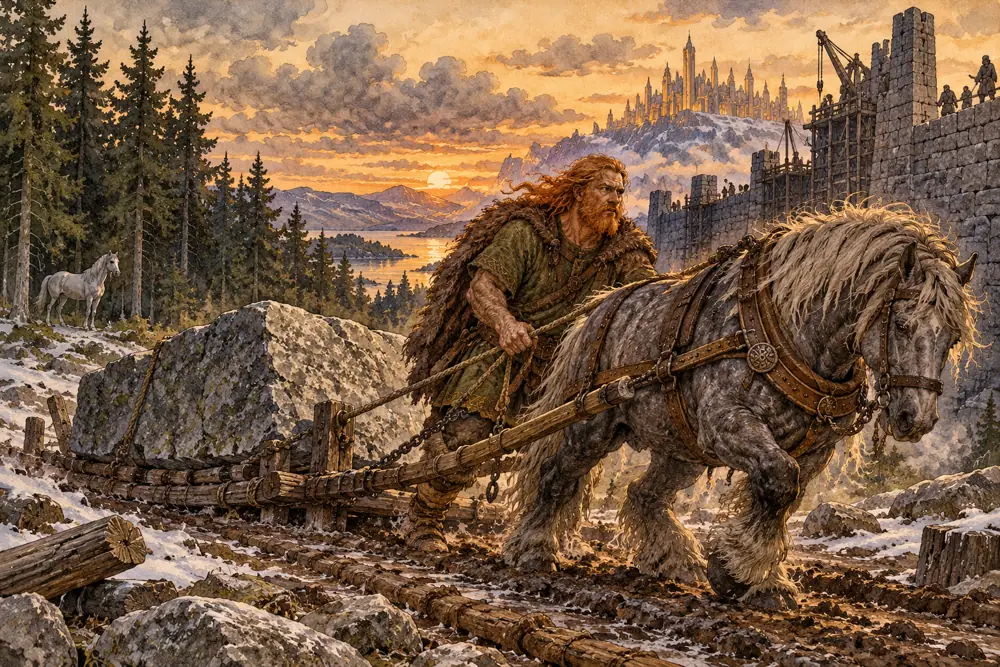
2 min read
The builder of Asgard’s wall
A builder nearly earns the sun, moon, and Freyja. Loki disrupts the work, and the gods’ protected settlement acquires a troubling history.
Read the story ↗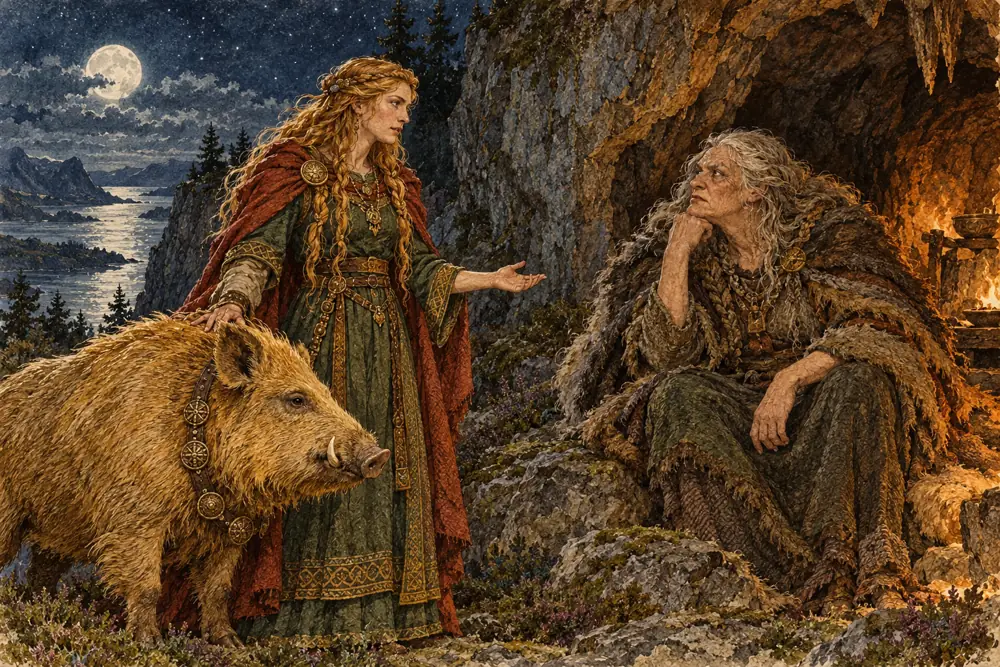
2 min read
Freyja, Hyndla, and Ottar’s ancestry
Freyja seeks a genealogy for her devotee Ottar. The encounter becomes a dispute about ancestry, memory, and the price of knowledge.
Read the story ↗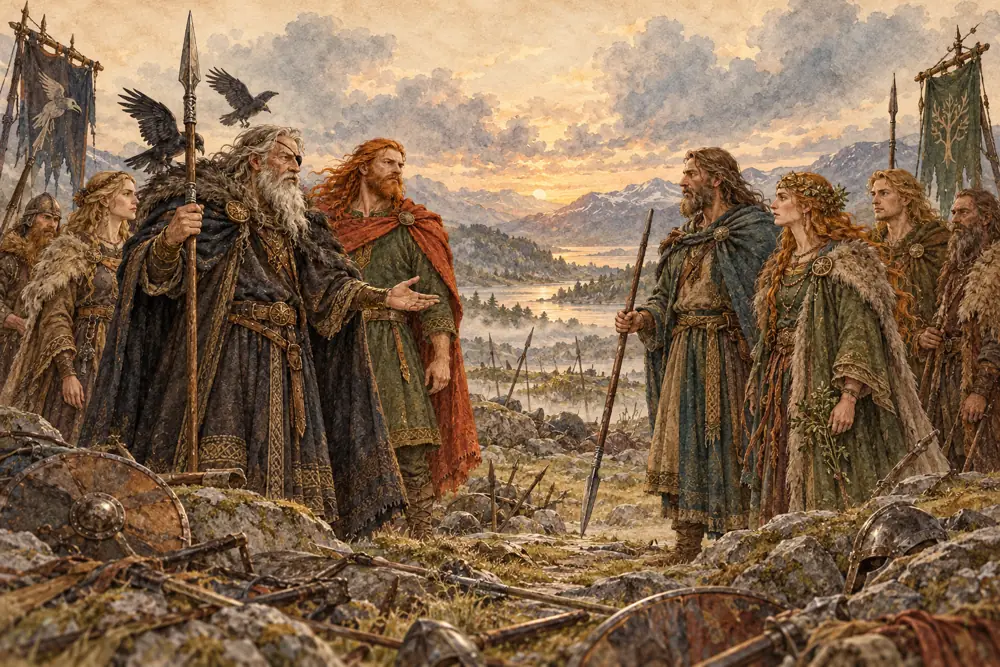
2 min read
The war between the Æsir and Vanir
An early war, a mysterious woman and an uneasy peace survive in accounts that do not fit together neatly.
Read the story ↗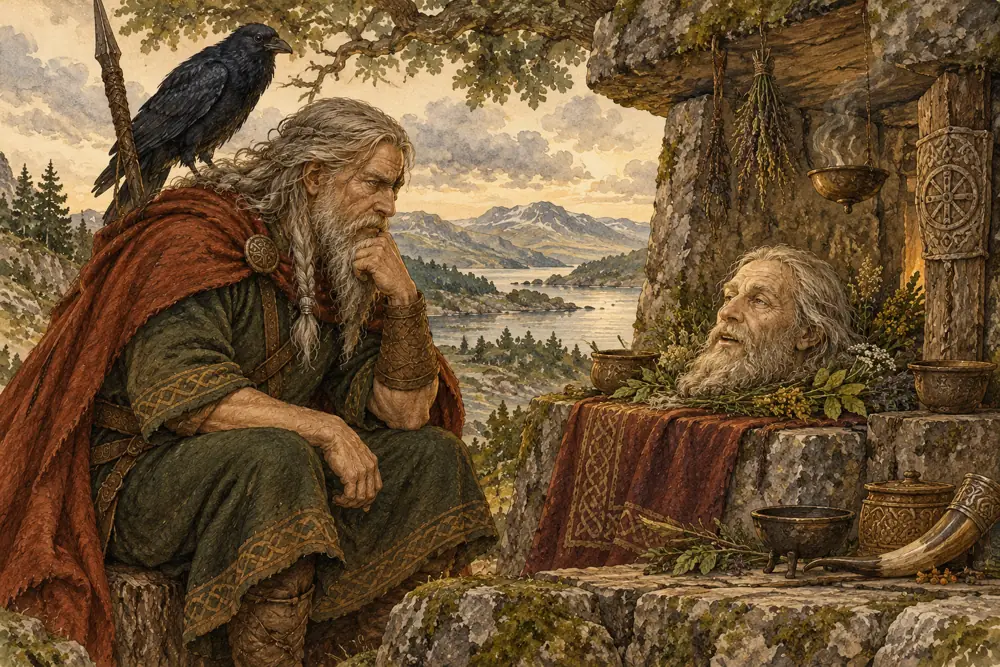
2 min read
Mimir’s speaking head
A hostage exchange ends in murder, but Odin preserves the counsellor whose advice remains indispensable.
Read the story ↗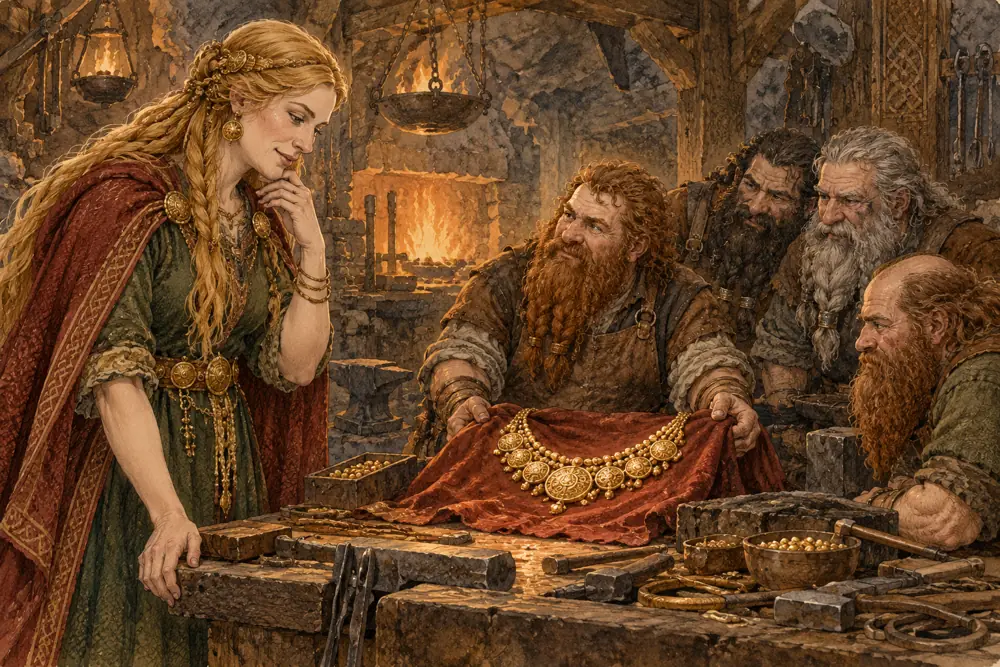
2 min read
Freyja’s necklace in Sörla þáttr
The famous necklace-acquisition story survives in a Christian-framed narrative, centuries after the Viking Age.
Read the story ↗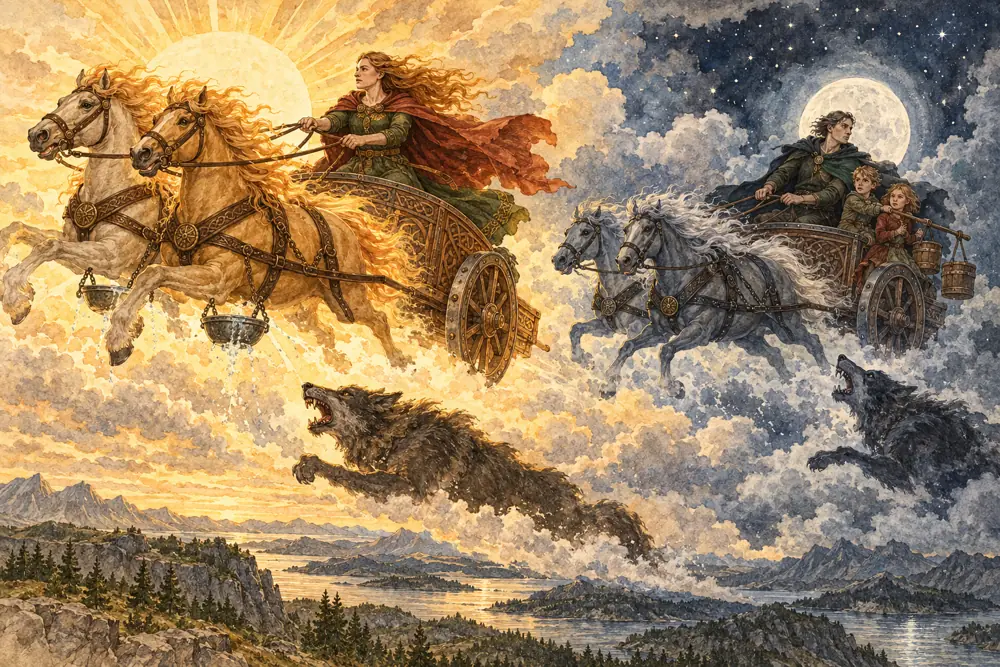
2 min read
Sun and Moon on their appointed paths
The lights of the sky become travellers with names, companions and enemies.
Read the story ↗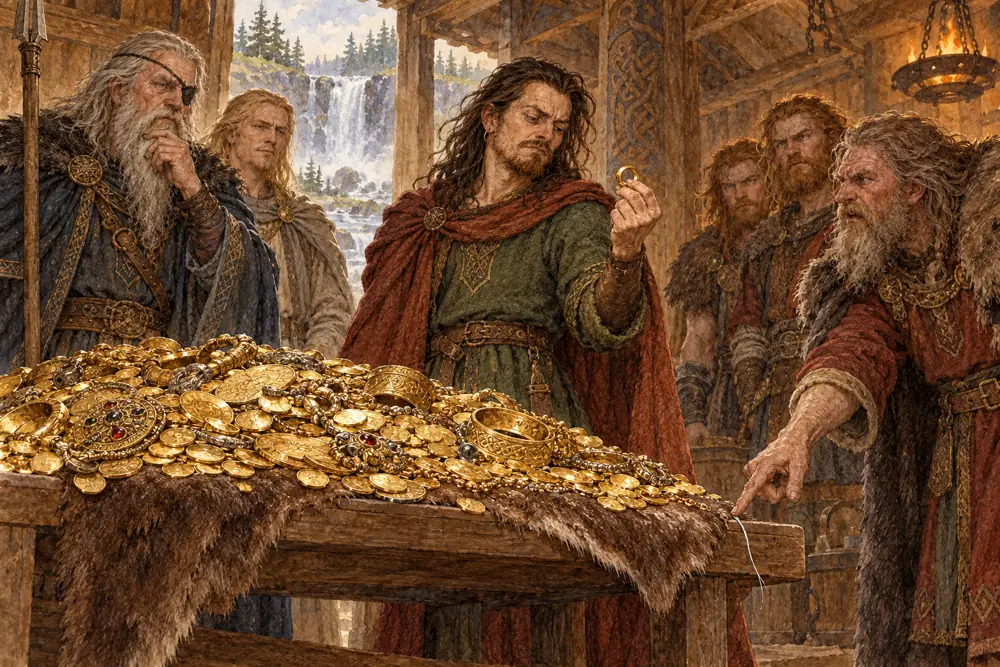
2 min read
Loki and the otter’s ransom
An apparently easy catch traps three gods in a deadly compensation claim and sets a heroic legend in motion.
Read the story ↗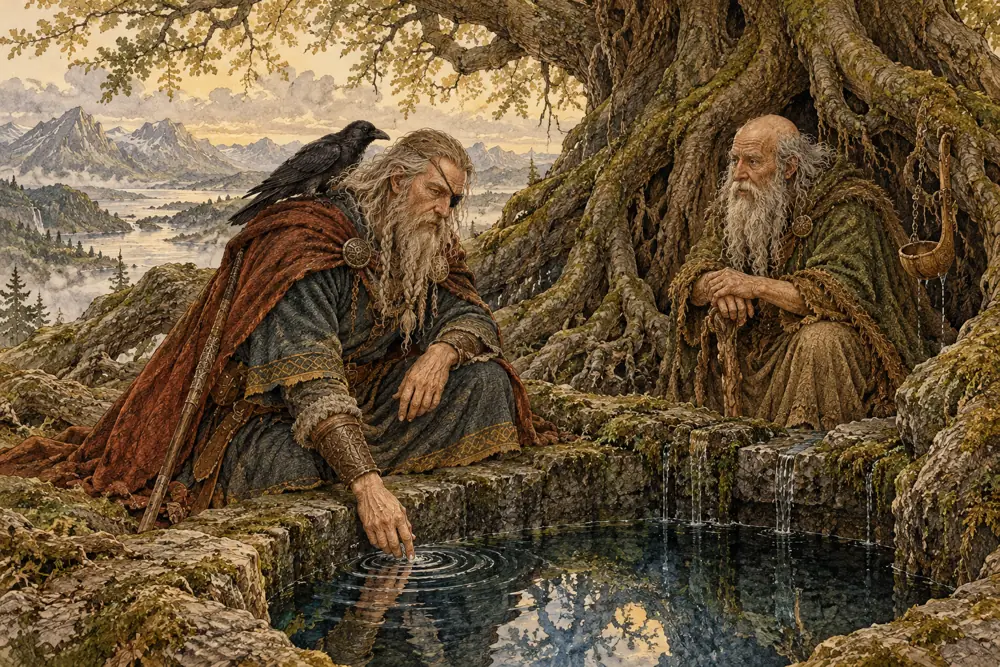
2 min read
Odin’s eye at Mimir’s well
Even Odin cannot simply command the knowledge held beneath the world-tree.
Read the story ↗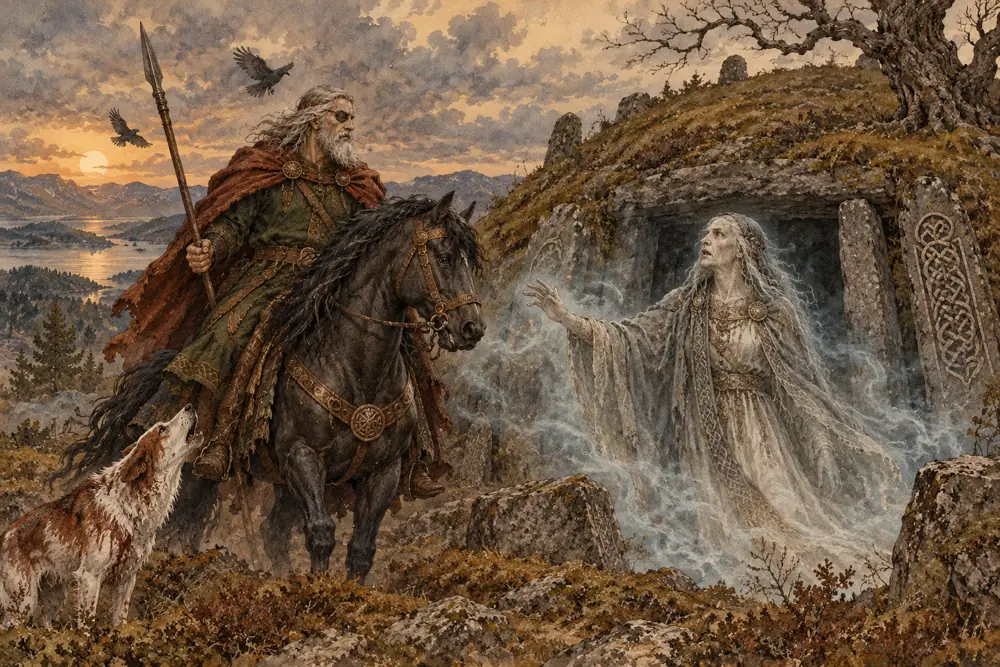
2 min read
Baldr’s dreams and the awakened seer
A disturbing dream sends Odin beneath the world, where preparations for a guest reveal the danger facing his son.
Read the story ↗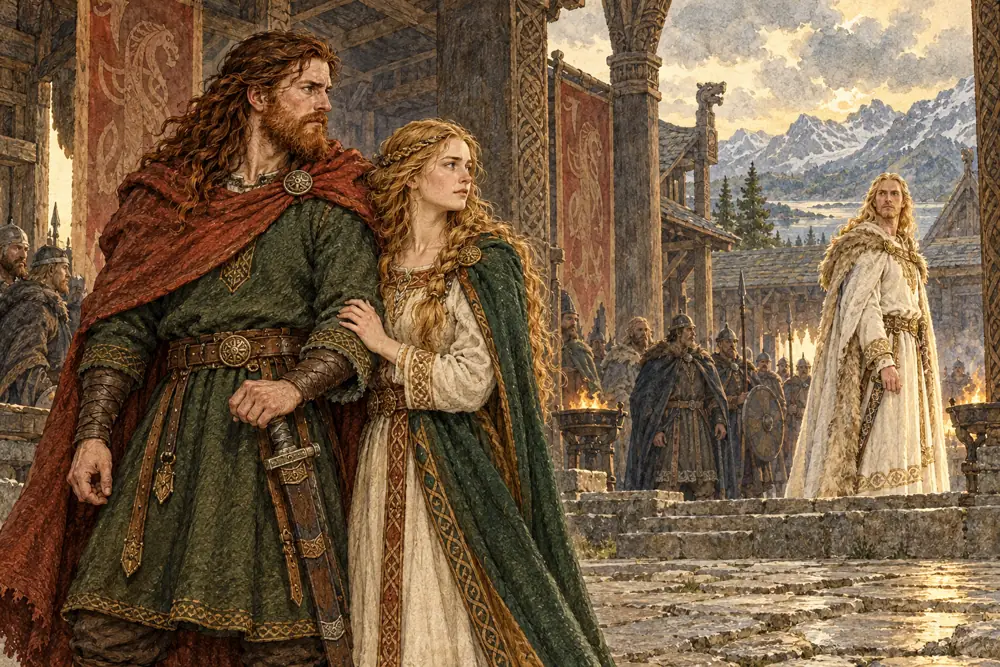
2 min read
Balder, Hother and Nanna in Saxo
Saxo’s Danish history places familiar names in a very different struggle, with a human hero confronting a divine rival.
Read the story ↗
2 min read
Odin and Rinda in Saxo
Saxo’s disturbing narrative makes the birth of Balder’s avenger the result of deception and sexual violence.
Read the story ↗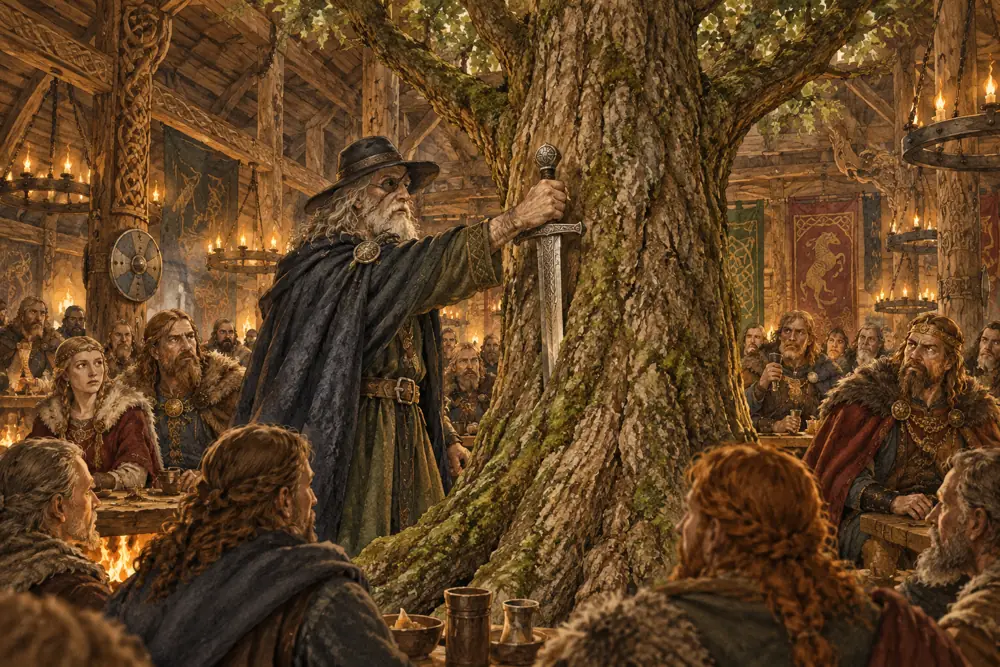
2 min read
Odin’s sword in the hall-tree
An unnamed one-eyed stranger places a sword in the tree inside Volsung’s hall. Sigmund can draw it out; the new bridegroom cannot forgive him for keeping it.
Read the story ↗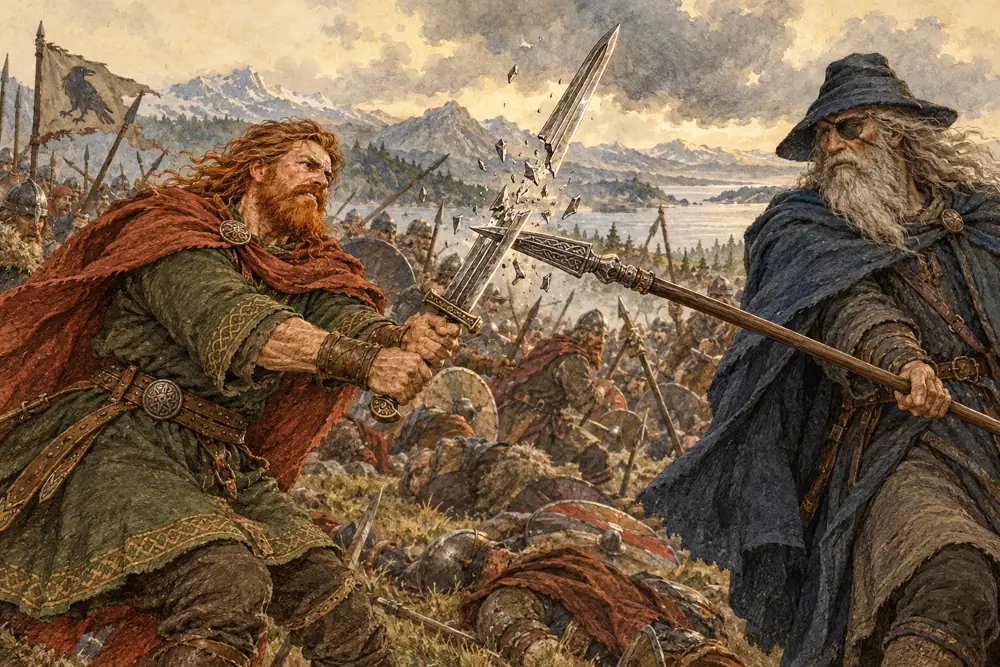
2 min read
When Odin breaks Sigmund’s sword
Sigmund’s last battle ends when a one-eyed stranger meets his sword with a pole weapon. The dying king understands that Odin’s support has ended, but asks that the broken blade be kept for his unborn son.
Read the story ↗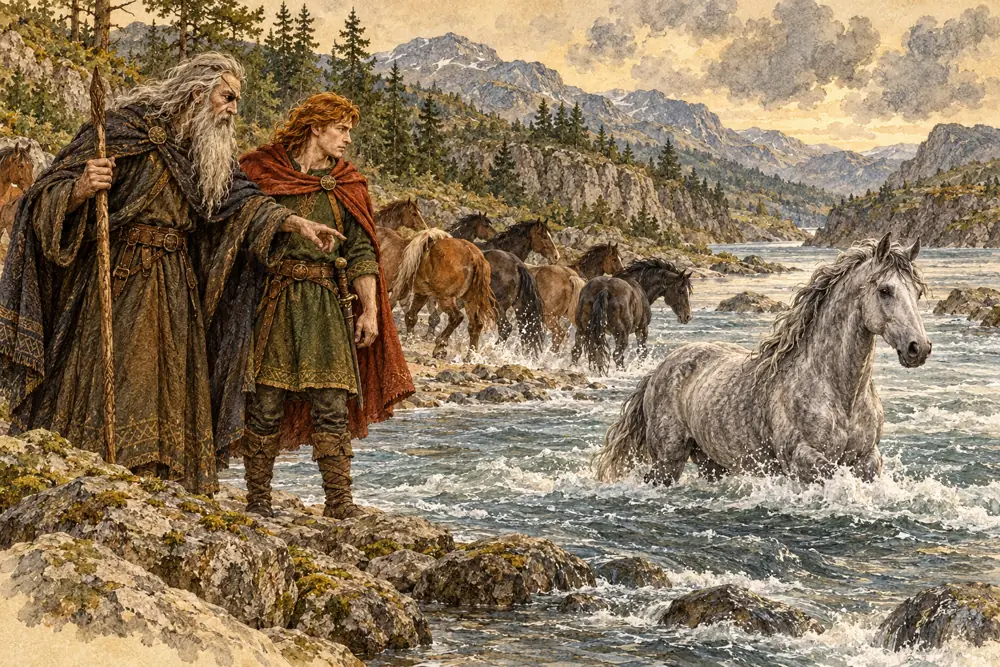
2 min read
Odin helps Sigurd choose Grani
A long-bearded stranger helps the young Sigurd test a herd of horses. The one that remains in the river becomes Grani, whose ancestry reaches back to Odin’s own horse Sleipnir.
Read the story ↗
2 min read
The old man’s advice before Fafnir’s death
Regin tells Sigurd where to strike Fafnir but dismisses his practical fear of the dragon’s blood. A mysterious old adviser supplies the missing precaution.
Read the story ↗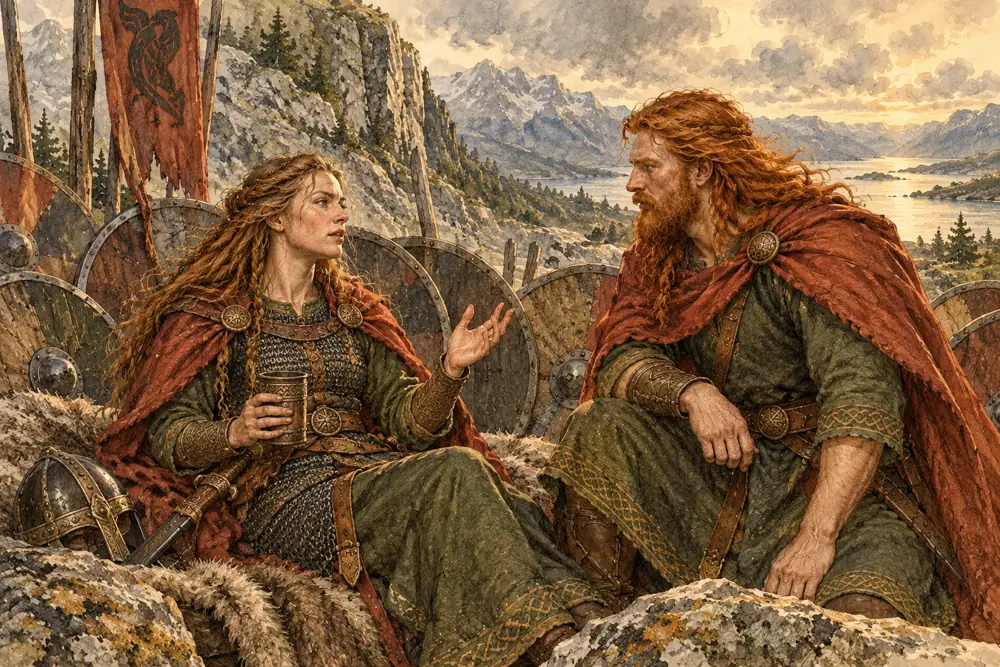
2 min read
Sigrdrifa defies Odin and wakes from enchanted sleep
Sigrdrifa chooses a battle’s outcome against Odin’s wishes. When Sigurd wakes her, she explains the punishment and offers him knowledge rather than remaining a silent rescued figure.
Read the story ↗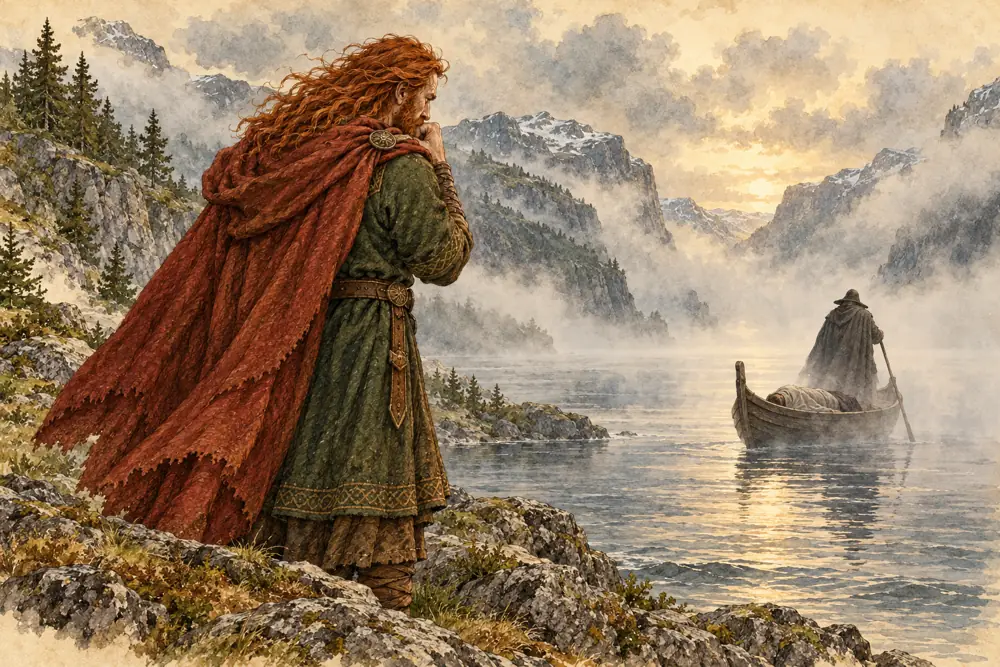
2 min read
Sinfjotli and the vanishing boatman
After Sinfjotli dies from poisoned drink, Sigmund encounters a stranger with a small boat. The stranger takes the body and vanishes; he is commonly interpreted as Odin, though the scene does not name him.
Read the story ↗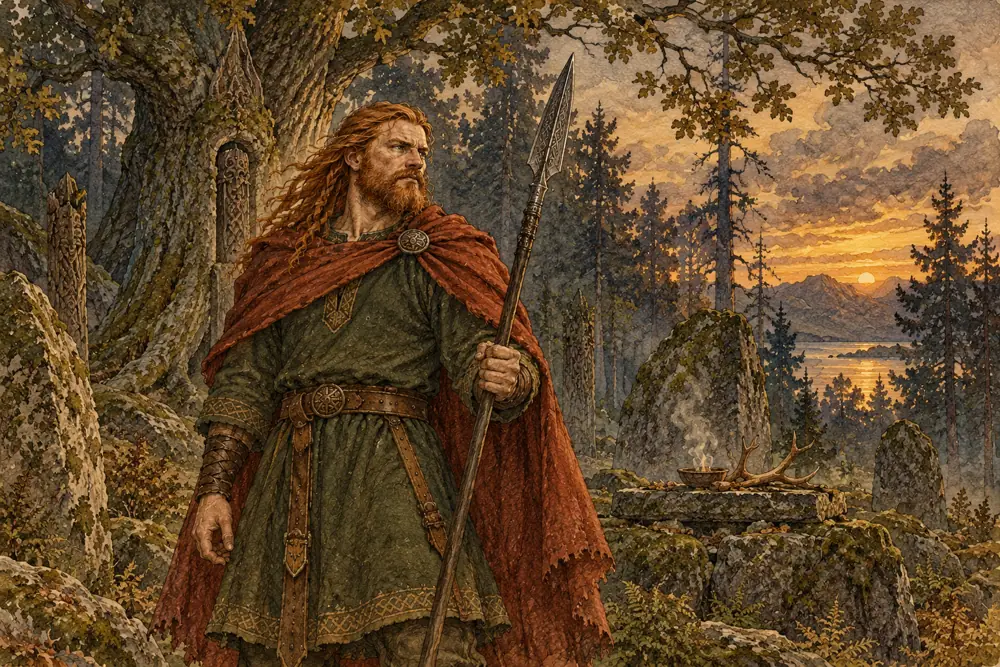
2 min read
Odin’s spear and Dag’s revenge
Dag obtains Odin’s spear to avenge his father and kills Helgi, his own brother-in-law. His sister Sigrun refuses to accept compensation or let divine involvement excuse the betrayal.
Read the story ↗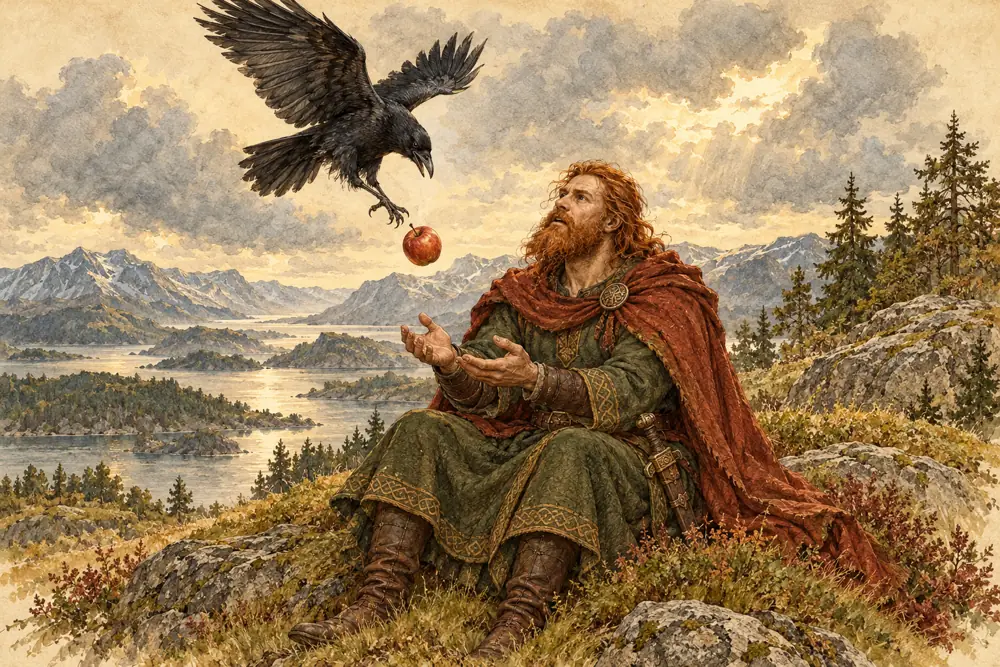
2 min read
Frigg, Odin and the apple sent to Rerir
Frigg hears the prayers of a childless royal couple, and Odin sends an apple through a bird-shaped messenger. The miraculous conception leads to a birth that is remarkable but far from painless.
Read the story ↗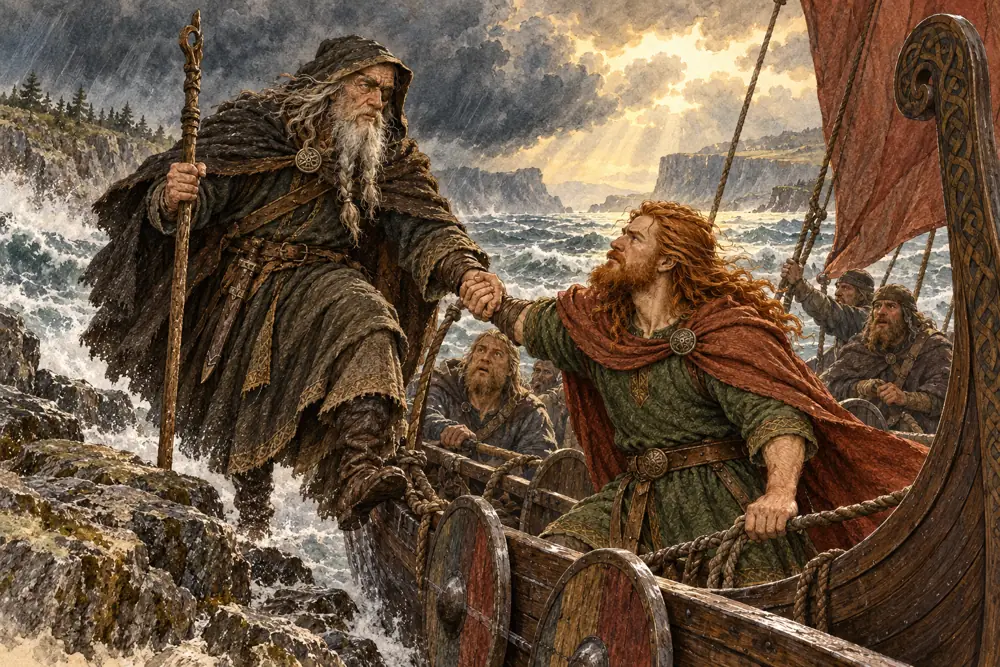
2 min read
Odin boards Sigurd’s ship in a storm
On his voyage to avenge his father, Sigurd takes aboard a stranger called Hnikar. The storm subsides, and Odin’s disguised counsel combines omens with practical instructions for battle.
Read the story ↗