
A Norse story · 2 min read
Balder, Hother and Nanna in Saxo
A rival tradition of love and war
Saxo’s Danish history places familiar names in a very different struggle, with a human hero confronting a divine rival.
A different set of relationships
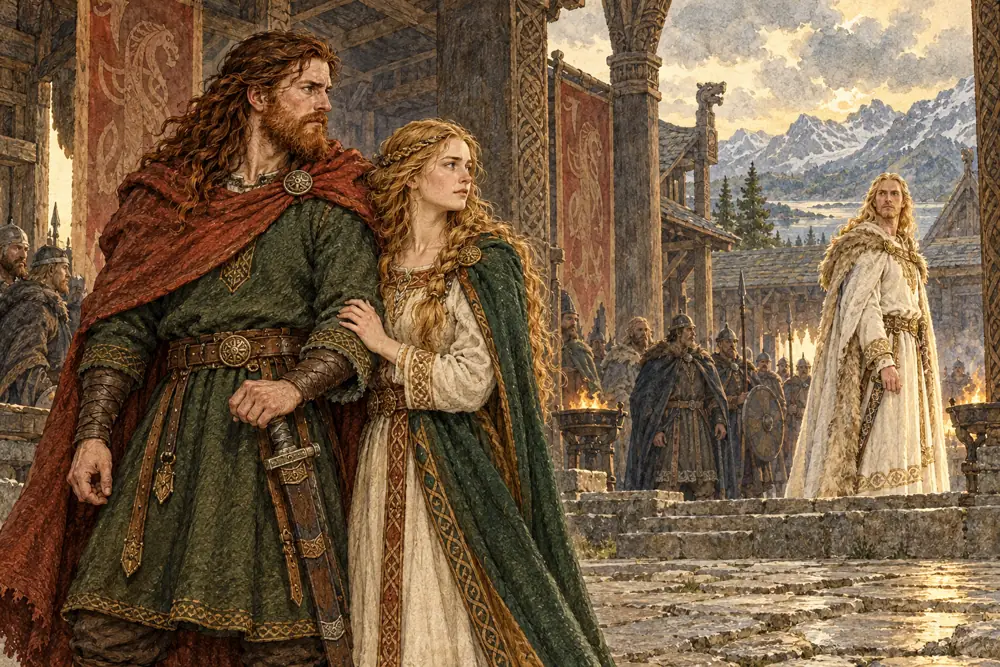
In Book III of Gesta Danorum, Hother is a capable young warrior raised by Gewar, whose daughter Nanna loves him. Balder, Odin’s son, desires Nanna and sees Hother as an obstacle. Here Nanna is not simply Baldr’s wife, and Hother is not the blind, manipulated thrower of the Prose Edda. He is a resourceful protagonist. The resemblance between the names makes comparison valuable, but the relationships and motives cannot be transferred unchanged between the stories.
Weapons and changing victories
Supernatural women warn Hother about his opponent. Gewar tells him of a special sword capable of harming Balder, which Hother obtains from Miming along with a treasure-increasing bracelet. Nanna rejects Balder, and the rivalry develops into war. Odin and Thor fight on Balder’s side. Hother damages Thor’s weapon, forcing the divine forces to retreat, and marries Nanna. Later battles reverse his success: Balder wins victories, while Hother withdraws and seeks further help. Saxo embeds the struggle in an imagined political landscape of northern kings and kingdoms.
The fatal encounter
Hother learns of the special food prepared to strengthen Balder and reaches the women who make it. They do not simply hand him Balder’s portion; the account instead describes protective gifts. On his way back he encounters Balder and wounds him with his sword. Balder survives briefly and is carried into battle before dying. A dream visit from the figure Saxo calls Proserpine announces his approaching death, and his followers bury him in a mound.
Reading the difference honestly
There is no mistletoe game in this account, and Loki does not arrange the killing. Saxo writes as a Christian author who explicitly denies that the old gods are truly divine, while turning inherited material into a Danish legendary history. That viewpoint matters, but it does not make the entire narrative disposable: it preserves a substantial alternative tradition. Read beside the Eddic material, it shows how widely stories about the same figures could differ rather than revealing a single corrected version of Baldr’s death.
Read behind the retelling
Sources & limits
Distinct medieval Danish/Latin tradition. Hother is not depicted as blind here, Nanna marries him, and the fatal weapon is a sword rather than mistletoe.
Retold in contemporary English. Dialogue is summarized, not presented as a translation. How to read our sources and versions.
Another thread to follow

2 min read
The death of Baldr
Frigg tries to protect Baldr from every danger, but Loki finds the one promise she did not obtain.
Read the story ↗
3 min read
Ragnarok: the breaking of the world
The end approaches through broken human bonds and broken cosmic restraints. The surviving texts also imagine a world that rises after the disaster.
Read the story ↗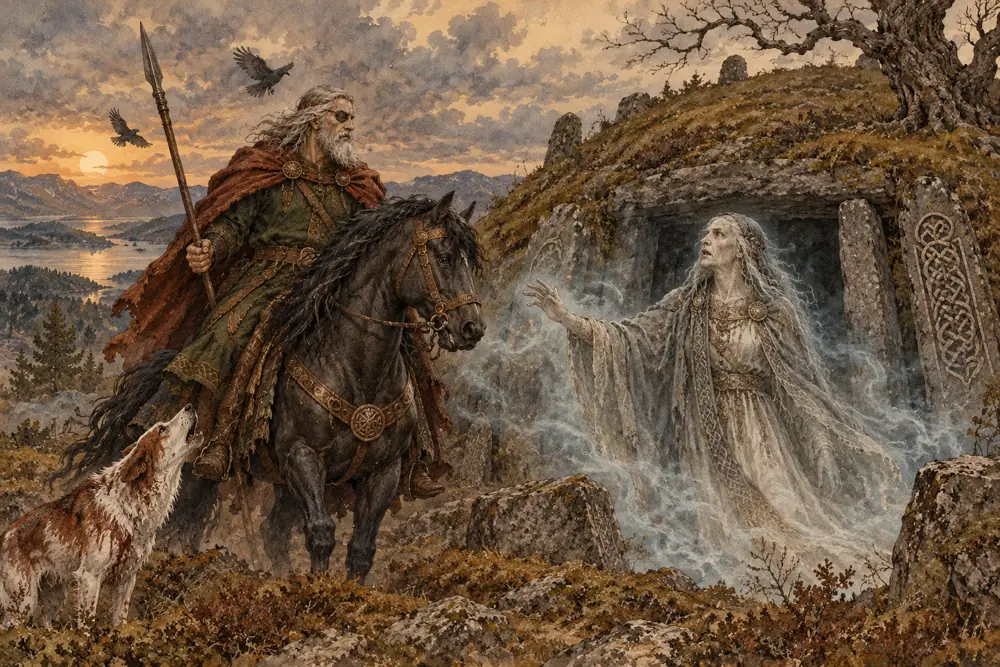
2 min read
Baldr’s dreams and the awakened seer
A disturbing dream sends Odin beneath the world, where preparations for a guest reveal the danger facing his son.
Read the story ↗