
A Norse story · 2 min read
Baldr’s dreams and the awakened seer
Odin rides to question the dead
A disturbing dream sends Odin beneath the world, where preparations for a guest reveal the danger facing his son.
The journey below
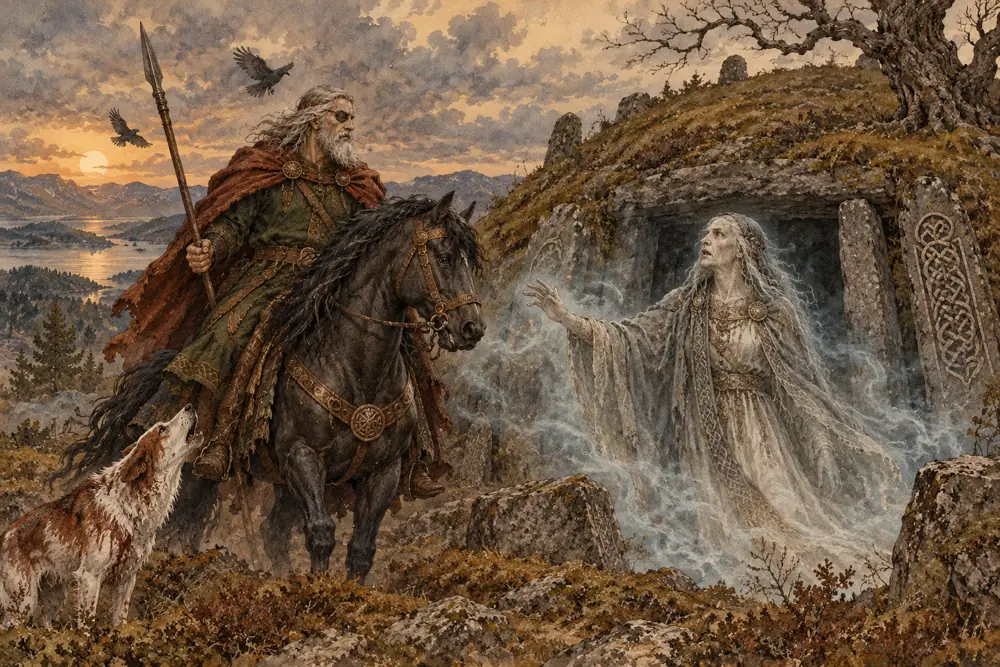
In Baldrs draumar, the gods and goddesses meet to consider the ominous dreams troubling Baldr. Odin saddles Sleipnir and rides down toward the realm of the dead. A blood-marked hound howls as he passes. The poem does not recount the dreams themselves; their danger is established through the assembly and the journey they provoke. Reaching Hel’s dwelling, Odin finds a seer’s grave and uses spells to compel its occupant to speak.
A feast prepared for Baldr
The woman protests at being disturbed after her long death. Odin conceals his name and asks whom the decorated benches and prepared drink are intended to welcome. The answer is Baldr. When Odin insists on knowing who will kill him, she names Hodr and the fatal branch. She then foretells the avenger: Rind will bear Vali, who will act when only one night old. He will neither wash nor comb his hair before completing the vengeance. Each answer brings Odin more knowledge and less comfort.
Recognition and refusal
Odin presses her with another question, whose wording and meaning remain difficult. She recognises him, and their exchange becomes openly hostile. Odin challenges her identity in return. Finally she tells him to ride home and says she will not be sought again until Loki is free and the final destruction arrives. The visit has uncovered a fate rather than secured a rescue.
A prophecy, not the death scene
This poem is a separate dramatic encounter, not a complete account of Baldr’s killing. It does not narrate Loki guiding a blind Hodr through a game of throwing objects; that familiar scene belongs to another source. Nor does it securely identify the dead seer with every prophetic woman in other poems. Its particular force comes from the unwilling answers of the dead and the father’s repeated demand to know more. The foreknowledge is precise enough to wound him, yet supplies no clear way of changing what it reveals.
Read behind the retelling
Sources & limits
The dreams are not described in detail. The seer’s identity and Odin’s final question are uncertain; do not fill those gaps with invented explanations.
Retold in contemporary English. Dialogue is summarized, not presented as a translation. How to read our sources and versions.
Another thread to follow

2 min read
The death of Baldr
Frigg tries to protect Baldr from every danger, but Loki finds the one promise she did not obtain.
Read the story ↗
3 min read
Ragnarok: the breaking of the world
The end approaches through broken human bonds and broken cosmic restraints. The surviving texts also imagine a world that rises after the disaster.
Read the story ↗
2 min read
Odin’s contest of wisdom
Odin tests Vafthrúðnir in a contest that moves from the structure of the cosmos to a secret only Odin can know.
Read the story ↗