
Gods & companions
Vali
The swiftly grown avenger of Baldr
Vali, the son of Odin and Rind, is connected with vengeance for Baldr. His extraordinary speed of growth compresses childhood and violent obligation into a single mythical image.
Explore the stories ↓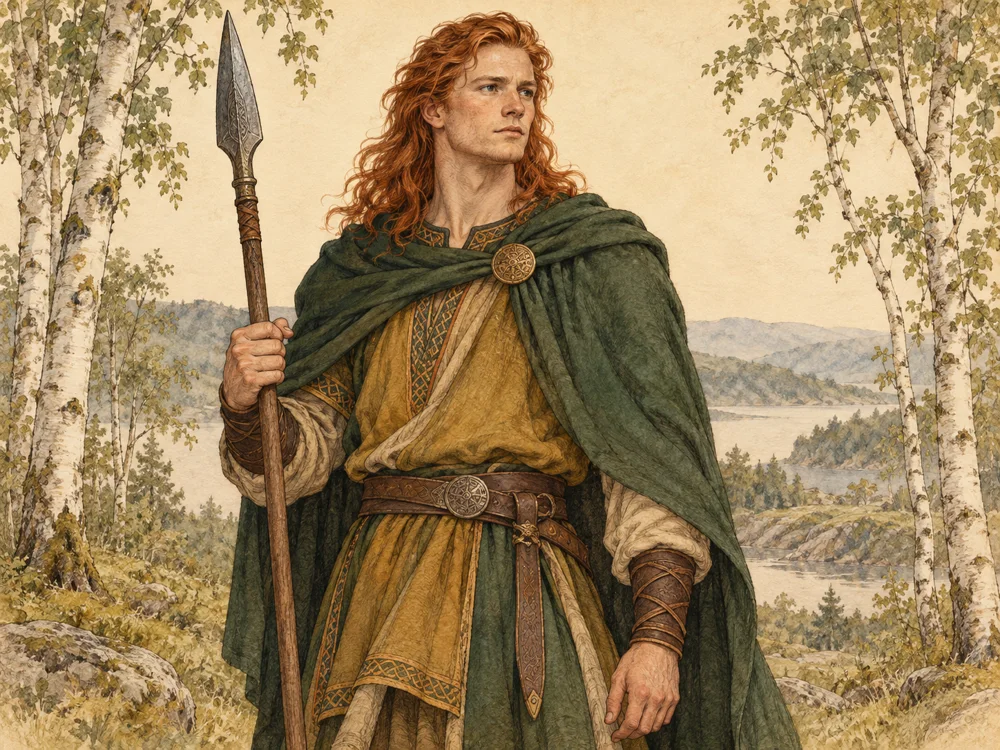
Born for an act of vengeance
Völuspá describes an avenger, Odin’s son, who fights when only a night old and neither washes his hands nor combs his hair before carrying out the deed. Gylfaginning names Vali as the son of Odin and Rind and describes him as bold and skilled with weapons. Read together, these sources place him within the aftermath of Baldr’s death, while offering little ordinary biography.
After the destruction
Snorri includes Vali with Vidar among the survivors of Ragnarök. Their continued existence belongs to the account of renewal after catastrophic loss. The names may look similar in English, but Vali and Vidar are different figures with different acts of vengeance: Vali is associated with Baldr’s death, Vidar with Odin’s.
A second Vali creates confusion
Snorri’s account of Loki’s punishment also includes a son of Loki called Vali in the manuscript tradition represented by the translation. That figure must not simply be merged with Odin’s son. The naming and wording of Loki’s sons vary in the sources. Clear parentage labels are more useful than pretending that all the details fit one uncomplicated family tree.
Named by the unwilling seer
In Baldrs draumar, Odin questions a dead seer about the death that threatens Baldr. After she identifies the killer, Odin insists on knowing who will avenge him. She names Vali, whom Rind will bear in Vestrsalir, and describes an avenger who acts when only a night old. He will neither wash his hands nor comb his hair before the deed. The passage supplies a prophetic role, not the ordinary stages of childhood. Its force lies in the impossibly rapid arrival of vengeance, while the seer repeatedly asks to be allowed to fall silent.
His future is stated without a new campaign
Vafþrúðnismál names Vali together with Vidar as a survivor who will dwell in the gods' home after the fires. The poem does not then describe a fresh enemy for him, a journey through the rebuilt world or a new set of laws. His continued existence is the surviving fact of the story. It is better to leave that future open than to invent adventures simply because the catastrophe has ended.
Read behind the retelling
Sources & limits
Vali son of Odin should not be confused with the similarly named son of Loki in accounts of Loki’s punishment.
- Gylfaginning, chapters 30, 50 and 53
- Völuspá, the avenging son after Baldr’s death
- Baldrs draumar 10–11; Henry Adams Bellows, 1923
- Vafþrúðnismál 50–51; Henry Adams Bellows, 1923
Retold in contemporary English. Dialogue is summarized, not presented as a translation. How to read our sources and versions.
Follow the thread
Stories & related reading: Vali

2 min read
The death of Baldr
Frigg tries to protect Baldr from every danger, but Loki finds the one promise she did not obtain.
Read the story ↗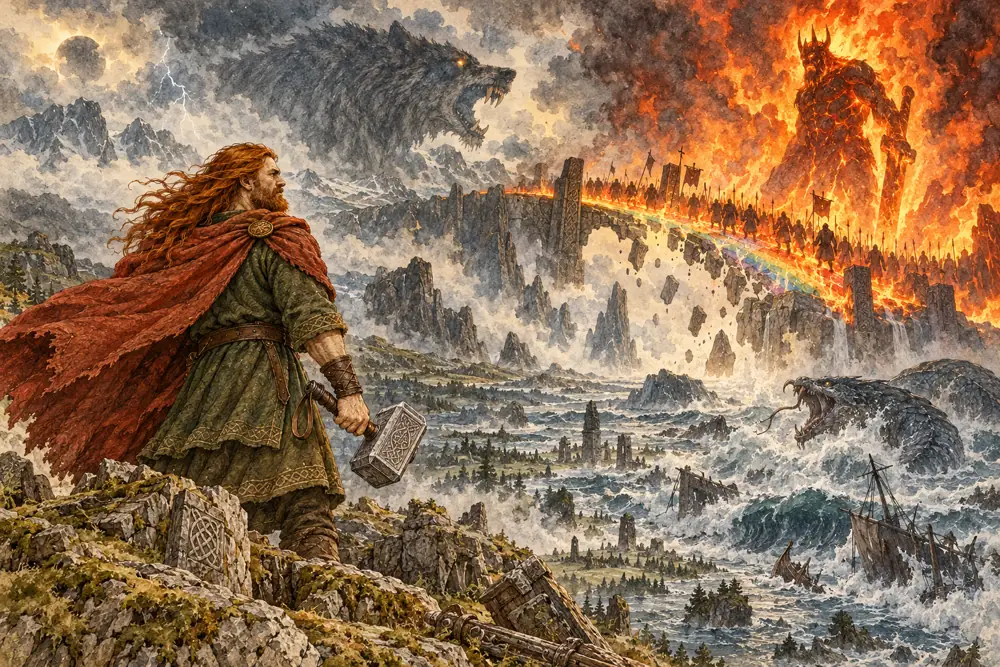
3 min read
Ragnarok: the breaking of the world
The end approaches through broken human bonds and broken cosmic restraints. The surviving texts also imagine a world that rises after the disaster.
Read the story ↗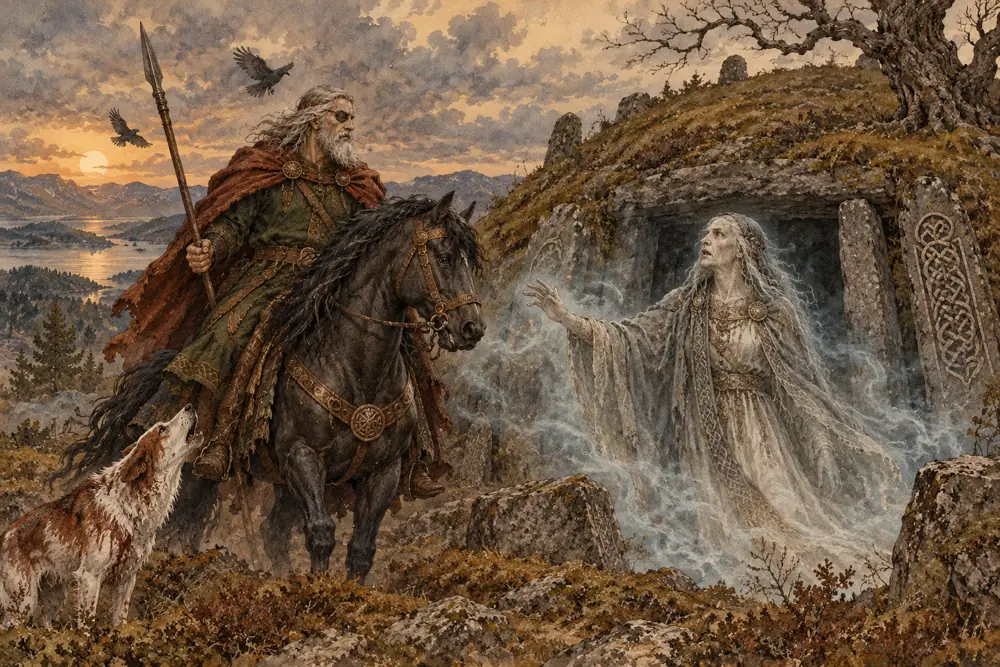
2 min read
Baldr’s dreams and the awakened seer
A disturbing dream sends Odin beneath the world, where preparations for a guest reveal the danger facing his son.
Read the story ↗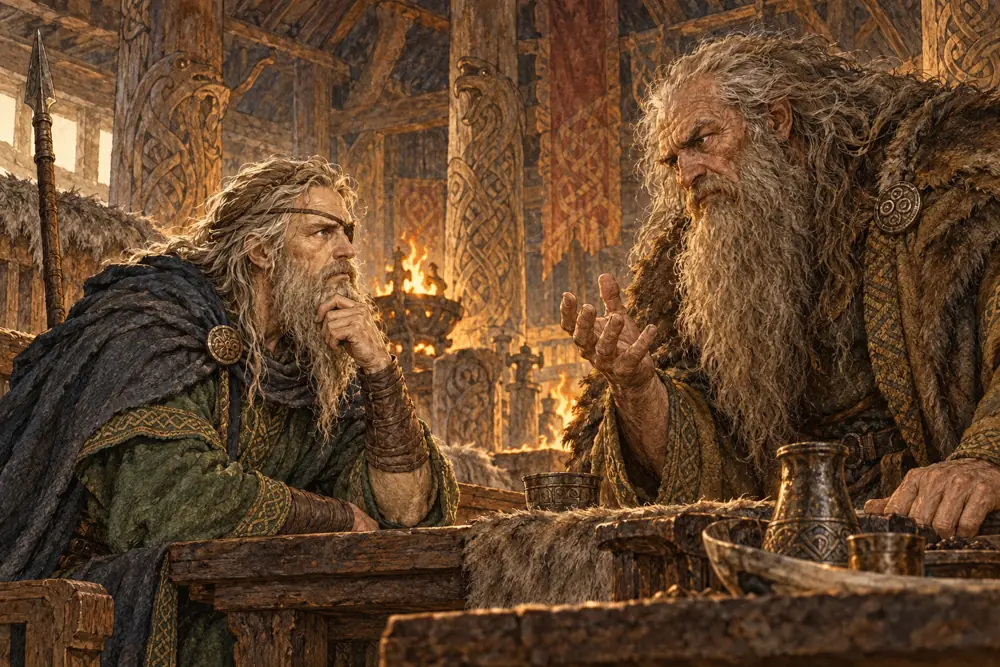
2 min read
Odin’s contest of wisdom
Odin tests Vafthrúðnir in a contest that moves from the structure of the cosmos to a secret only Odin can know.
Read the story ↗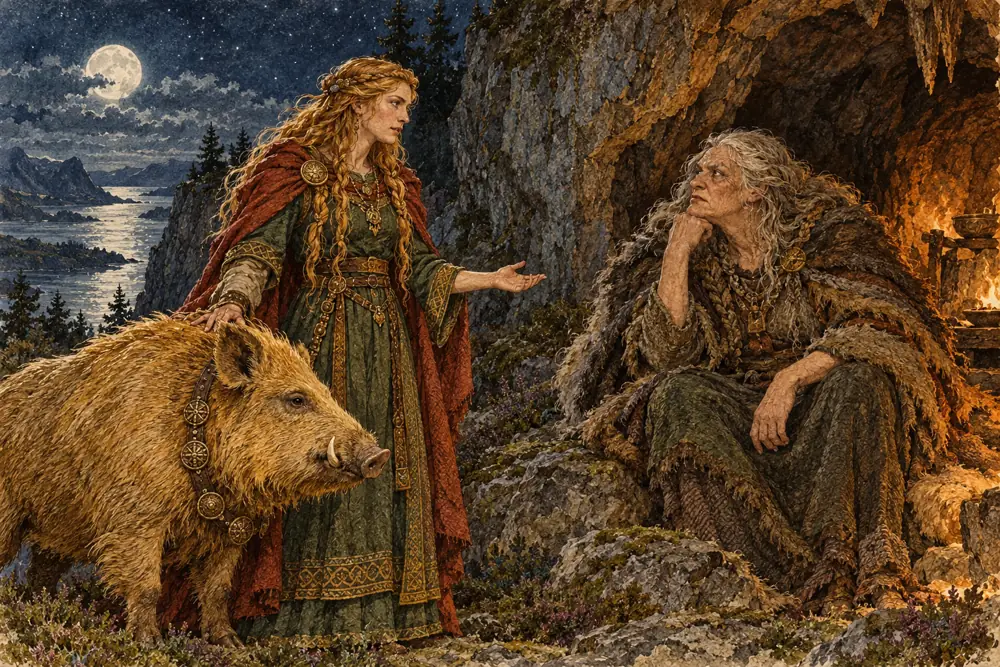
2 min read
Freyja, Hyndla, and Ottar’s ancestry
Freyja seeks a genealogy for her devotee Ottar. The encounter becomes a dispute about ancestry, memory, and the price of knowledge.
Read the story ↗
2 min read
Odin and Rinda in Saxo
Saxo’s disturbing narrative makes the birth of Balder’s avenger the result of deception and sexual violence.
Read the story ↗