
A Norse story · 2 min read
The death of Baldr
The overlooked plant and the tears that were not enough.
Frigg tries to protect Baldr from every danger, but Loki finds the one promise she did not obtain.

Dreams and promises
In Gylfaginning, Baldr is troubled by dreams of danger. Frigg responds by obtaining promises that things in the world will not harm him. Once he seems invulnerable, the gods make a game of throwing and striking at him. Nothing hurts him, and the spectacle delights them. Loki discovers the weakness in this protection by questioning Frigg in disguise. She has not required an oath from mistletoe because it seemed too young. The fatal gap is small, but it is enough. This detailed sequence is Snorri’s account, not a plot we should automatically attribute to every surviving reference to Baldr.
Hödr’s throw
Loki obtains the mistletoe and approaches Hödr, who stands apart because he cannot see and has no weapon. Loki offers to guide his throw. The missile strikes Baldr and kills him. The gods are overcome by grief. Snorri’s account makes Loki the planner and Hödr the person whose hand carries out the act. That distinction matters when describing responsibility. Other traditions present Baldr and Hödr differently, so Hödr should not be assigned one universal biography on the basis of this episode alone.
A funeral and a journey to Hel
Baldr is placed on his ship for a funeral. Nanna dies from grief and is placed with him. Odin lays the ring Draupnir on the pyre; Thor hallows it with his hammer. Meanwhile Hermóðr rides to Hel to ask that Baldr return. Hel agrees on one condition: everything must weep for him, proving that he is universally mourned. Baldr sends Draupnir back to Odin, and Nanna sends gifts for Frigg and Fulla. The scene gives the dead a continuing presence in the narrative without cancelling their deaths.
The refusal that ends the attempt
Messengers ask the world to mourn. People, animals and even apparently lifeless things shed tears, until a giantess called Þökk refuses. Snorri reports that people believed this figure was Loki. The condition is broken, and Baldr remains with Hel. Accounts of the renewed world after Ragnarök place Baldr and Hödr together again, but that future should not be inserted as an immediate rescue. The force of this story lies in the failure of otherwise extraordinary measures: promises, divine power, an underworld journey and universal grief cannot recover him now. It is a myth about loss as much as an episode preparing the world’s destruction.
Read behind the retelling
Sources & limits
This retelling follows Snorri. Þökk is identified with Loki as a reported belief within the account; other Baldr traditions differ.
Retold in contemporary English. Dialogue is summarized, not presented as a translation. How to read our sources and versions.
Another thread to follow
3 min read
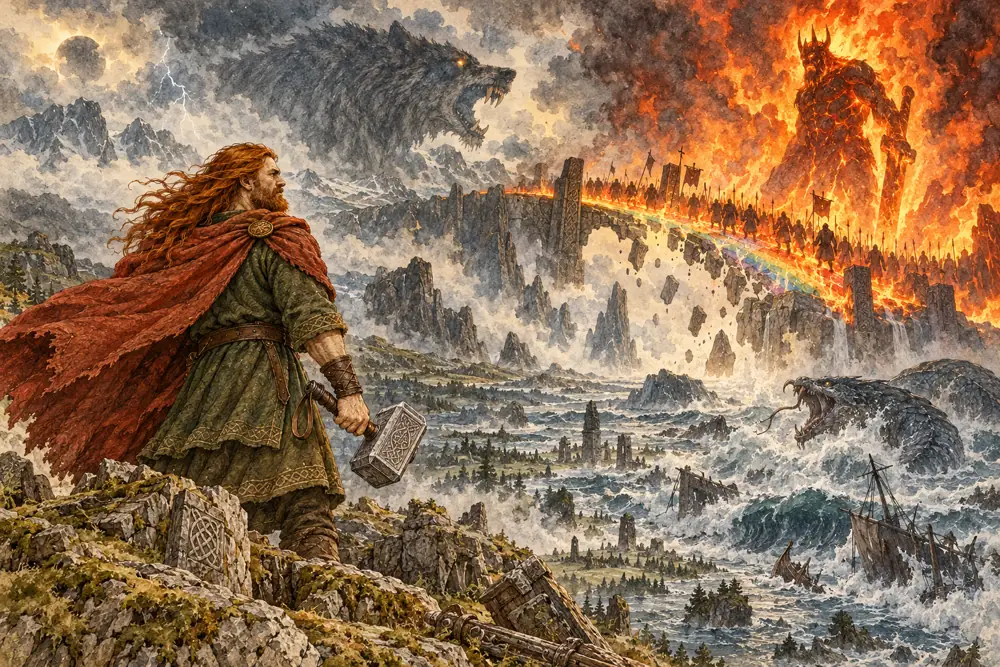
Ragnarok: the breaking of the world
The end approaches through broken human bonds and broken cosmic restraints. The surviving texts also imagine a world that rises after the disaster.
Read the story ↗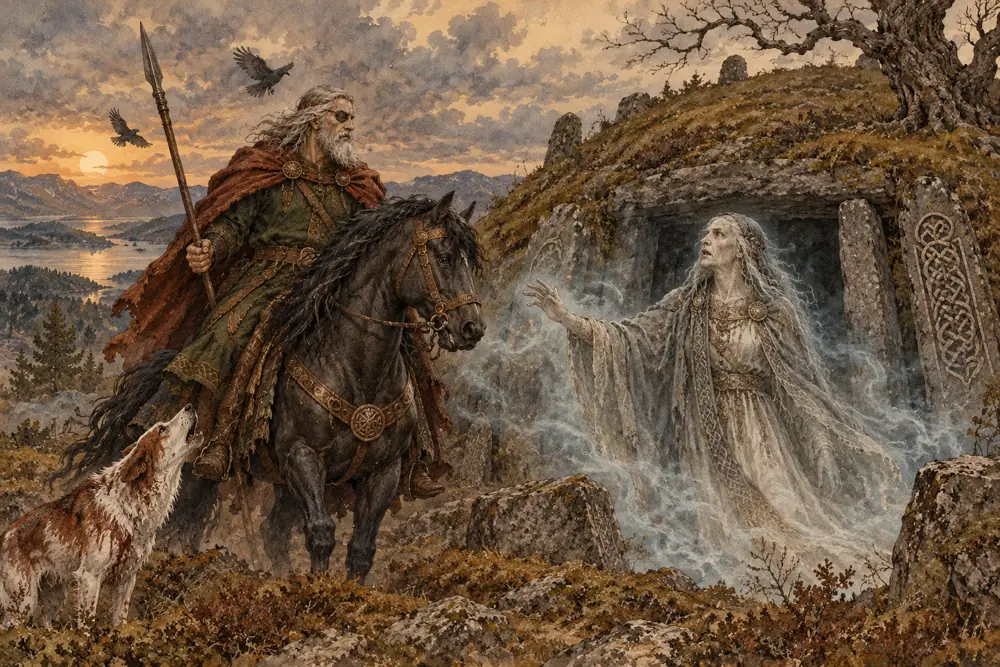
2 min read
Baldr’s dreams and the awakened seer
A disturbing dream sends Odin beneath the world, where preparations for a guest reveal the danger facing his son.
Read the story ↗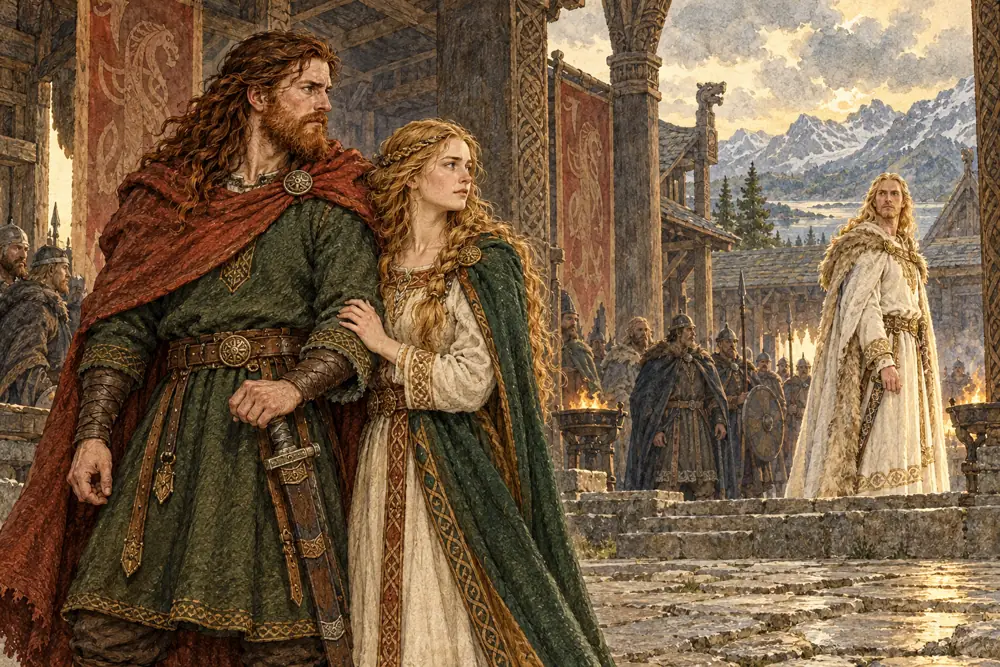
2 min read
Balder, Hother and Nanna in Saxo
Saxo’s Danish history places familiar names in a very different struggle, with a human hero confronting a divine rival.
Read the story ↗