
Gods & companions
Hermod
The rider who asks for Baldr’s return
Hermod undertakes the journey that the grieving gods cannot make together: he rides to Hel to ask whether Baldr can return.
Explore the stories ↓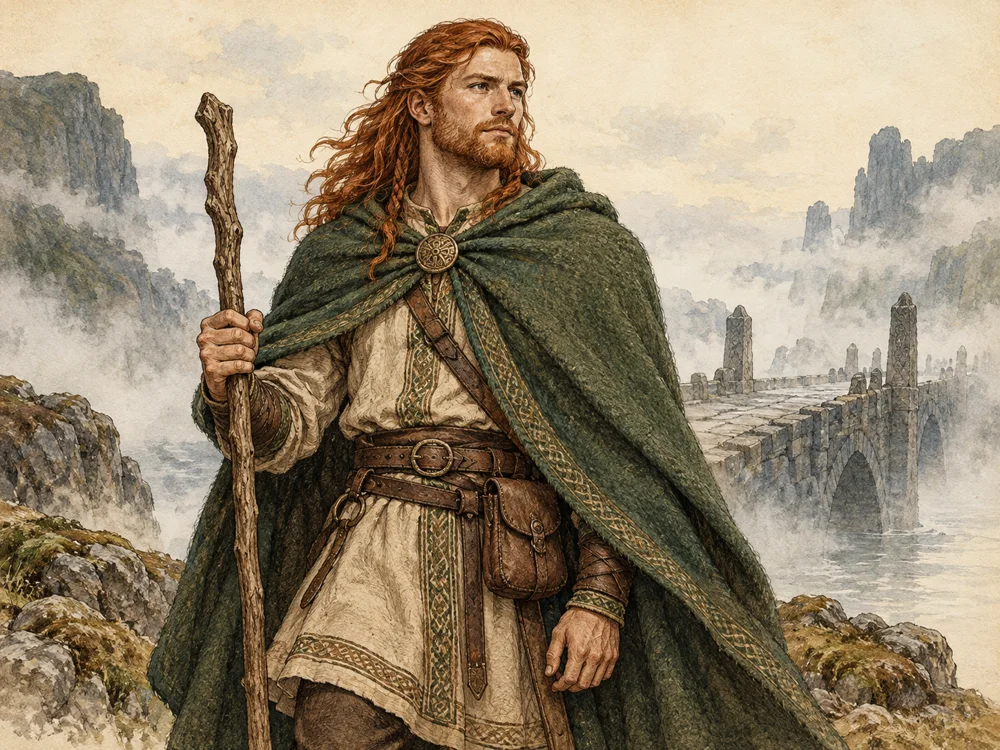
Nine nights into darkness
In Gylfaginning, Frigg asks for a volunteer and Hermod accepts. Mounted on Sleipnir, he rides through dark valleys for nine nights and crosses the bridge over Gjöll. Its guardian notices that he does not have the appearance of a dead man. He continues to Hel’s gate, tightens the horse’s girths and leaps the barrier.
A message rather than a rescue by force
Hermod finds Baldr in honour within the hall and appeals for his release. Hel requires everything to weep for him. He returns with that condition and gifts from Baldr and Nanna. His task is diplomatic as well as physical: courage gets him there, but he cannot compel the answer he wants. The subsequent failure is not caused by a lack of skill in riding; it turns on the impossible demand for universal mourning.
The guardian notices that he is alive
Hermod’s crossing of Gjöll contains an important encounter often lost in short summaries. The bridge guardian Módgudr asks his name and family and remarks that five companies of dead people crossed the previous day, yet his single horse makes the bridge sound as loudly. She also sees that he lacks the appearance of the dead. Hermod explains that he is seeking Baldr, and she confirms that Baldr has passed that way. Her directions send him downward and northward. The scene distinguishes a living envoy’s exceptional journey from the ordinary passage of the dead and gives him information rather than an enemy to defeat.
What he brings home from Hel
After finding Baldr, Hermod remains overnight and presents his appeal in the morning. Hel answers with a condition, not a ransom price: everything must weep. Baldr then sends Draupnir back to Odin as a remembrance, while Nanna sends clothing and gifts to Frigg and a ring to Fulla. Hermod returns carrying these objects and the account of what he has seen. His report sets the gods’ worldwide appeal in motion. He does not personally encounter the final refusal by Thökk in this account; that belongs to the messengers’ subsequent effort. Keeping those actions separate preserves the shape of his particular embassy.
Read behind the retelling
Sources & limits
Hermod’s family status is not equally clear across all evidence. This narrative follows the role and kinship presented in the cited prose version.
Retold in contemporary English. Dialogue is summarized, not presented as a translation. How to read our sources and versions.
Follow the thread
