
Gods & companions
Hodr
The brother drawn into Baldr’s death
In Snorri’s version, the blind Hodr kills Baldr with the weapon and guidance Loki supplies. He later returns beside Baldr in the renewed world.
Explore the stories ↓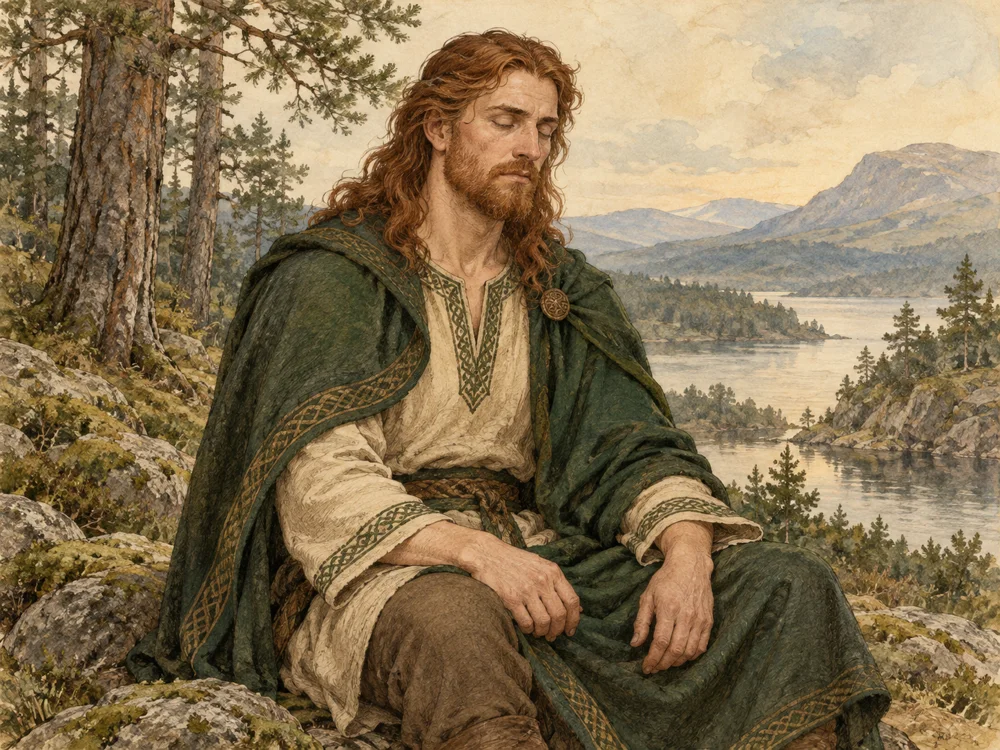
A brief introduction with terrible consequences
Gylfaginning first presents Hodr as blind and strong, while hinting at an act the gods would prefer not to name. When the others throw objects at the protected Baldr, Hodr stands apart because he cannot see and has no weapon. Loki offers both a weapon and directions, drawing him into a game whose apparent safety has already collapsed.
Agency and manipulation
Hodr performs the fatal act, but in this account he does not understand Loki’s scheme. His position raises a different question from that of a straightforward villain: what does responsibility look like when someone acts through another person’s deception? The narrative should be retold on its own terms rather than importing motives from different medieval versions of Baldr’s death.
Return beside his brother
The prophetic material and Snorri’s ending bring Baldr and Hodr together again after Ragnarök. That is a striking destination for two brothers separated by a killing. The texts do not preserve a detailed reconciliation conversation, however. An imagined apology or explanation can be moving creative writing, but it is not a recovered passage from the Eddas.
The avenger born for Baldr
The killing does not end with the gods’ shock. In the prophetic account of Baldr’s death, Rind bears Váli, who becomes an avenger with extraordinary speed. He does not wash his hands or comb his hair before carrying out vengeance. Hodr’s place in this sequence is therefore more tragic than the single instant when he throws the mistletoe: he becomes the target of the family’s response to Baldr’s loss. The compressed poetry does not stage a trial or let Hodr explain Loki’s deception. That silence matters, because Snorri’s fuller version makes the fatal action manipulated while the vengeance tradition still treats Baldr’s killer as someone who must die.
Hother fights for himself in Saxo
Saxo’s Hother is a skilled human warrior rather than a blind god standing outside a game. He loves Nanna, obtains a special weapon and fights Balder and his divine allies. At one stage he damages Thor’s weapon and drives the opposing forces back; later reversals force him to seek further help. Eventually he wounds Balder with a sword. This is not a missing chapter that can be inserted into Snorri’s story: its hero, motives and weapon are different. Reading the two traditions together reveals how radically a familiar name could be reshaped in medieval accounts of the northern past.
Read behind the retelling
Sources & limits
The blindness and manipulation described here follow Snorri. Other medieval traditions give Hodr a different character and role.
- Gylfaginning, chapters 28, 49 and 53
- Völuspá, Baldr’s death and return
- Völuspá, Baldr and Váli passage; Bellows
- Saxo, Gesta Danorum, Book III
Retold in contemporary English. Dialogue is summarized, not presented as a translation. How to read our sources and versions.
Follow the thread
Stories & related reading: Hodr

2 min read
The death of Baldr
Frigg tries to protect Baldr from every danger, but Loki finds the one promise she did not obtain.
Read the story ↗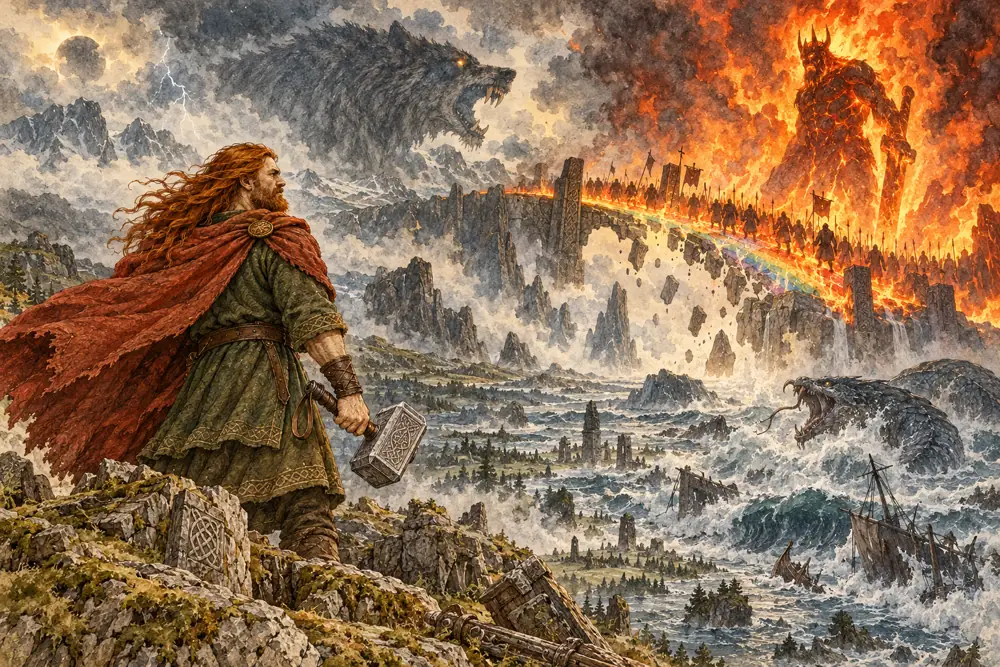
3 min read
Ragnarok: the breaking of the world
The end approaches through broken human bonds and broken cosmic restraints. The surviving texts also imagine a world that rises after the disaster.
Read the story ↗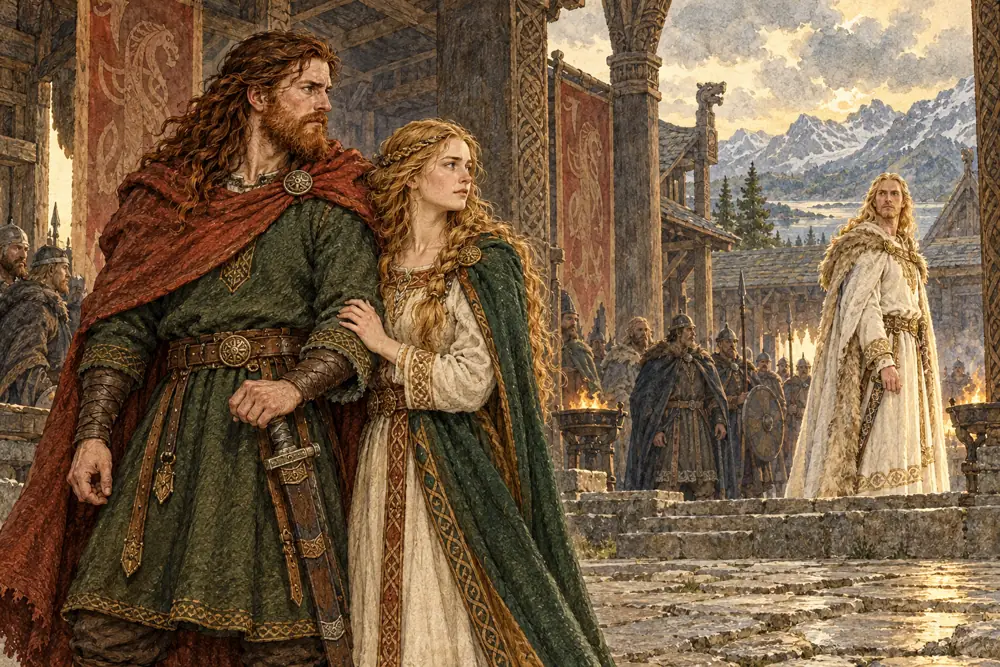
2 min read
Balder, Hother and Nanna in Saxo
Saxo’s Danish history places familiar names in a very different struggle, with a human hero confronting a divine rival.
Read the story ↗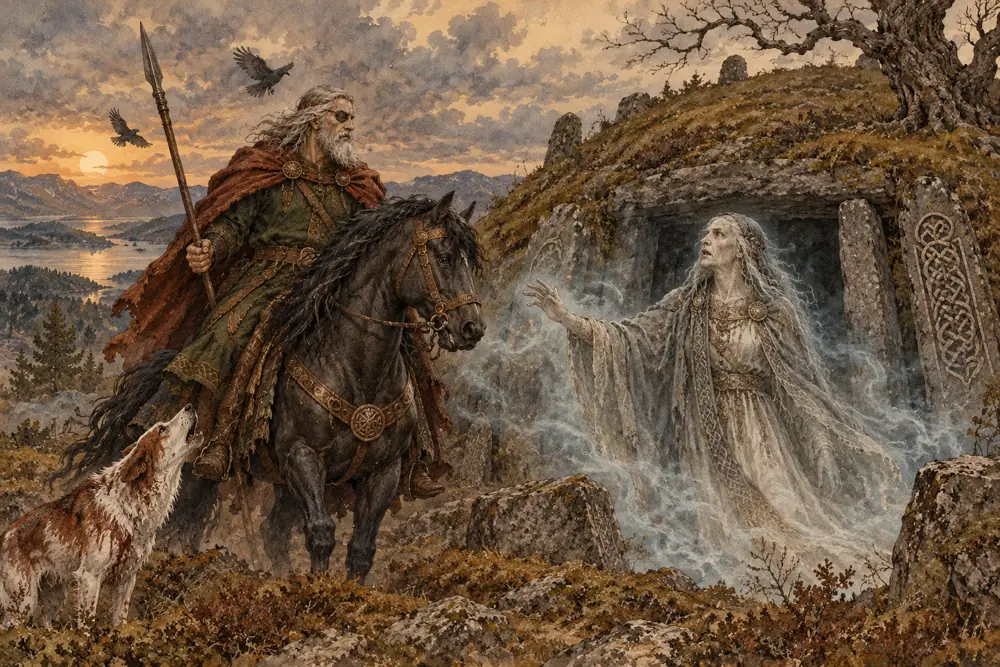
2 min read
Baldr’s dreams and the awakened seer
A disturbing dream sends Odin beneath the world, where preparations for a guest reveal the danger facing his son.
Read the story ↗