
Other powers
Hel
A ruler of the dead—and the name of a destination
Hel can name both a female figure and a realm of the dead. In Snorri’s account she receives authority over those sent to her and decides the condition for Baldr’s release.
Explore the stories ↓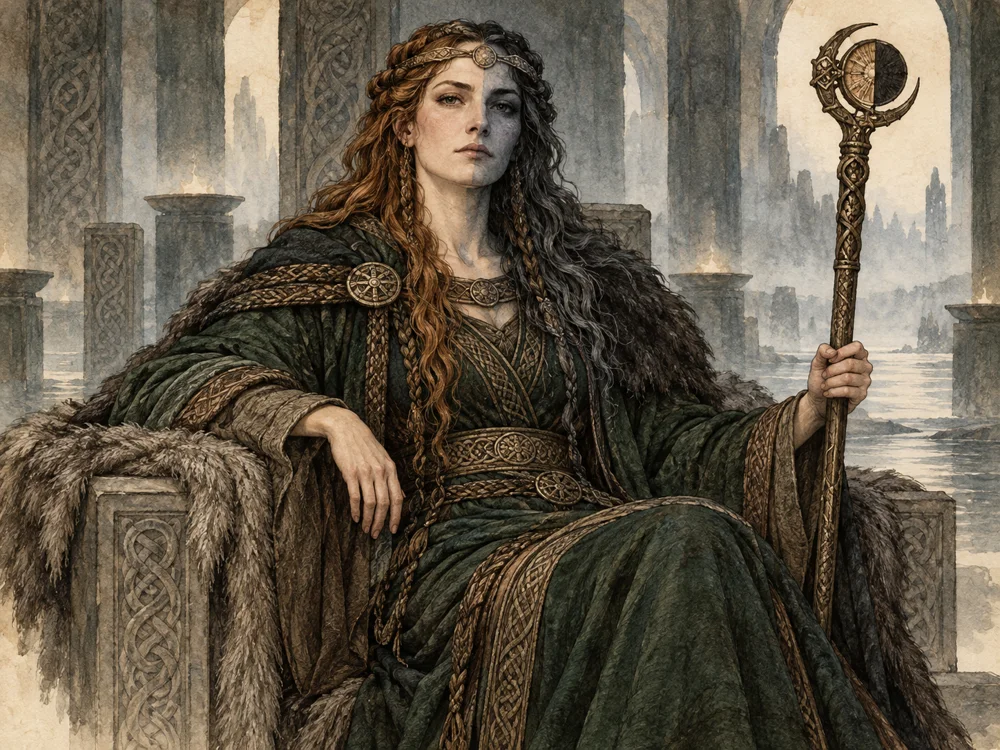
The figure in Snorri’s account
Gylfaginning makes Hel a child of Loki and Angrboda, alongside Fenrir and Jörmungandr. Odin sends her to Niflheim and assigns her authority over the dead who come to her, especially those who die of illness or old age. She is described as partly dark and partly flesh-coloured. This description should not automatically be replaced by a modern image of a woman with half a skeleton.
Baldr in her hall
When Hermod arrives seeking Baldr, Hel does not immediately refuse. She proposes a test: everything, living and dead, must weep for him. A single refusal prevents his return. Baldr, who has died violently, is in her hall; this alone warns against turning Snorri’s earlier description into a rigid universal sorting chart for every dead person.
A complicated word and afterlife
Norse references to death and its destinations are not one consistent system. Hel is not simply the Christian hell with its spelling shortened, nor is her character a straightforward counterpart of the devil. Distinguishing place from person helps readers follow the texts without inventing a comprehensive religion from fragments that were recorded in different contexts.
Getting to her hall is an ordeal of its own
Hermod rides for nine nights through dark valleys before reaching the river Gjöll. Módgud, who guards its bridge, notices that he does not have the appearance of the dead and asks why he has come. She has seen Baldr pass and directs the rider farther on. At Hel's gate, Hermod tightens Sleipnir's girths and the horse leaps over the barrier. Inside, Baldr sits in an honored seat, and Hermod stays overnight before making his request. The setting is therefore not a battlefield in which the messenger simply overpowers a monster. He has crossed boundaries to reach a ruler whose decision matters. Hel asks for a demonstration that Baldr is as universally loved as the gods claim, setting the condition that everything must weep. Strength and a remarkable horse can bring a visitor to her threshold, but they do not secure the release.
A household named through deprivation
Snorri gives Hel not only a domain but an unsettling set of household details. In Brodeur's translation, her dish is Hunger and her knife Famine; her servants are named through idleness and slowness, and her bed through sickness. The description turns familiar domestic things into reminders of bodily failure and want. It is a very different technique from a modern image of a fiery torture chamber. At the same time, these bleak names do not mean that every scene in the realm is narrated in identical terms: Baldr can occupy a high seat and send gifts back to his relatives. Reading both passages preserves the source's range instead of forcing every detail into one uniform picture of the afterlife.
Read behind the retelling
Sources & limits
Hel the person, Hel the destination and Christian hell should not be collapsed into a single concept.
Retold in contemporary English. Dialogue is summarized, not presented as a translation. How to read our sources and versions.
Follow the thread
Stories & related reading: Hel

2 min read
The death of Baldr
Frigg tries to protect Baldr from every danger, but Loki finds the one promise she did not obtain.
Read the story ↗
3 min read
Ragnarok: the breaking of the world
The end approaches through broken human bonds and broken cosmic restraints. The surviving texts also imagine a world that rises after the disaster.
Read the story ↗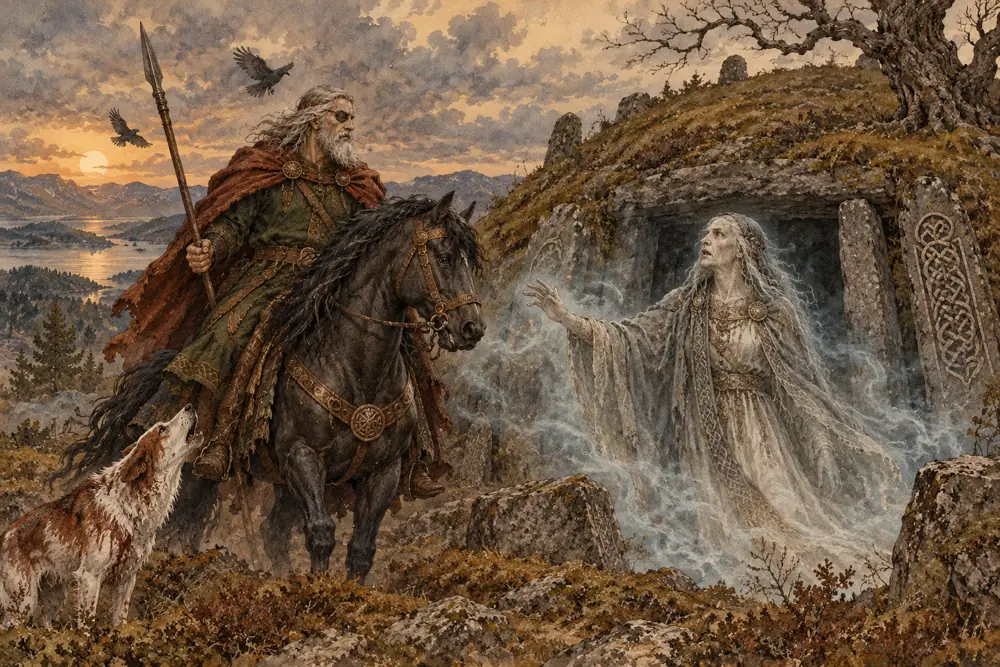
2 min read
Baldr’s dreams and the awakened seer
A disturbing dream sends Odin beneath the world, where preparations for a guest reveal the danger facing his son.
Read the story ↗