
Gods & companions
Baldr
The beloved god whose death changes everything
Baldr’s death and the failed effort to bring him back form a turning point in Snorri’s account. His story connects dreams, protection, grief and the possibility of a world renewed.
Explore the stories ↓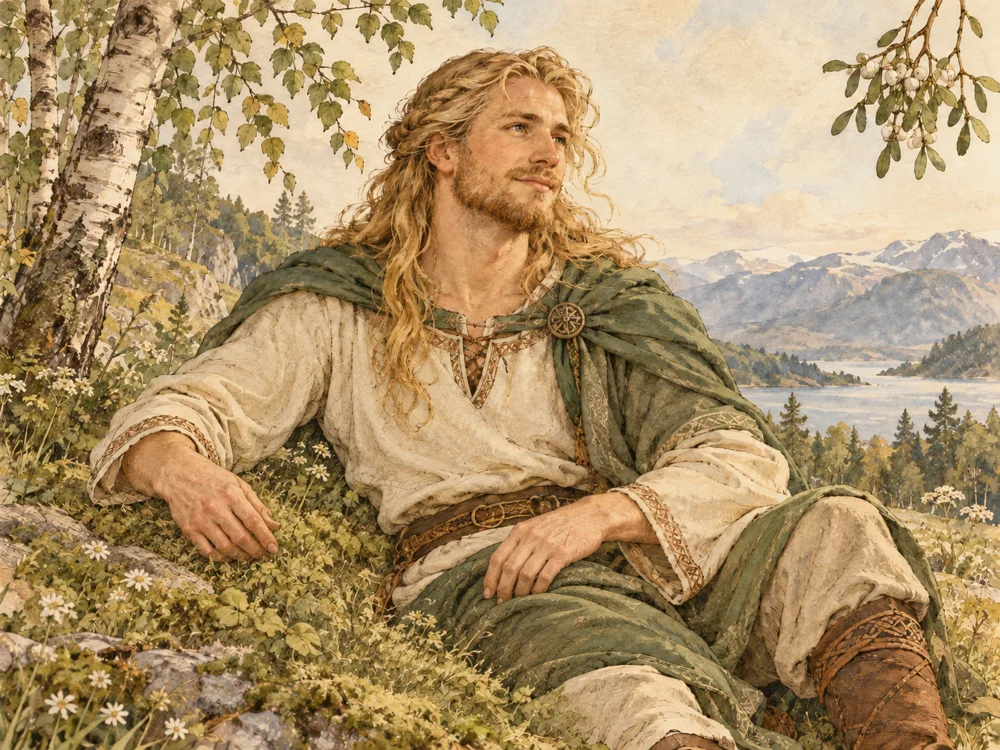
A bright figure in a fragile world
Baldr is the son of Odin and Frigg, the husband of Nanna and the father of Forseti in Gylfaginning. Snorri praises his beauty, wisdom and goodness and gives him the dwelling Breidablik. These qualities help explain the shock of his death, but they do not establish that he is literally the sun or that every aspect of his myth is a coded account of seasonal change. Such readings belong to interpretation. The medieval narrative is first of all about a particular loss suffered by a divine community.
Dreams, mistletoe and Höd
Baldr has disturbing dreams, and Frigg secures promises that things will not hurt him. The gods amuse themselves by testing his apparent safety. Loki learns that mistletoe has been left out, provides it to the blind Höd and directs the throw that kills Baldr. In this prose version, Höd is manipulated rather than a knowing rival. Other traditions differ, so his motive should not be reconstructed by mixing incompatible accounts. Even the familiar image of a large mistletoe arrow can be more specific than a particular translation warrants.
The funeral and the failed return
The gods prepare a funeral on Baldr’s ship Hringhorni. Nanna dies of grief and is placed with him on the pyre; Odin leaves the ring Draupnir, and Thor hallows the funeral with Mjöllnir. Meanwhile, Hermod rides to Hel. Baldr is there, and Hel agrees to release him only if everything weeps. A being called Thökk refuses, and the effort fails. Snorri reports the belief that this figure was Loki. The narrative joins cosmic significance to recognisable actions: mourning, gifts and a desperate attempt to negotiate.
An ending that is not only an ending
After Ragnarök, Völuspá and Snorri’s account describe Baldr and Höd together in the renewed world. Their return does not undo the grief of the earlier story, but it prevents destruction from having the final word. Baldr also sits at the centre of a famous unanswered question: what did Odin whisper into his son’s ear before the funeral? In the wisdom contest of Vafþrúðnismál, only Odin can know. A responsible retelling leaves that secret intact rather than supplying an attractive modern answer.
A welcome is prepared before he dies
Baldrs draumar begins with the gods asking why Baldr suffers ominous dreams. Odin saddles Sleipnir and rides down toward the dead, passing a blood-marked hound. At a seer's grave he speaks charms that force her to answer. He disguises his name and asks why the hall is prepared for a guest. She explains that the drink and adornment await Baldr. Odin presses her: who will kill him, and who will avenge him? The answers name Höd as the killer and Vali, born to Rind, as the avenger. The seer repeatedly wants the questioning to end. Eventually she recognizes Odin, and their exchange becomes hostile. Baldr himself never speaks in the poem: the terrifying force of the scene comes from preparations already under way for a death the gods have not prevented.
The funeral requires help from outside the gods
In Gylfaginning, the gods cannot launch Baldr's great ship Hringhorni for the funeral. They summon Hyrrokkin, who arrives riding a wolf with serpents as reins. Her first push sends the vessel forward so violently that the rollers flare and the earth shakes. Thor is furious, but the others prevent him from attacking her. Nanna dies from grief when Baldr is carried aboard and is placed on the pyre with him. Odin adds Draupnir; Baldr's horse is also brought to the fire. The gathering includes gods and giants rather than a neat division into mourning friends and hostile outsiders. Even this central divine funeral depends on someone beyond the Æsir accomplishing what their combined effort could not.
Read behind the retelling
Sources & limits
Baldr is not securely established as a sun god. The sources preserve different accounts of his death; this profile follows Snorri while marking the limits.
- Gylfaginning, chapters 22, 32, 49 and 53
- Völuspá, Baldr’s death and the renewed world
- Vafþrúðnismál, final exchange
- Baldrs draumar; Henry Adams Bellows, 1923
Retold in contemporary English. Dialogue is summarized, not presented as a translation. How to read our sources and versions.
Follow the thread
Stories & related reading: Baldr

2 min read
The death of Baldr
Frigg tries to protect Baldr from every danger, but Loki finds the one promise she did not obtain.
Read the story ↗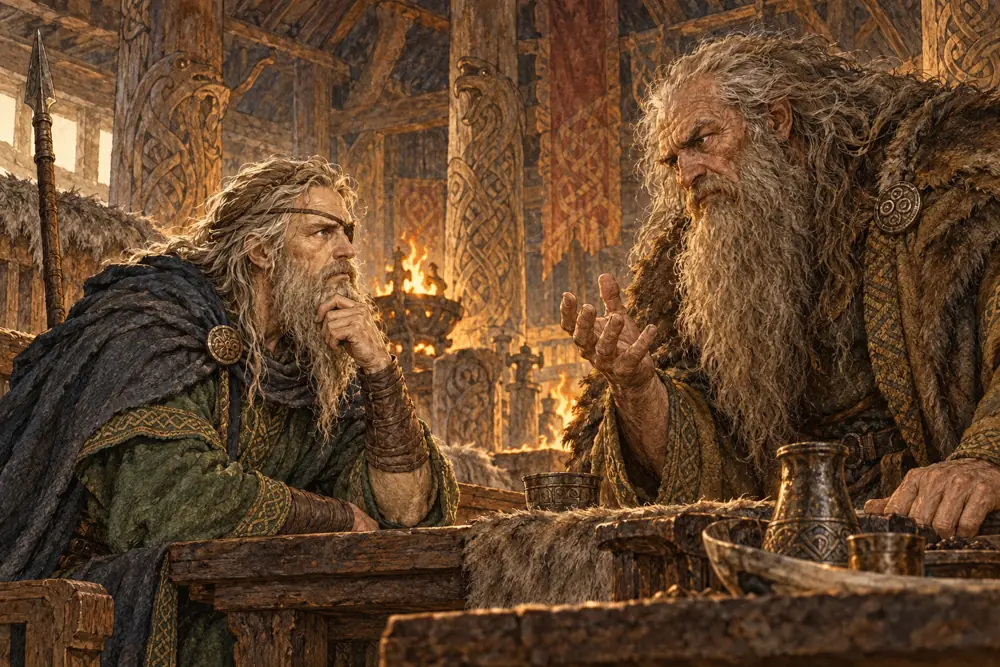
2 min read
Odin’s contest of wisdom
Odin tests Vafthrúðnir in a contest that moves from the structure of the cosmos to a secret only Odin can know.
Read the story ↗
3 min read
Ragnarok: the breaking of the world
The end approaches through broken human bonds and broken cosmic restraints. The surviving texts also imagine a world that rises after the disaster.
Read the story ↗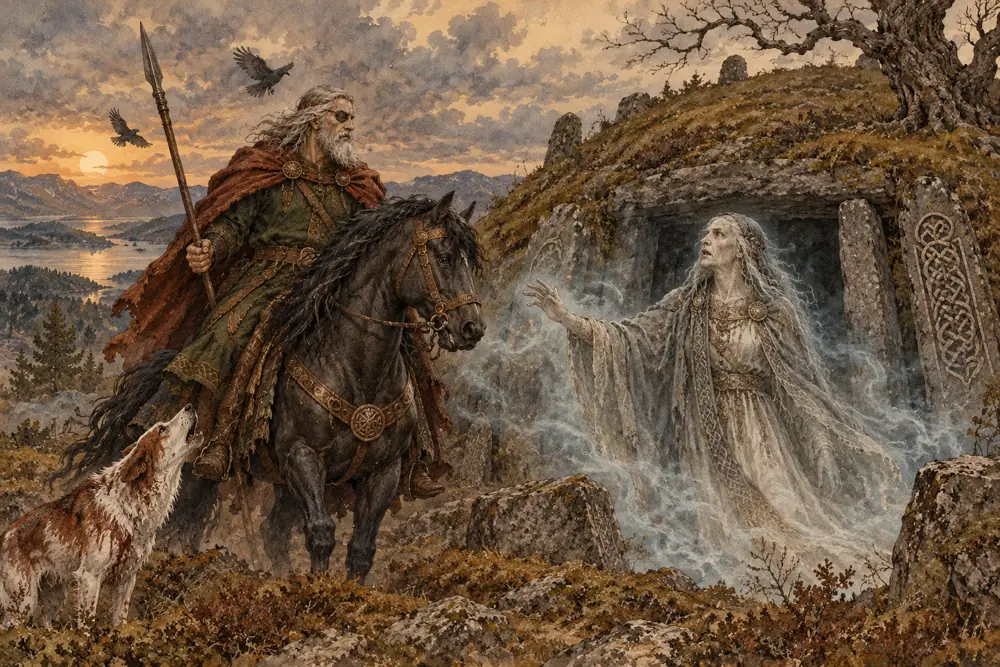
2 min read
Baldr’s dreams and the awakened seer
A disturbing dream sends Odin beneath the world, where preparations for a guest reveal the danger facing his son.
Read the story ↗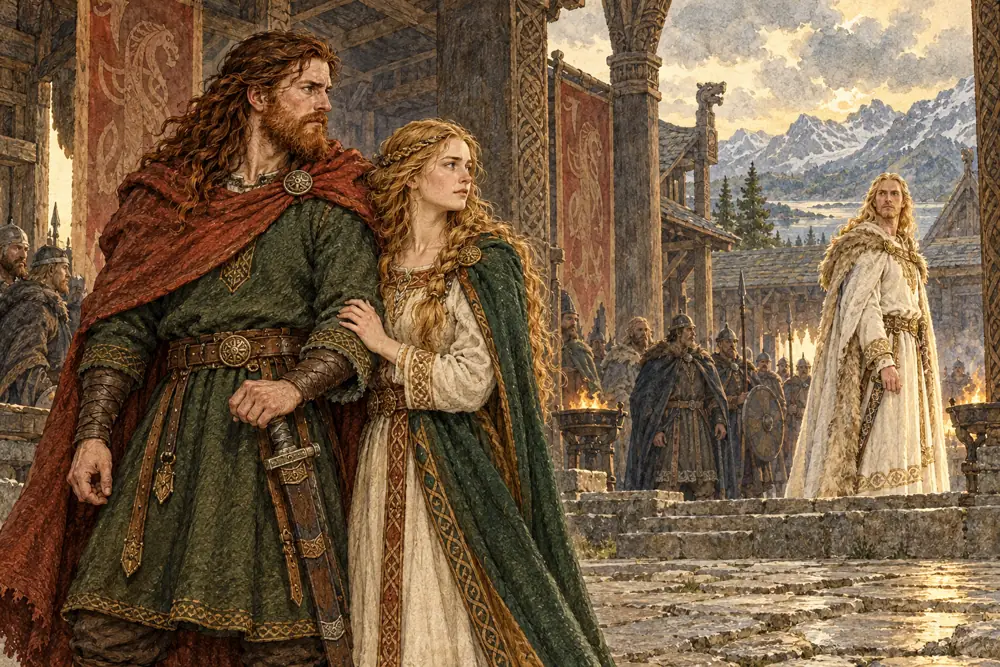
2 min read
Balder, Hother and Nanna in Saxo
Saxo’s Danish history places familiar names in a very different struggle, with a human hero confronting a divine rival.
Read the story ↗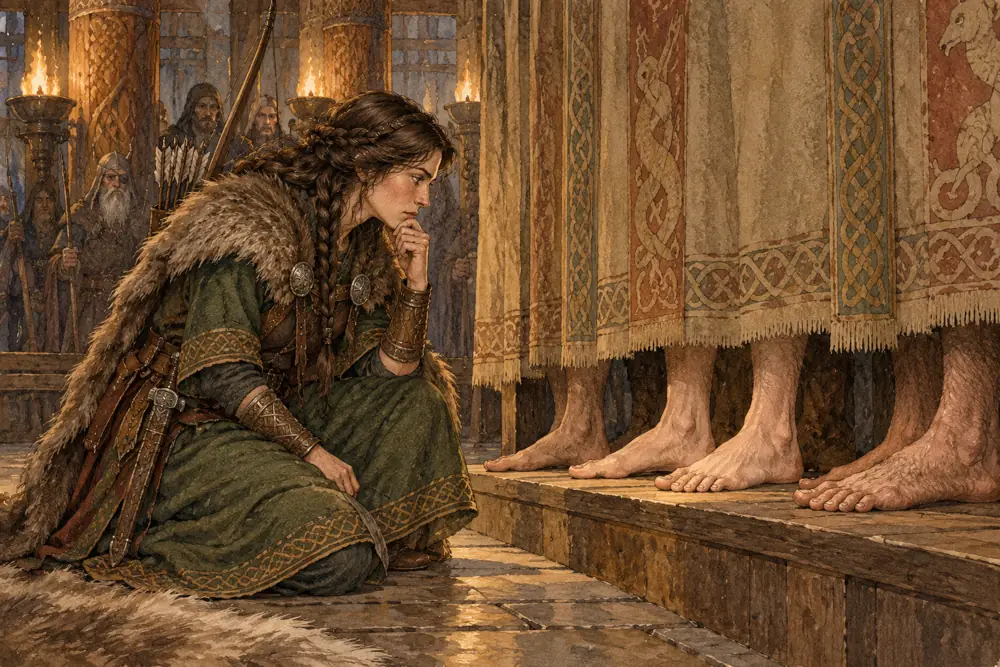
2 min read
Skadi chooses a husband
After Thjazi’s death, his daughter arrives armed at Asgard. The gods offer compensation, but the marriage that follows cannot reconcile two very different homes.
Read the story ↗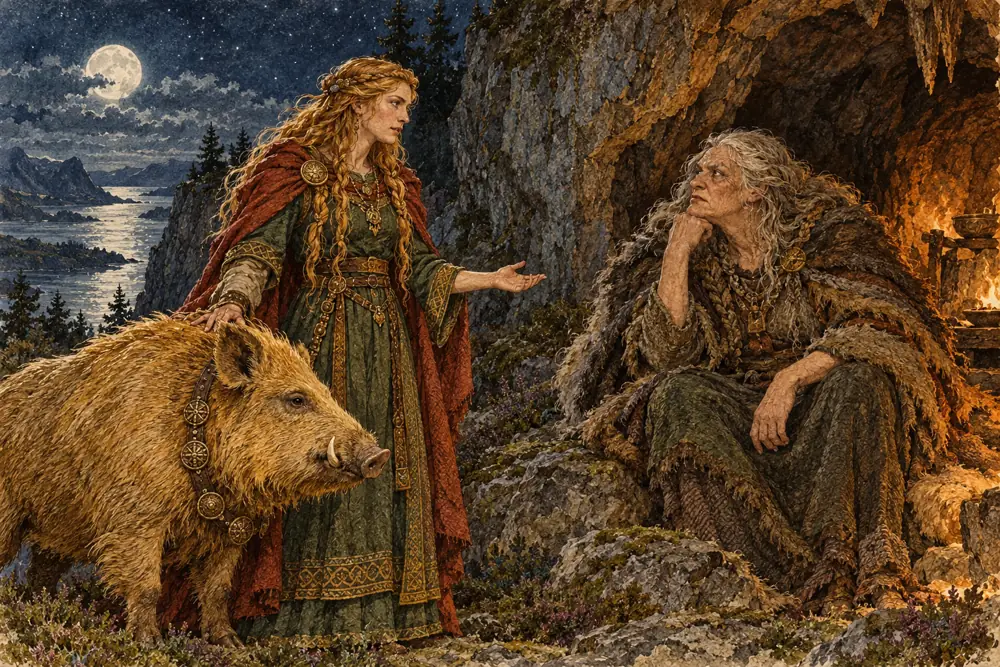
2 min read
Freyja, Hyndla, and Ottar’s ancestry
Freyja seeks a genealogy for her devotee Ottar. The encounter becomes a dispute about ancestry, memory, and the price of knowledge.
Read the story ↗
2 min read
Odin and Rinda in Saxo
Saxo’s disturbing narrative makes the birth of Balder’s avenger the result of deception and sexual violence.
Read the story ↗