
A Norse story · 2 min read
Odin and Rinda in Saxo
An account of coercion and the pursuit of revenge
Saxo’s disturbing narrative makes the birth of Balder’s avenger the result of deception and sexual violence.
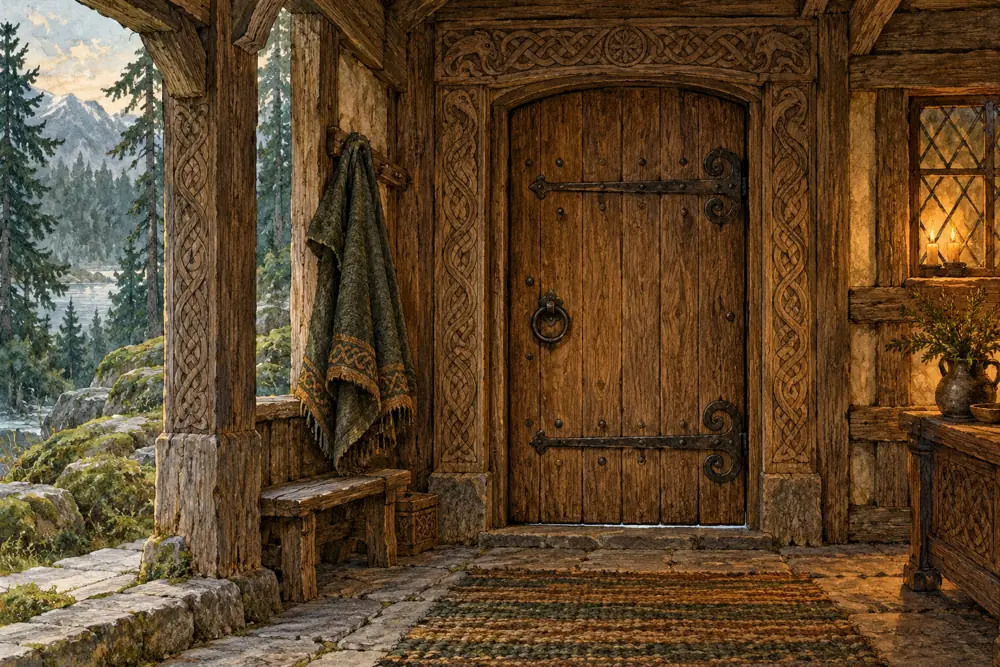
A prediction after Balder’s death
After Balder is killed, Saxo’s Odin consults a diviner about revenge. The answer is that he must have a son by Rinda, the daughter of a king of the Ruthenians. This is the geography of Saxo’s legendary narrative, not a secure identification of a historical royal family. Odin enters the king’s service under different disguises and attempts to obtain Rinda’s favour through military success, gifts and assumed appearances.
Refusal is not consent
Rinda repeatedly rejects him. Her father pressures her, but she continues to resist. Odin then uses magic against her and later gains access to the household disguised as a female healer. When she becomes ill, he claims that treatment requires restraint and exploits the situation to rape her. The episode is not a successful courtship or a romance. The violence can be stated plainly without reproducing the text’s bodily detail or its language that sometimes treats persistence as admirable.
Complicity, disgrace and vengeance
Saxo also records another version in which the father permits Odin access to his daughter. This variation shifts the mechanism of complicity; it does not establish her consent. The following narrative describes Odin’s expulsion by the other gods because of the disgrace associated with his conduct, and eventually his restoration. His son by Rinda is called Boe in Elton’s translation. Boe later kills Hother in battle but dies of his own wounds shortly afterward.
Related names, different accounts
The Eddic tradition names Rind as the mother of Odin’s avenging son Vali, but its brief references do not contain Saxo’s full plot. We should therefore not silently place every detail of this story inside Baldrs draumar. Saxo is a Christian writer sharply hostile to the claim that such figures are gods; his narrative needs to be read with that framing visible. Preserving the distinction allows the episode to be documented without either excusing Odin’s actions or pretending this version represents all Norse tradition.
Read behind the retelling
Sources & limits
Content note: non-graphic sexual violence and coercion. This is Saxo’s distinct medieval account; Boe and the Eddic Vali should not be treated as narratively identical in every detail.
- Saxo Grammaticus, Gesta Danorum, Book III, Rinda and Boe narrative; Oliver Elton translation
- Baldrs draumar, stanza 11: separate Eddic reference to Rind and Vali
Retold in contemporary English. Dialogue is summarized, not presented as a translation. How to read our sources and versions.
Another thread to follow
2 min read
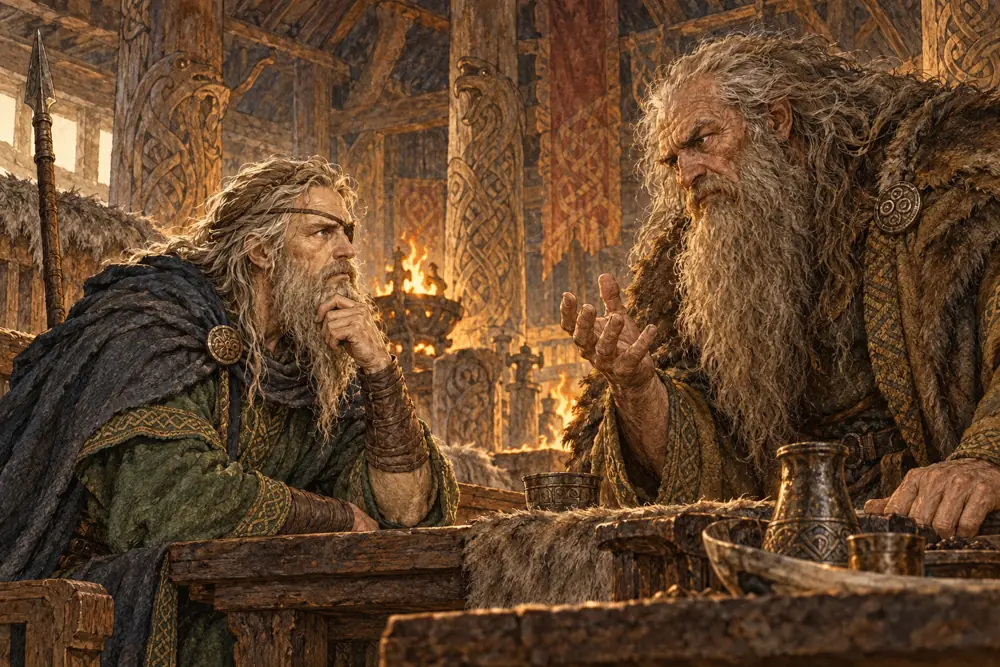
Odin’s contest of wisdom
Odin tests Vafthrúðnir in a contest that moves from the structure of the cosmos to a secret only Odin can know.
Read the story ↗
3 min read
Ragnarok: the breaking of the world
The end approaches through broken human bonds and broken cosmic restraints. The surviving texts also imagine a world that rises after the disaster.
Read the story ↗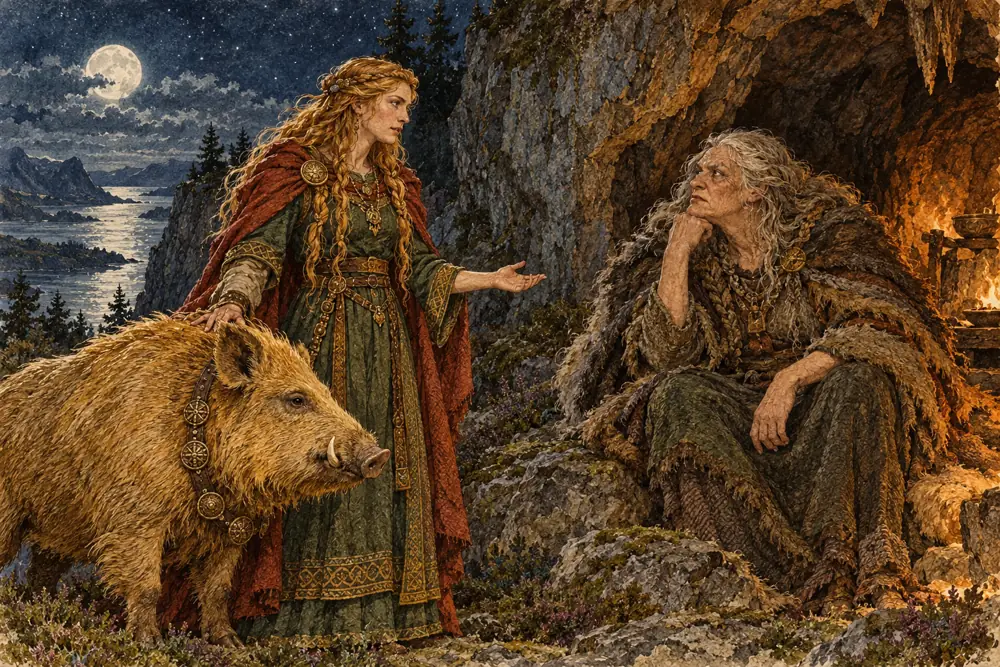
2 min read
Freyja, Hyndla, and Ottar’s ancestry
Freyja seeks a genealogy for her devotee Ottar. The encounter becomes a dispute about ancestry, memory, and the price of knowledge.
Read the story ↗