
A Norse story · 2 min read
Freyja, Hyndla, and Ottar’s ancestry
A journey for knowledge at the edge of myth and heroic legend
Freyja seeks a genealogy for her devotee Ottar. The encounter becomes a dispute about ancestry, memory, and the price of knowledge.
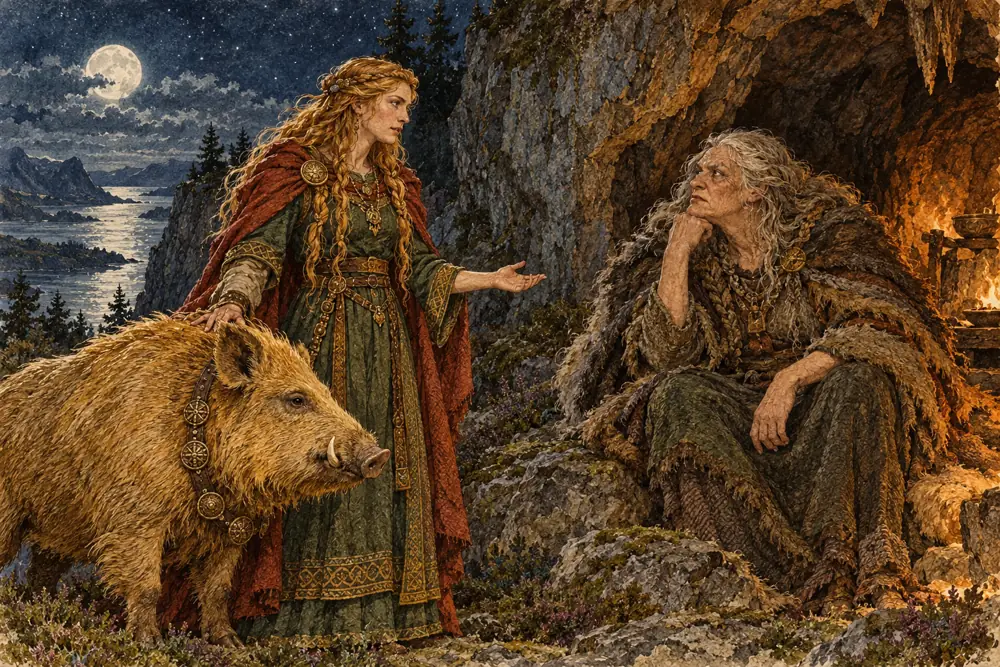
A goddess asks for help
Hyndluljóð begins with Freyja waking Hyndla, a knowledgeable giantess, and urging her to travel. Freyja is concerned with Ottar, a human devotee who needs to establish his ancestry in a dispute with Angantyr. Ottar has honoured the goddess with an altar and offerings. The favour she seeks is therefore practical as well as mythic: knowledge of descent can support a claim to inheritance or property. Hyndla sees through the arrangement around Freyja’s boar and accuses her of bringing Ottar along. The poem’s presentation of Ottar and the animal has prompted different readings; it should not be expanded into a detailed transformation scene that the text does not narrate.
A long chain of names
Hyndla recites relatives and ancestors, linking Ottar to many families of heroic tradition. This is not a modern family tree that can be verified with records. Legendary figures, dynastic claims, and familiar saga lineages become a network of prestige. Repeated reminders make the recitation a performance of knowledge for someone who must remember it. Names that seem like a catalogue can carry stories for an audience already familiar with heroic tradition. The poem depends on that recognition, rather than stopping to retell every ancestor’s life.
Myth enters the genealogy
Within the surviving poem is a passage often called the Short Völuspá, moving from heroic ancestry into divine and cosmic material. It mentions Baldr, Vali, Loki’s offspring, and other mythological relationships. This changes the scale of the encounter. Ottar’s personal need is surrounded by accounts of powers older and larger than any family dispute. The transmission and arrangement of the material are complicated; a tidy modern narrator should not conceal that difficulty by pretending the poem is one smooth travel adventure.
Knowledge must be remembered
Towards the end, Freyja demands a memory drink so Ottar can retain what he has heard. The exchange becomes hostile, with insults, threats, and a harmful wish attached to the drink. Freyja counters with a promise of protection. The poem ends without narrating the later court proceedings or announcing a documented legal victory. Its interest is the difficult acquisition of knowledge and the goddess’s commitment to her follower. As a boundary work between divine myth and heroic genealogy, it offers something different from Thor’s fights or Loki’s tricks: a story in which names, remembered relationships, and authoritative speech can change a human being’s prospects.
Read behind the retelling
Sources & limits
A mythological and genealogical poem, not a verifiable pedigree. The text does not narrate Ottar’s later success in the inheritance dispute.
Retold in contemporary English. Dialogue is summarized, not presented as a translation. How to read our sources and versions.
Another thread to follow
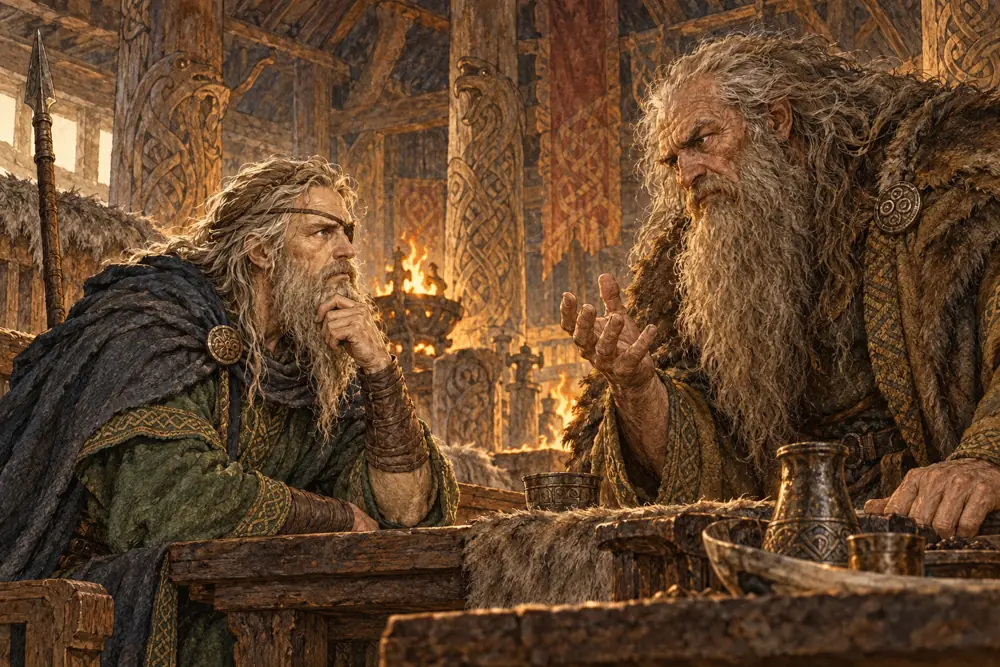
2 min read
Odin’s contest of wisdom
Odin tests Vafthrúðnir in a contest that moves from the structure of the cosmos to a secret only Odin can know.
Read the story ↗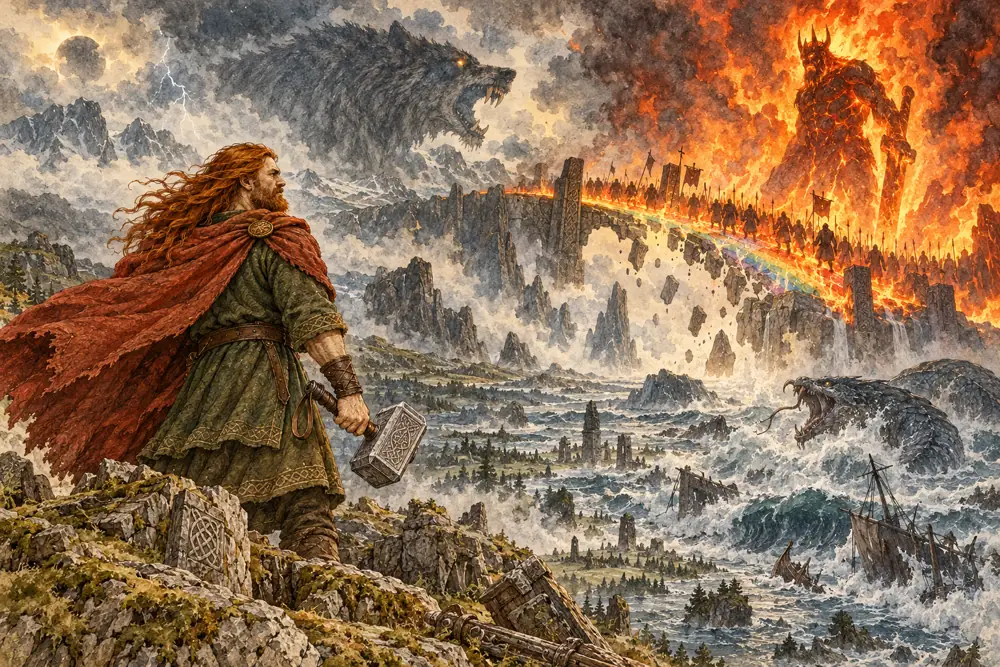
3 min read
Ragnarok: the breaking of the world
The end approaches through broken human bonds and broken cosmic restraints. The surviving texts also imagine a world that rises after the disaster.
Read the story ↗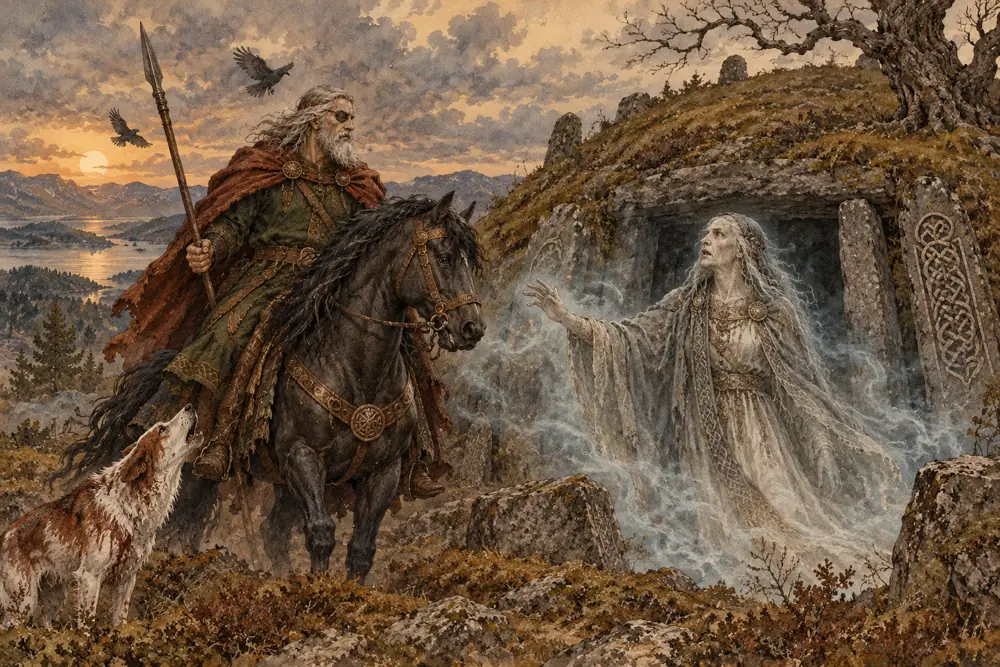
2 min read
Baldr’s dreams and the awakened seer
A disturbing dream sends Odin beneath the world, where preparations for a guest reveal the danger facing his son.
Read the story ↗