
A Norse story · 2 min read
The mead of poetry
How wisdom became a drink—and how Odin stole it.
The blood of Kvasir passes through murder, bargaining and deception before the poetic mead reaches the gods.
A peace becomes a person
Skáldskaparmál begins the mead’s history with peace between the Æsir and Vanir. Both groups spit into a vessel as a pledge, and from this they create Kvasir, a being who can answer every question. He travels sharing his knowledge until the dwarfs Fjalarr and Galarr kill him. They mix his blood with honey and make a mead that grants poetry and learning. Their explanation for Kvasir’s disappearance conceals murder beneath an absurd claim that his wisdom had overwhelmed him. The marvellous drink therefore begins not in a peaceful gift but in the destruction of a wise visitor.
Suttung takes possession
The dwarfs also cause the deaths of the giant Gillingr and his wife. Their son Suttung threatens revenge, and they surrender the mead to save themselves. Suttung hides it in a mountain and appoints his daughter Gunnlöð to guard it. Odin, using the name Bölverkr, approaches Suttung’s brother Baugi. After engineering the deaths of Baugi’s workers, he offers to do their work in return for a drink of the mead. When the promised access is refused, he has Baugi bore into the mountain. Odin enters through the opening in the form of a snake.
Three drinks and an eagle chase
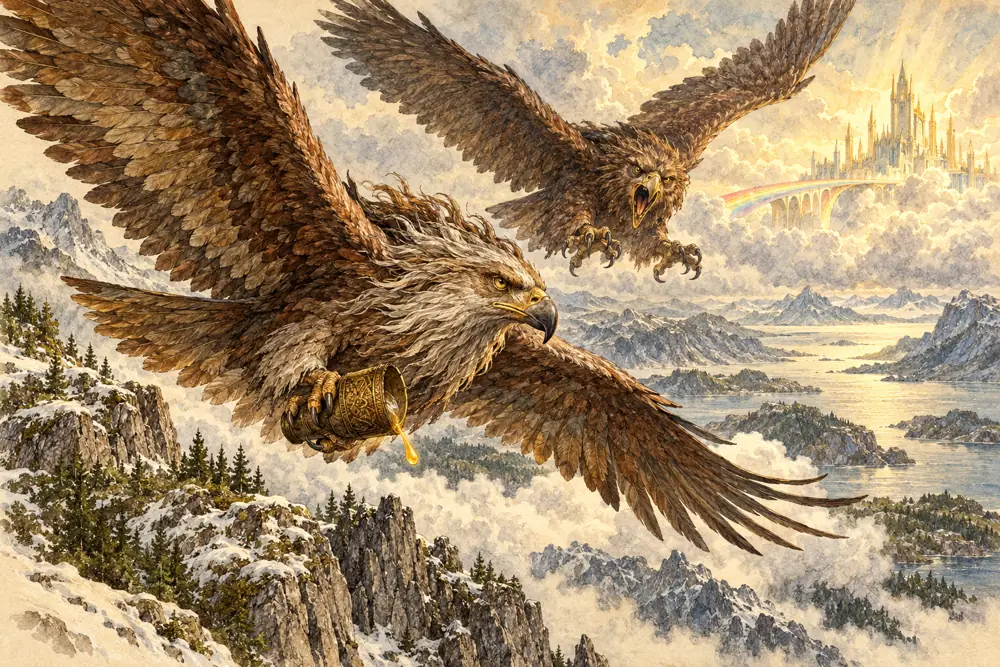
Odin spends three nights with Gunnlöð, who allows him three drinks. Each empties one of the containers, so he takes the entire supply. He then changes into an eagle and flies toward Asgard. Suttung pursues in the same shape. The gods set out vessels, and Odin brings the mead into them. The prose also offers a deliberately coarse explanation for bad poetry: some of the drink escapes behind him during the chase, becoming the portion available to inferior poets. The story joins exalted inspiration to bodily comedy without seeing any need to keep them apart.
Wisdom with an uneasy cost
The narrative explains poetic expressions that connect poetry with Kvasir’s blood, the dwarfs, Suttung or Odin. It also makes the giver of inspiration a thief and deceiver. Hávamál preserves a more compressed recollection involving Gunnlöð, a drill and the mead, including words that leave Odin’s conduct ethically uncomfortable. Its details should not all be treated as a verbatim outline of Snorri’s fuller prose. Neither account needs to be cleaned up into a simple moral victory. The drink reaches the gods, but knowledge travels through exploitation, broken trust and violence. That tension is part of what makes the surviving story memorable.
Read behind the retelling
Sources & limits
This is the prose mead narrative with a separate note on Hávamál. Gunnlöð’s story should not be reduced to a harmless romance or merged with Odin’s hanging ordeal.
Retold in contemporary English. Dialogue is summarized, not presented as a translation. How to read our sources and versions.
Another thread to follow
2 min read
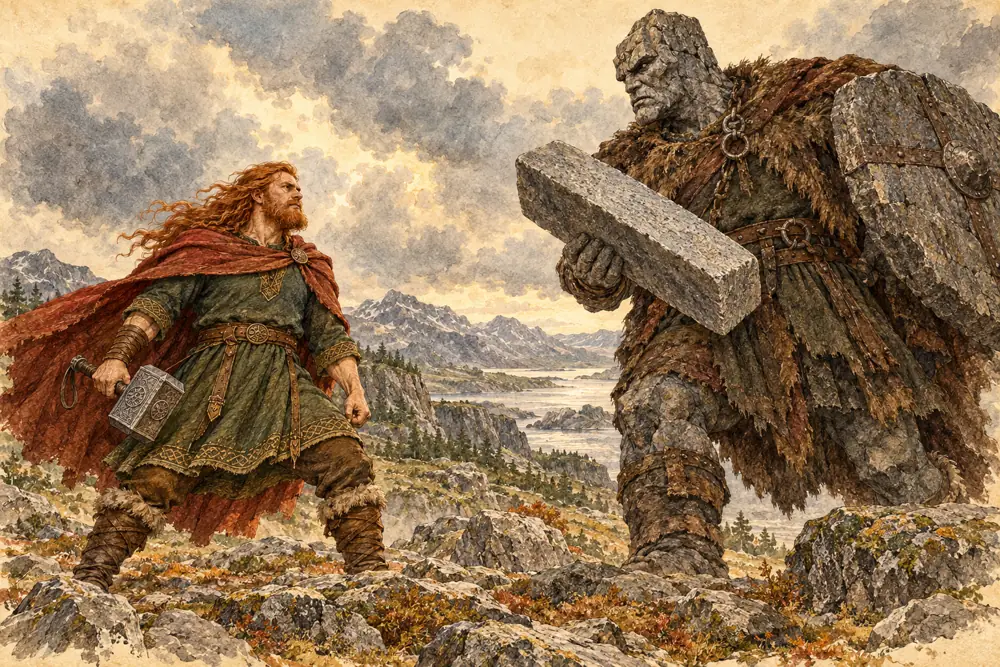
Thor and the stone-hearted Hrungnir
Hrungnir pursues Odin into Asgard, boasts beyond hospitality, and challenges Thor to meet him armed.
Read the story ↗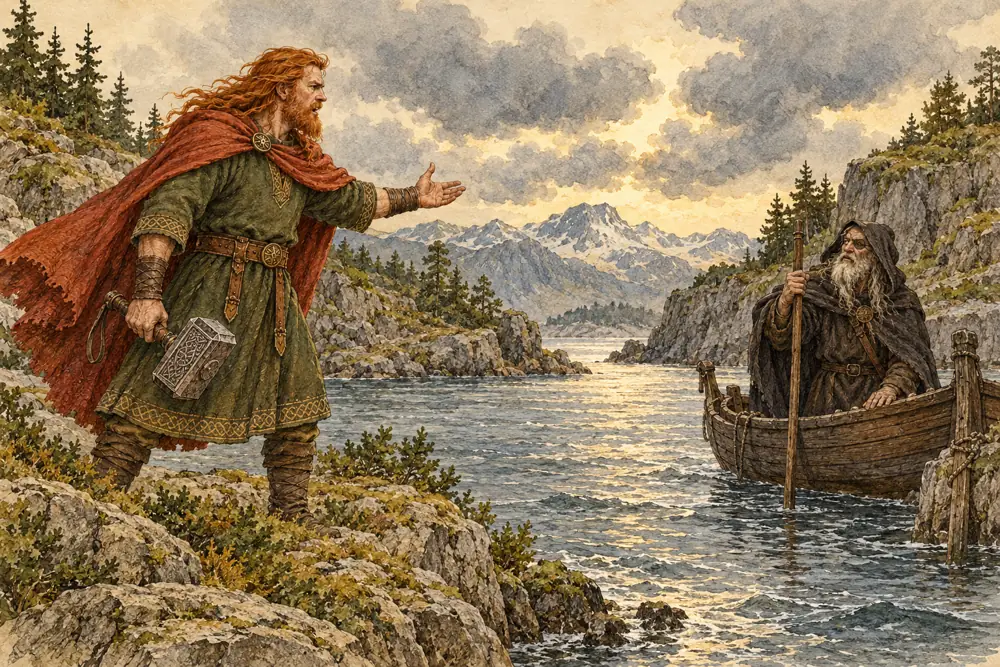
2 min read
Thor and the ferryman
Thor needs a ferry. Hárbarðr offers insults instead, and a verbal contest replaces the expected passage.
Read the story ↗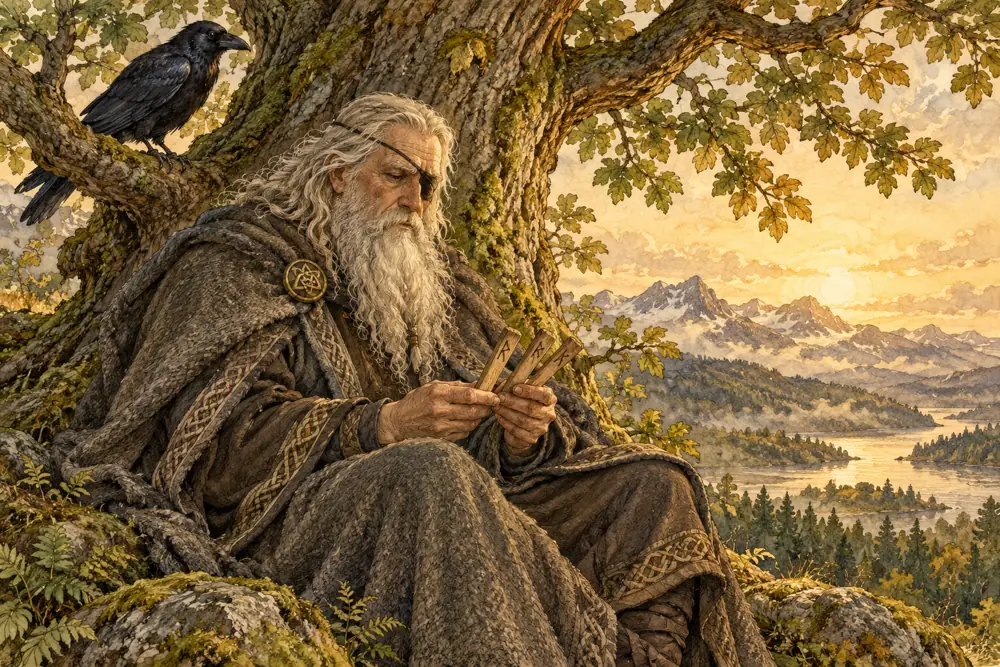
2 min read
Odin’s ordeal for the runes
Hávamál gives Odin a brief, disturbing account of sacrifice, deprivation and the gaining of runes.
Read the story ↗