
A Norse story · 2 min read
Thor and the stone-hearted Hrungnir
A horse race becomes a formal duel.
Hrungnir pursues Odin into Asgard, boasts beyond hospitality, and challenges Thor to meet him armed.
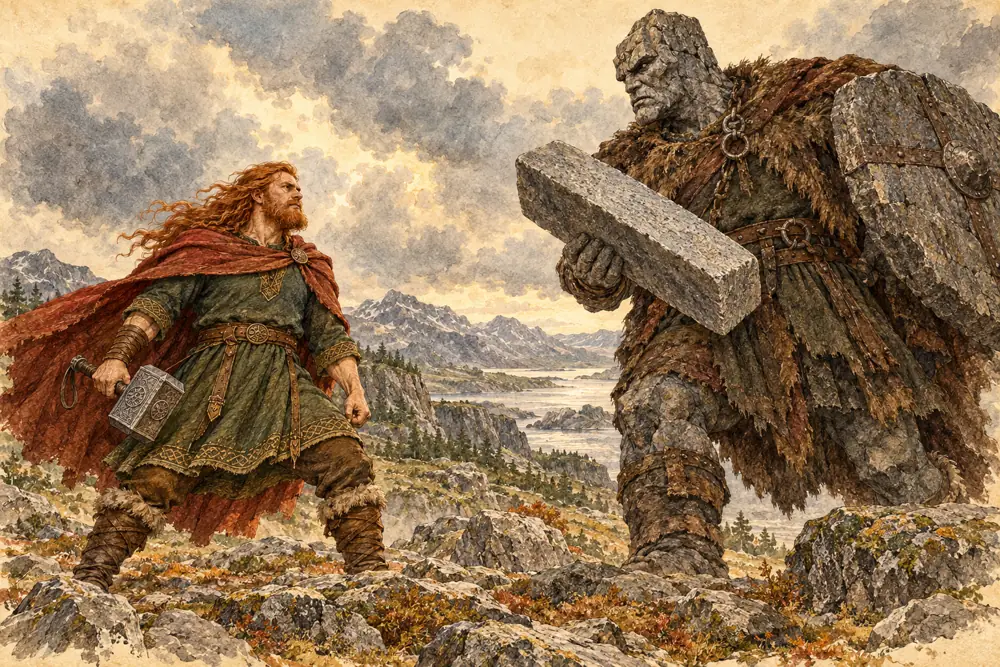
A guest who goes too far
In Skáldskaparmál, Odin rides Sleipnir into the territory of Hrungnir. A boast about horses turns into a race, and Hrungnir rides his own horse, Gullfaxi, after Odin all the way into Asgard. The gods offer him drink. Once drunk, he threatens to destroy their home and carry away Freyja and Sif. Thor arrives, but Hrungnir points out that he is an invited guest and unarmed. Rather than let Thor kill him on the spot, he challenges the god to a duel at an agreed place. Thor accepts. Boasting has become an obligation to fight.
Stone, clay and a useful deception
Hrungnir has a stone head and heart, a stone shield and a whetstone as his weapon. His allies also make a huge clay figure, Mökkurkálfi, and give it a mare’s heart; its impressive size does not make it courageous. Thor comes with Thjálfi. The boy tricks Hrungnir by claiming that Thor will attack from below, so the giant stands on his shield rather than holding it in front of him. Thjálfi’s intervention is another reminder that Thor’s adventures regularly depend on intelligence and assistance as well as overwhelming force.
The hammer meets the whetstone
Thor throws Mjölnir while Hrungnir throws his whetstone. They collide in the air. Part of the shattered whetstone lodges in Thor’s head, while the hammer kills Hrungnir. The giant falls with a leg across Thor’s neck. Thjálfi defeats the clay figure but cannot free Thor, and the other gods also fail to lift the leg. Thor’s very young son Magni removes it. Thor rewards him with Gullfaxi, provoking Odin’s displeasure at the horse being given to the son of a giantess rather than to him. Victory leaves an argument as well as an injury.
Why the stone remains
The healer Gróa begins chanting to loosen the fragment in Thor’s head. As he feels it move, Thor tells her that her husband Aurvandill will return, and recounts carrying him across a cold river. Her joy makes her forget the charm. The stone remains. The story therefore refuses a completely restored hero: the victor carries a lasting trace of the contest. Skáldskaparmál places such narratives beside poetry and poetic language. Hrungnir’s stone heart and Thor’s wounded head are not stray decorative details; they help readers understand allusions that poets could evoke in only a few words.
Read behind the retelling
Sources & limits
Magni is Thor’s son. The giant is Hrungnir; Hymir belongs to the fishing story. Gróa’s unfinished healing follows the duel in the prose account.
Retold in contemporary English. Dialogue is summarized, not presented as a translation. How to read our sources and versions.
Another thread to follow

2 min read
Loki’s quarrel at Ægir’s feast
Loki enters the gods’ feast and attacks one guest after another in a formal exchange of insults.
Read the story ↗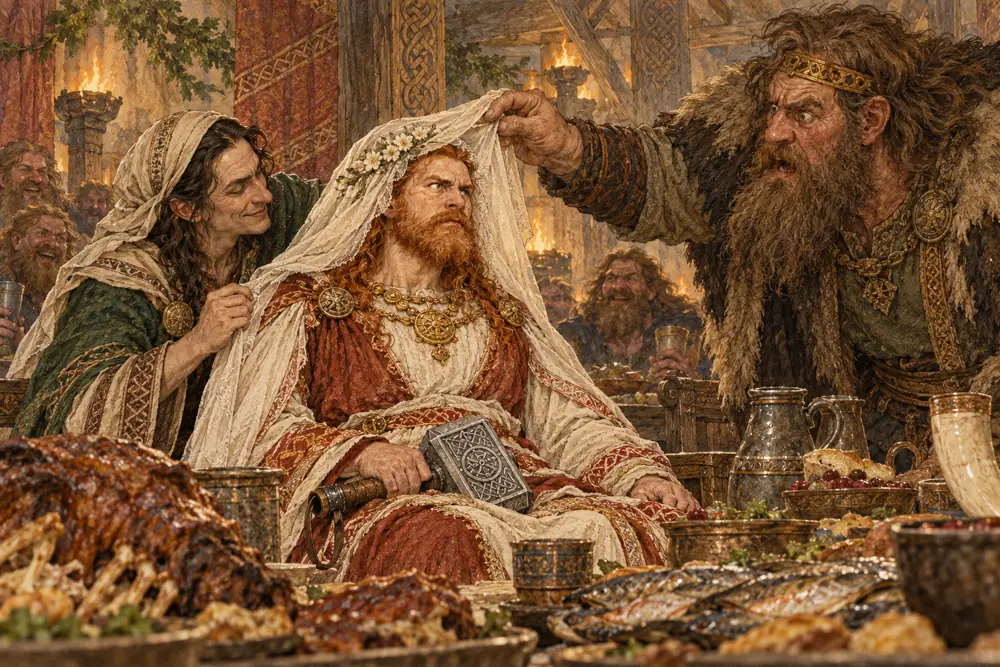
2 min read
Thor’s extraordinary wedding
When Thrym demands Freyja in exchange for Mjölnir, the gods send a very different bride.
Read the story ↗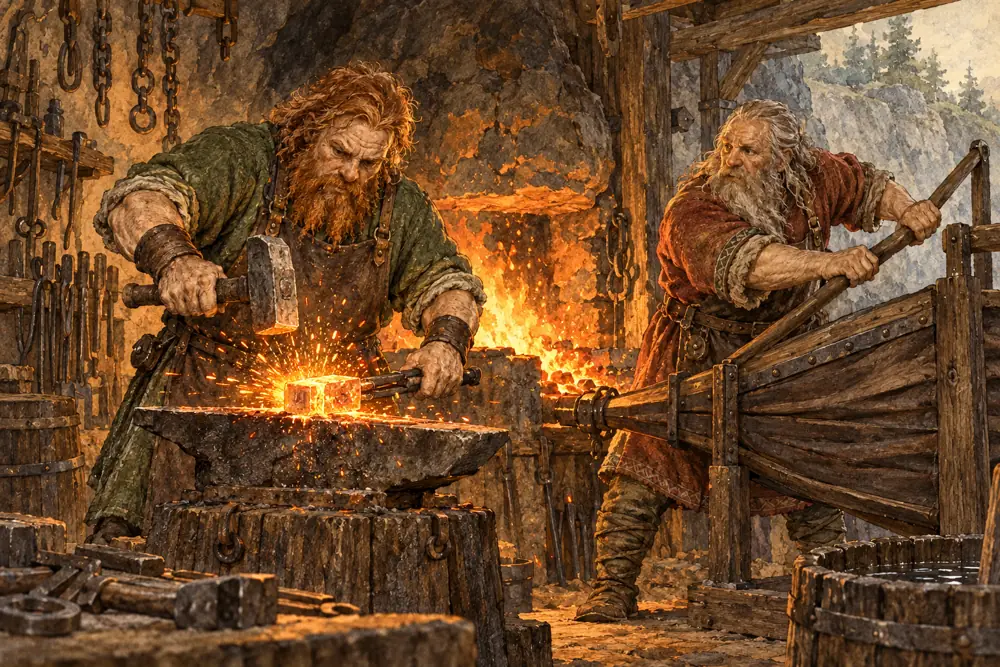
2 min read
The treasures of the gods
Loki’s attack on Sif’s hair sets two groups of dwarf craftsmen to work, bringing some of the gods’ most famous possessions into the story.
Read the story ↗