
A Norse story · 2 min read
Thor’s extraordinary wedding
A stolen hammer and a bride nobody expected.
When Thrym demands Freyja in exchange for Mjölnir, the gods send a very different bride.
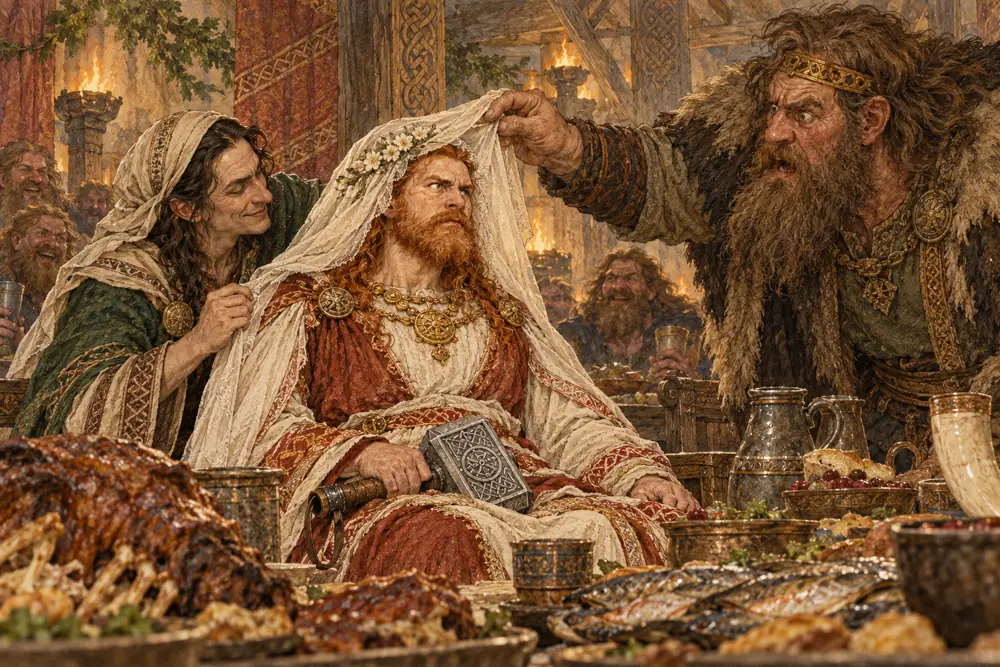
The weapon is missing
Thor wakes to discover that Mjölnir has vanished. In Þrymskviða, the missing hammer is a crisis for more than its owner: it is the weapon that keeps hostile giants in check. Loki borrows Freyja’s feather garment and flies in search of it. He finds Thrym, who admits hiding the hammer deep underground. His price for its return is Freyja as his bride. Loki returns with the demand, and Thor tells Freyja to prepare for the journey. She refuses furiously. Her reaction is not a minor obstacle to be brushed aside: the poem explicitly gives her a decisive refusal.
A disguise for the thunder god
The gods meet to find another plan. Heimdall proposes dressing Thor as the bride, complete with bridal clothing and Freyja’s necklace. Thor initially objects because he fears ridicule and accusations of unmanliness. Loki points to the danger of leaving the hammer with the giants. Thor agrees, and Loki accompanies him as a maid. Modern readers may find the disguise funny for different reasons from a medieval audience. The poem plays with its society’s expectations about gender and reputation; its insults are not a reliable statement about anyone’s modern identity.
Dinner nearly gives the game away
At the wedding feast, the supposed bride devours an ox, eight salmon and the delicacies intended for the women, then drinks an astonishing amount. Thrym is startled. Loki explains that Freyja has eaten nothing for eight nights because she longed so much to come. When Thrym lifts the veil, Thor’s fierce eyes make him recoil. Loki supplies another explanation: the bride has also gone without sleep. Loki’s improvisation keeps the disguise intact long enough for the wedding rite to proceed. Thor’s familiar appetite becomes the chief danger to the plan.
The hammer returns
Thrym orders Mjölnir brought in to hallow the bride and places it in Thor’s lap. The object used to seal the marriage restores the god’s power. Thor seizes it, kills Thrym and strikes down the giants at the gathering. The story ends in violent recovery rather than an actual marriage. Its comedy depends on the audience knowing what Thrym does not: he has brought his greatest enemy into his home and personally returned the weapon he feared. The poem does show a hammer being used in a wedding setting, but one literary scene cannot establish every detail of historical Scandinavian wedding practice.
Read behind the retelling
Sources & limits
This retelling follows Þrymskviða. The poem is evidence for a mythic wedding scene, not a complete handbook of Viking Age marriage rituals.
Retold in contemporary English. Dialogue is summarized, not presented as a translation. How to read our sources and versions.
Another thread to follow

2 min read
Loki’s quarrel at Ægir’s feast
Loki enters the gods’ feast and attacks one guest after another in a formal exchange of insults.
Read the story ↗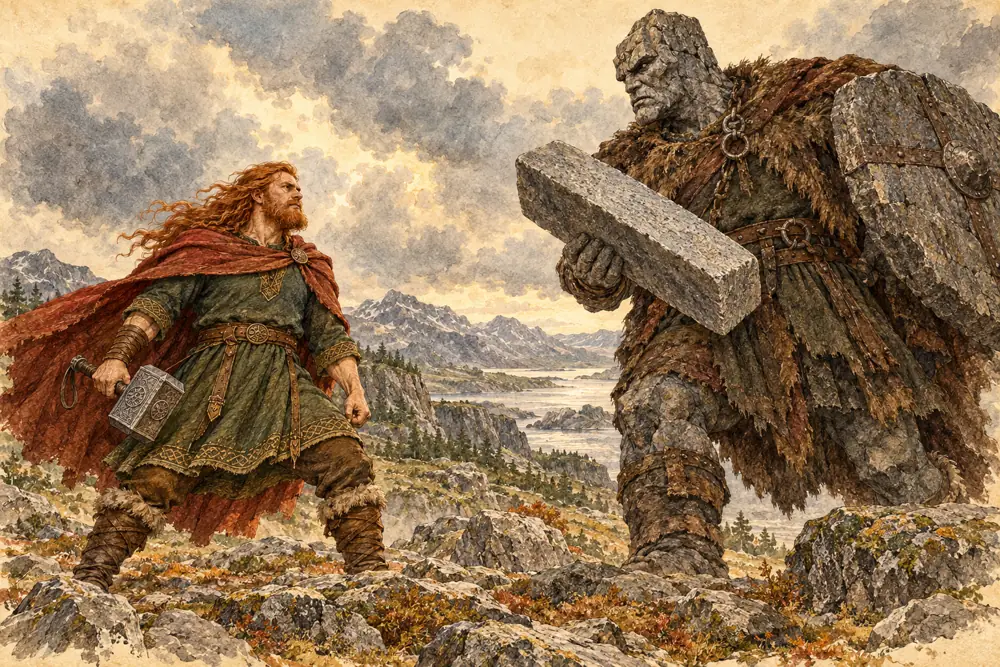
2 min read
Thor and the stone-hearted Hrungnir
Hrungnir pursues Odin into Asgard, boasts beyond hospitality, and challenges Thor to meet him armed.
Read the story ↗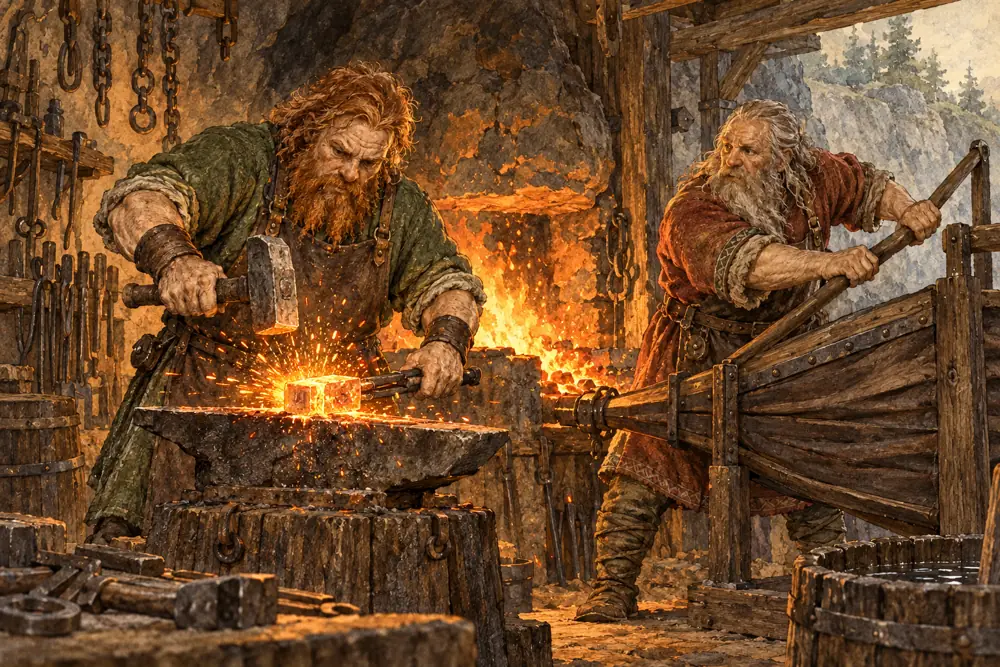
2 min read
The treasures of the gods
Loki’s attack on Sif’s hair sets two groups of dwarf craftsmen to work, bringing some of the gods’ most famous possessions into the story.
Read the story ↗