
A Norse story · 2 min read
Mimir’s speaking head
Wisdom survives a broken peace
A hostage exchange ends in murder, but Odin preserves the counsellor whose advice remains indispensable.
A promising exchange
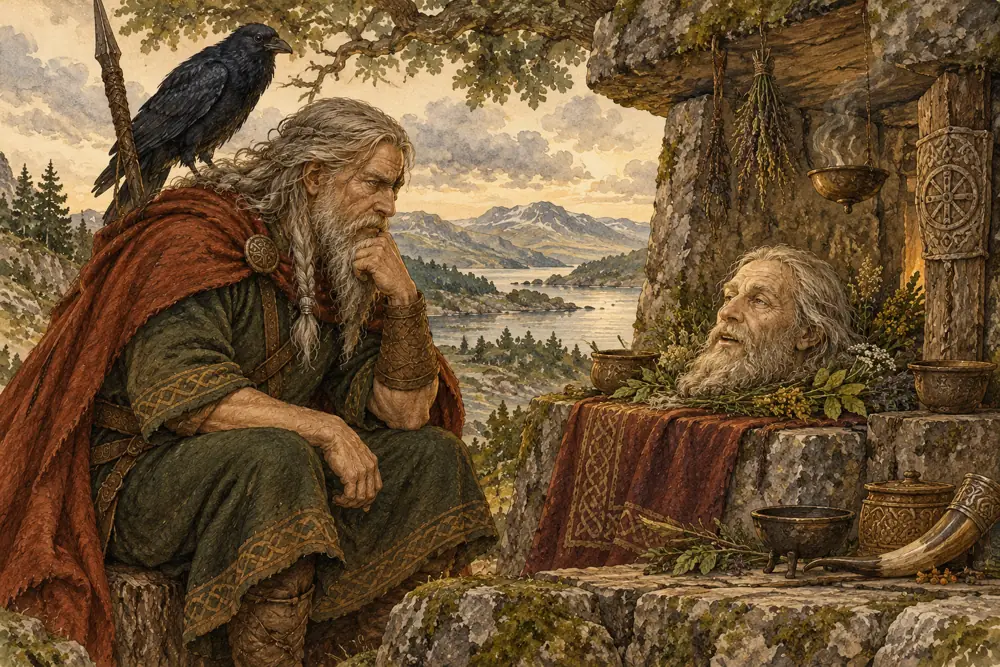
After war between the Æsir and Vanir, Ynglinga saga describes a settlement secured by exchanging important people. Hoenir seems an excellent choice for a leader: he is impressive in appearance and stature. Mimir accompanies him and provides the wisdom that allows him to govern. The arrangement initially works because the Vanir see the two men acting together. They cannot yet distinguish the authority of the figure in front from the judgement of the adviser beside him.
The adviser pays
At assemblies where Mimir is absent, difficult questions expose Hoenir’s dependence. Instead of deciding, he repeatedly leaves the judgement to others. The Vanir conclude that the exchange has deceived them. Their response is to kill Mimir, sever his head and send it back to the Æsir. The text does not explain why they punish the able adviser rather than the inadequate leader. That disturbing imbalance is part of the story, not something a retelling should repair by inventing another offence.
Odin keeps his counsel
Odin treats the head with herbs that prevent decay and chants spells over it. Mimir can then speak and reveal hidden matters. The exchange has destroyed the living counsellor but has not ended his service to Odin. Knowledge becomes something preserved beyond ordinary bodily life. The saga’s next descriptions of Odin’s arts include supernatural skills, so the episode belongs to its portrait of a ruler whose exceptional powers explain his later worship.
A head and a well
Mimir also appears in the Eddic tradition as keeper of a well of wisdom. Völuspá associates Odin with counsel from Mimir’s head, while Gylfaginning describes a visit to the well before the final battle. These witnesses establish a cluster of traditions about Odin’s reliance on Mimir; they do not supply a secure chronology connecting every appearance. The speaking head therefore deserves its own telling rather than being treated as a fully explained sequel to the sacrifice of Odin’s eye.
Read behind the retelling
Sources & limits
The detailed hostage-and-beheading narrative comes from Ynglinga saga. Its relationship to the well tradition is not explained consistently by the surviving sources.
- Ynglinga saga, chapter 4
- Völuspá, Ragnarök passage concerning Mimir’s head
- Gylfaginning, chapters 15 and 51
Retold in contemporary English. Dialogue is summarized, not presented as a translation. How to read our sources and versions.
Another thread to follow
2 min read
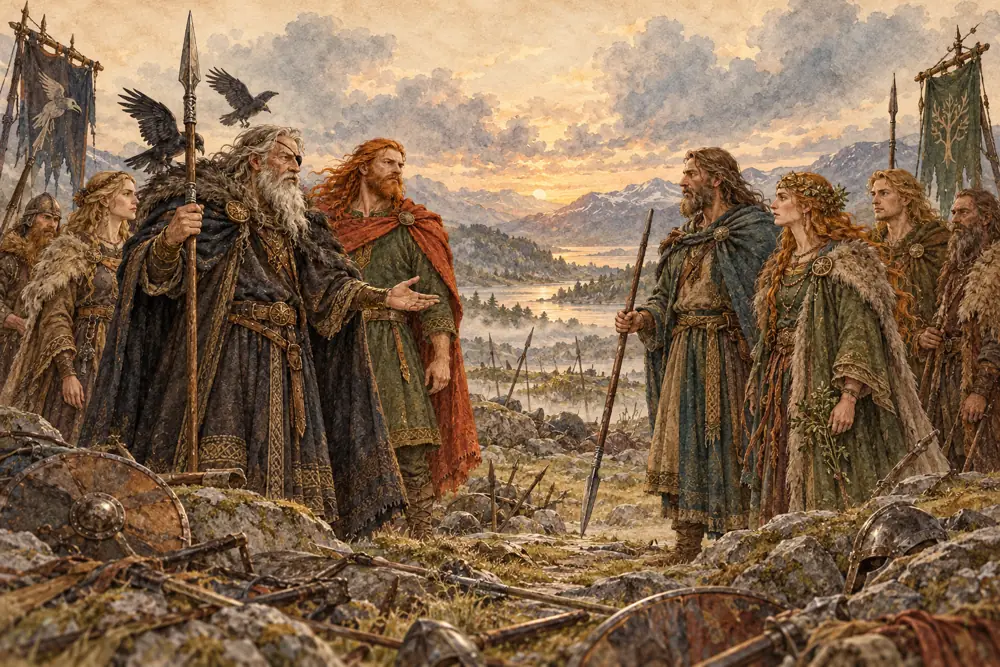
The war between the Æsir and Vanir
An early war, a mysterious woman and an uneasy peace survive in accounts that do not fit together neatly.
Read the story ↗
2 min read
Loki’s quarrel at Ægir’s feast
Loki enters the gods’ feast and attacks one guest after another in a formal exchange of insults.
Read the story ↗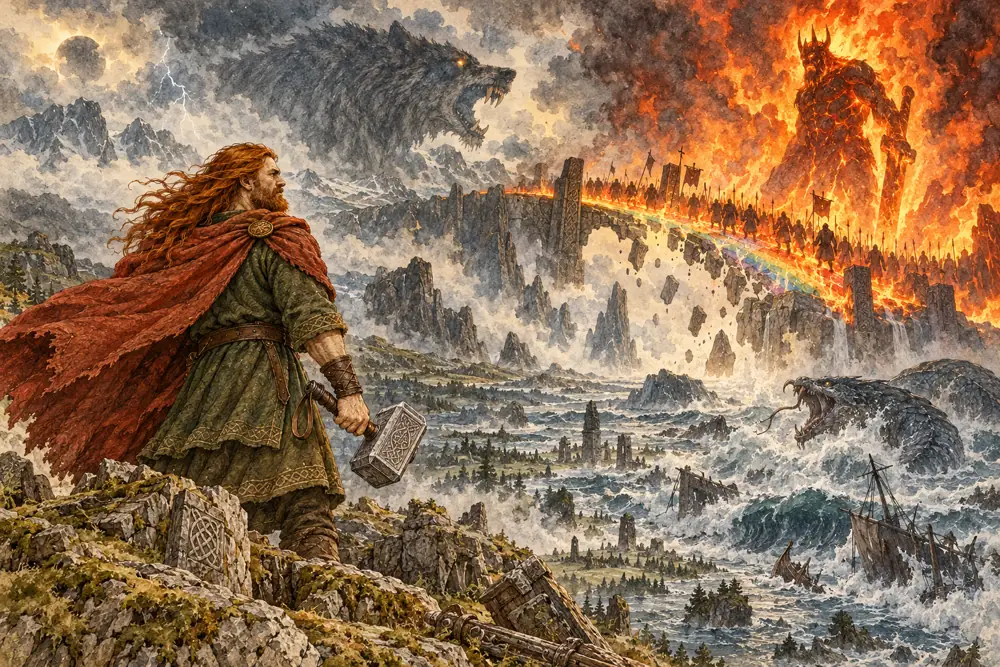
3 min read
Ragnarok: the breaking of the world
The end approaches through broken human bonds and broken cosmic restraints. The surviving texts also imagine a world that rises after the disaster.
Read the story ↗