
Gods & companions
Mimir
The keeper of knowledge Odin seeks
Mimir is associated with a well of wisdom beneath Yggdrasil and with counsel that Odin seeks even as the final crisis approaches.
Explore the stories ↓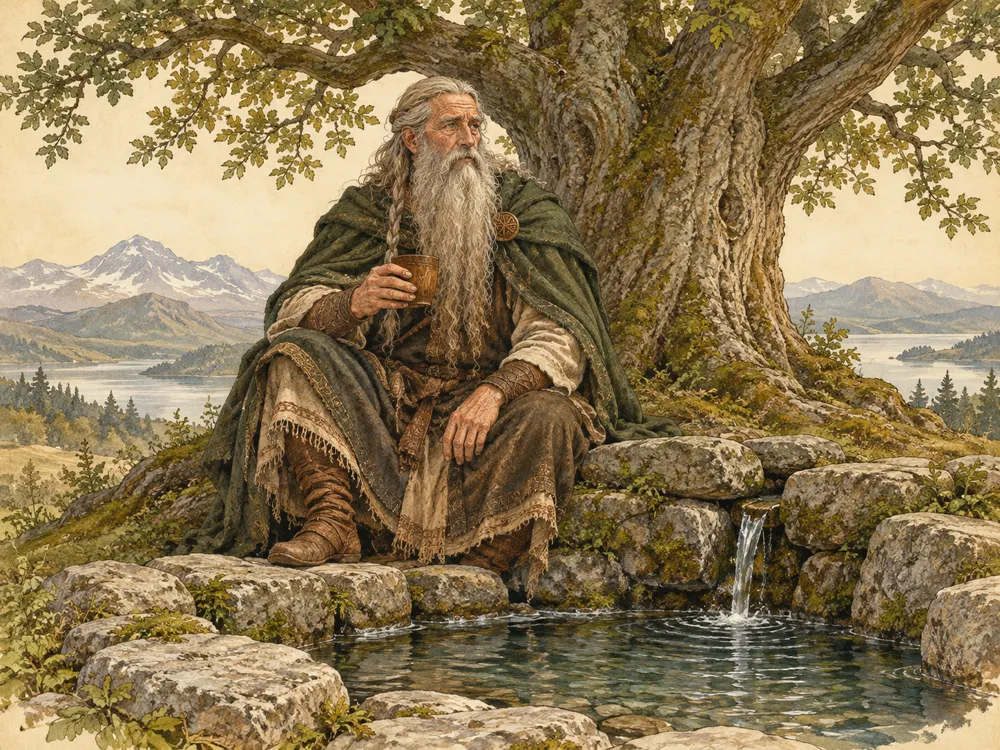
The well and the eye
Gylfaginning places Mimir’s well beneath the root of Yggdrasil that reaches towards the giants. Mimir drinks from it and possesses deep knowledge. Odin asks for a drink but must first leave an eye as a pledge. The scene does not show a chief god who simply commands every resource: even Odin must accept a price imposed at the boundary of someone else’s knowledge.
Counsel at the end
When Ragnarök begins, Snorri sends Odin to Mimir’s well for advice. Völuspá also refers to consultation with Mimir’s head. These references belong to a wider, unevenly preserved body of tradition. They should not be expanded into a complete sequence of conversations for which no text survives. Mimir is a particularly useful reminder that the myths often allude to stories their original audiences may have known better than we do.
Wisdom becomes the hostage’s danger
In Ynglinga saga, Mimir accompanies Hoenir to the Vanir after the divine war. Hoenir has the appearance of a leader, while Mimir provides the judgment needed to make the arrangement succeed. When the Vanir discover that Hoenir cannot handle difficult questions alone, they believe the exchange has cheated them. They behead Mimir and return his head to the Æsir. The episode is disturbing because the knowledgeable man pays for another figure’s inadequacy. Nothing in the narrative requires us to invent a secret offense by Mimir to make that outcome seem fair.
Odin preserves a counselor, not merely a trophy
Odin treats the severed head with herbs and chants over it so that it will not decay and can speak. Mimir continues to reveal hidden matters, making the head an instrument of counsel rather than simply a token of revenge. This story supplies the missing narrative behind the saga’s speaking-head tradition. It also illuminates Odin’s dependence: power does not make wisdom unnecessary, and the loss of a living adviser must be answered through extraordinary means. The well tradition presents a different setting for that dependence. Reading the two together is illuminating, but the texts do not narrate a single orderly sequence from the eye’s pledge to the hostage exchange.
Read behind the retelling
Sources & limits
The well and the severed-head tradition are related strands, but their surviving references do not supply one fully narrated continuous biography.
Retold in contemporary English. Dialogue is summarized, not presented as a translation. How to read our sources and versions.
Follow the thread
Stories & related reading: Mimir

3 min read
Ragnarok: the breaking of the world
The end approaches through broken human bonds and broken cosmic restraints. The surviving texts also imagine a world that rises after the disaster.
Read the story ↗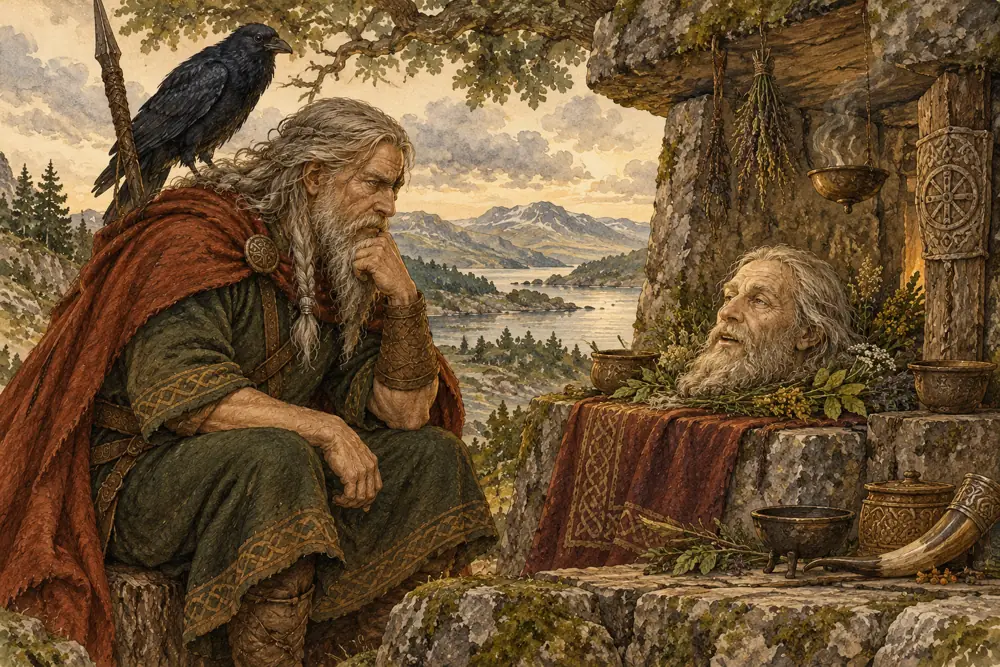
2 min read
Mimir’s speaking head
A hostage exchange ends in murder, but Odin preserves the counsellor whose advice remains indispensable.
Read the story ↗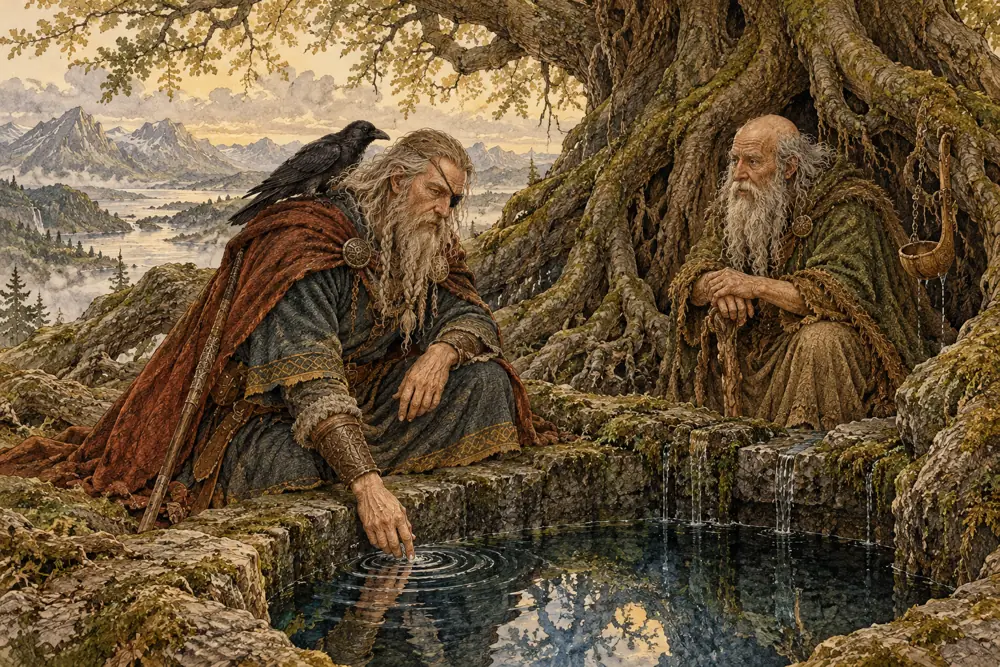
2 min read
Odin’s eye at Mimir’s well
Even Odin cannot simply command the knowledge held beneath the world-tree.
Read the story ↗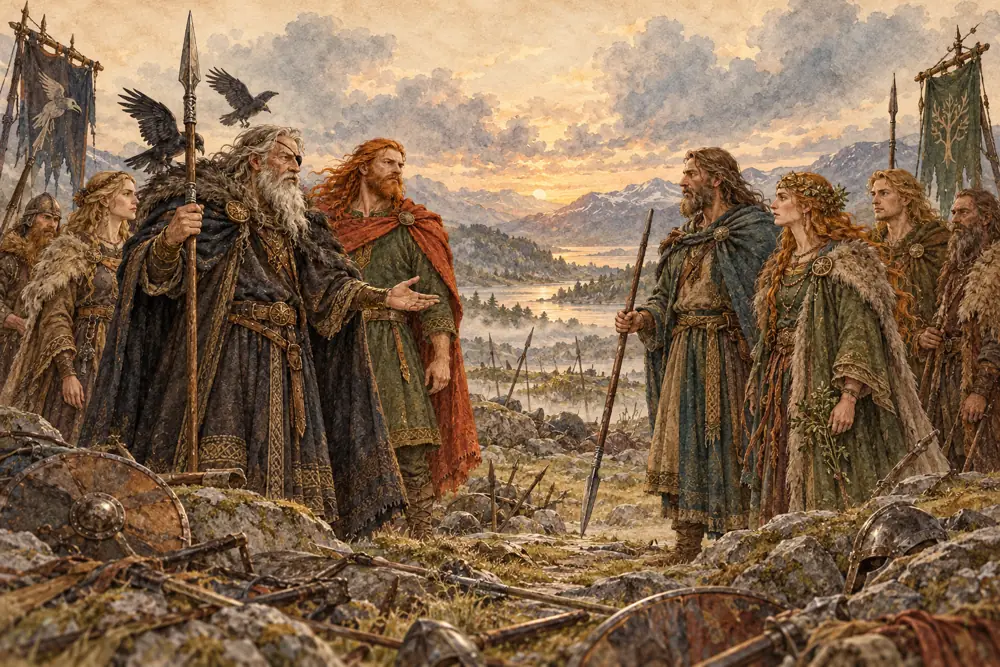
2 min read
The war between the Æsir and Vanir
An early war, a mysterious woman and an uneasy peace survive in accounts that do not fit together neatly.
Read the story ↗