
Vanir
Freyr
Prosperity, desire and the sword given away
Freyr is linked with rain, sunshine, fruitful seasons and peace. His best-known story follows a painful desire for Gerd and an embassy whose threats complicate any simple romantic reading.
Explore the stories ↓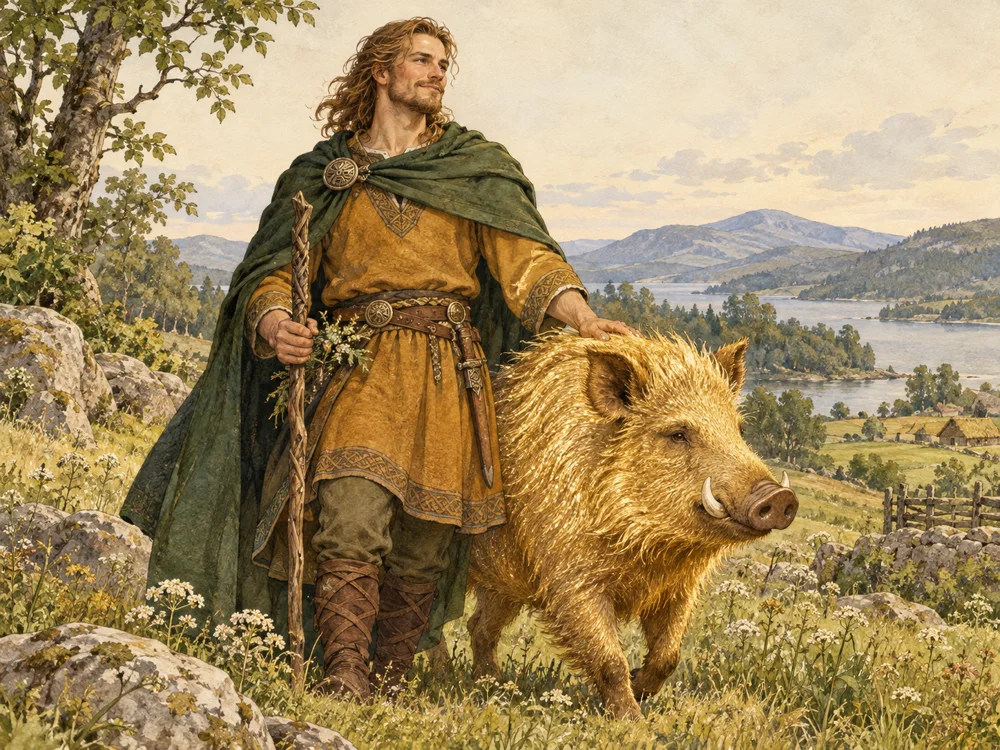
A god of flourishing life
Freyr is Njörd’s son and Freyja’s brother. In Gylfaginning, Snorri connects him with rain, sunshine and the earth’s produce, and says he is invoked for fruitful seasons and peace. Grímnismál associates him with Álfheimr, given to him as a childhood gift. Those statements establish important associations, but they do not make Freyr the exclusive owner of every agricultural activity or establish a single standard festival calendar for the whole Viking world.
Wonderful possessions
Freyr receives the ship Skídbladnir, which can be folded up when it is not required and has a favourable wind when its sail is raised. His boar Gullinbursti belongs to the same broad account of extraordinary objects made by dwarfs. At Baldr’s funeral, Snorri describes Freyr travelling with his boar. The objects connect him with movement, brightness and abundance, yet their narrative origin is not a separate set of agricultural instructions. They also emerge from Loki’s dangerous dealings with craftsmen.
Gerd and the cost of longing
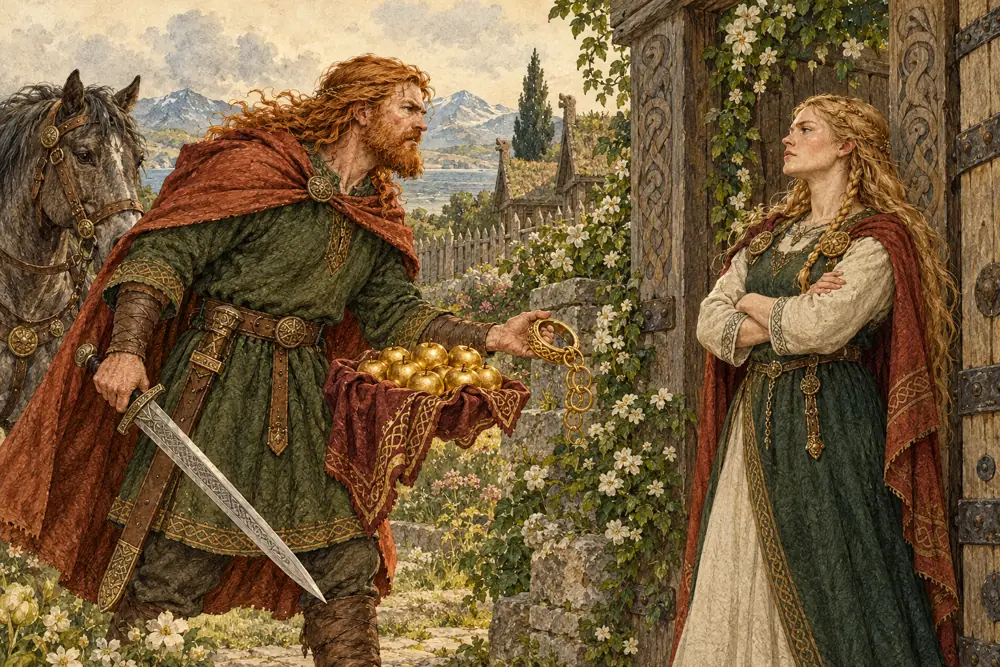
When Freyr looks from Odin’s high seat, he sees Gerd and becomes overwhelmed by desire. He sends Skírnir to approach her and gives up his sword. In the poem Skírnismál, gifts fail to persuade Gerd; threats and a terrifying curse follow before she agrees to meet Freyr. The poem’s emotional intensity is real, but calling it simply a beautiful love story conceals its coercion. Snorri’s compressed prose version tells the episode differently and places particular emphasis on the sword Freyr has surrendered.
An absence felt at Ragnarök
Snorri explains that Freyr kills Beli with an antler, showing that losing his sword does not immediately make him helpless. The greater consequence comes at Ragnarök, when he faces Surtr without it and falls. His profile therefore joins prosperity to vulnerability: the god associated with flourishing life cannot protect himself from the final destruction. There is no securely preserved complete story of every relationship and battle alluded to around him. Where a source gives only a reference, we should leave that gap visible.
The messenger returns, but Freyr must wait
The ending of Skírnismál concentrates on waiting rather than a wedding. After the threats and curses, Gerd offers Skírnir a drink and names a place called Barri where she will meet Freyr after nine nights. When Skírnir returns, Freyr is already outside and demands the answer before the messenger even removes the saddle. Skírnir gives him the appointed place and time. Freyr complains that one night is long, two longer, and asks how he can endure the delay. The poem ends with desire making time almost unbearable. It does not narrate a feast, a marriage ceremony or Gerd's later domestic life. Those additions may appear in modern retellings, but they are not scenes supplied by this poem. The abrupt ending also leaves the coercion used by Freyr's agent unresolved rather than converting the episode into an uncomplicated romantic triumph.
A different Freyr in the royal saga
Ynglinga saga retells the gods as rulers of a legendary past. In that version Freyr succeeds Njörd, rules during prosperity and becomes associated with Uppsala. When he falls ill and dies, his followers conceal his death, placing him in a mound while continuing to collect payments through openings for different metals. Peace and good seasons continue. The episode belongs to a medieval account connecting divine figures with royal ancestry and cult, not a contemporary record proving that a human king Freyr once occupied a particular excavated mound. Read beside Ragnarök, it is especially revealing: one literary work gives him a concealed death and continuing prosperity, while another gives him a final battle against Surtr. They are different narrative frameworks, not successive chapters of one biography.
Read behind the retelling
Sources & limits
Skírnismál includes coercion and curses. A romantic summary that leaves these out misrepresents the surviving poem.
- Gylfaginning, chapters 24, 37, 43, 49 and 51
- Skírnismál
- Grímnismál, stanza 5
- Skáldskaparmál, the making of the gods’ treasures
- Ynglinga saga, Freyr's reign and death; Samuel Laing translation, 1844
Retold in contemporary English. Dialogue is summarized, not presented as a translation. How to read our sources and versions.
Follow the thread
Stories & related reading: Freyr
2 min read
Freyr, Gerd, and Skirnir’s threats
Freyr’s desire sends Skirnir to Gerd, whose refusals are met first with gifts and then with violence and magical coercion.
Read the story ↗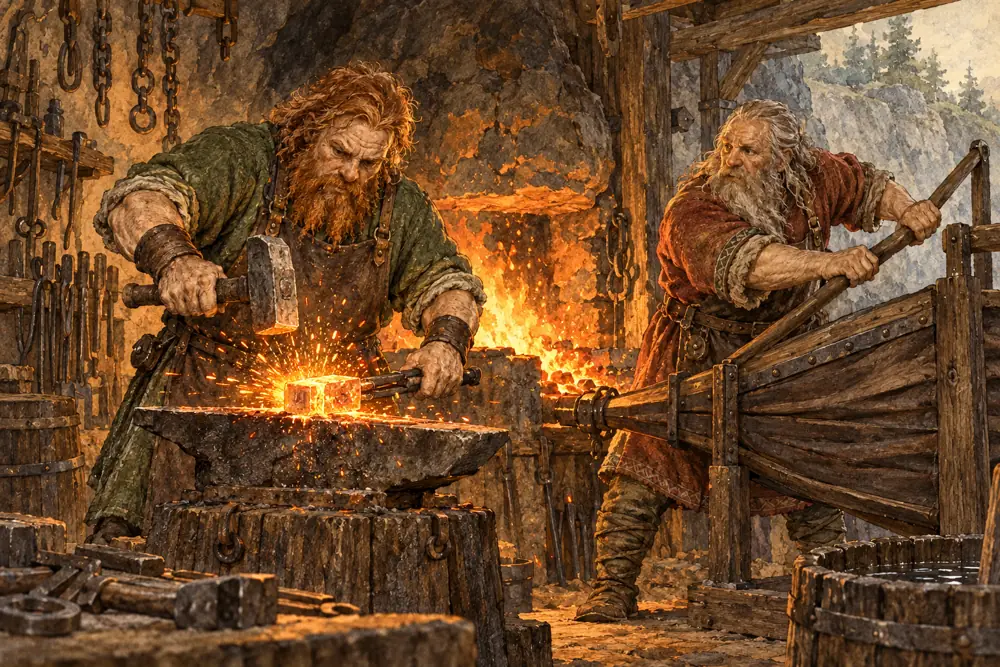
2 min read
The treasures of the gods
Loki’s attack on Sif’s hair sets two groups of dwarf craftsmen to work, bringing some of the gods’ most famous possessions into the story.
Read the story ↗
2 min read
The death of Baldr
Frigg tries to protect Baldr from every danger, but Loki finds the one promise she did not obtain.
Read the story ↗
3 min read
Ragnarok: the breaking of the world
The end approaches through broken human bonds and broken cosmic restraints. The surviving texts also imagine a world that rises after the disaster.
Read the story ↗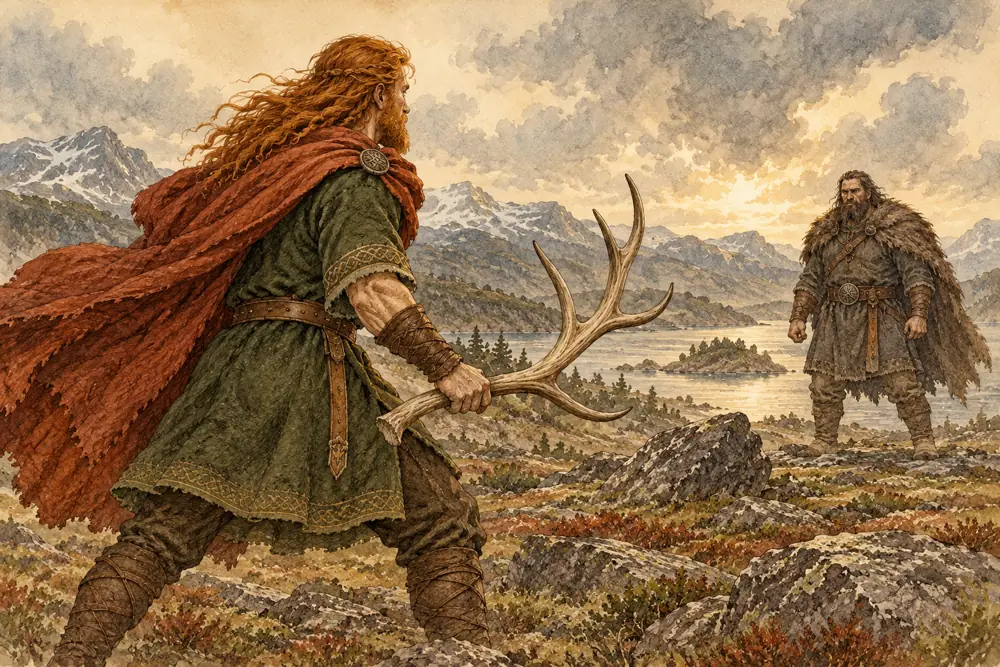
1 min read
Freyr defeats Beli with an antler
Freyr can improvise a weapon against one enemy, but his lost sword will matter more in the final battle.
Read the story ↗
2 min read
Loki’s quarrel at Ægir’s feast
Loki enters the gods’ feast and attacks one guest after another in a formal exchange of insults.
Read the story ↗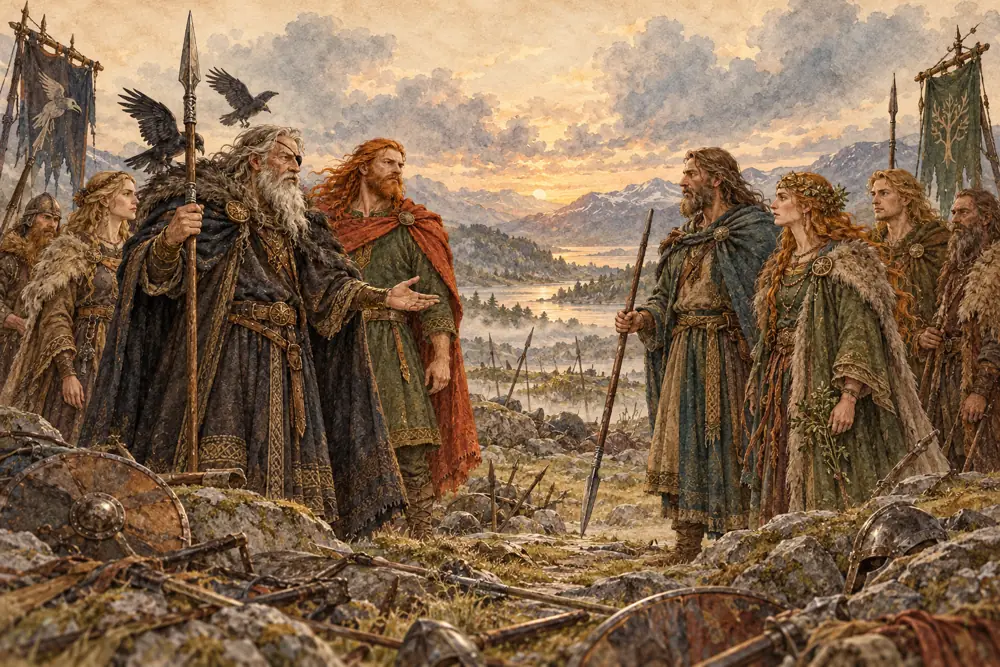
2 min read
The war between the Æsir and Vanir
An early war, a mysterious woman and an uneasy peace survive in accounts that do not fit together neatly.
Read the story ↗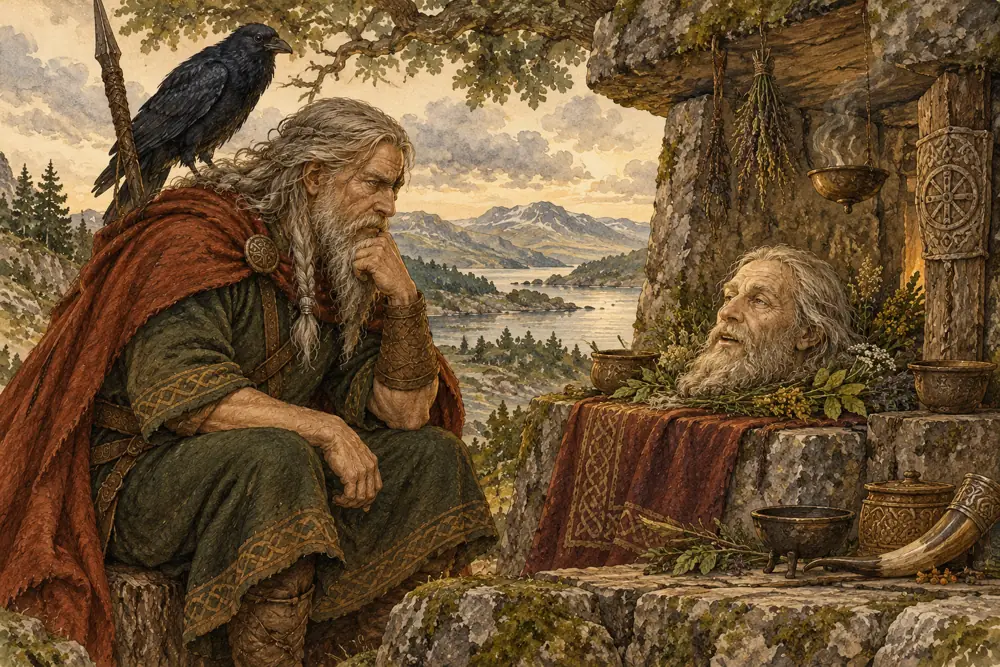
2 min read
Mimir’s speaking head
A hostage exchange ends in murder, but Odin preserves the counsellor whose advice remains indispensable.
Read the story ↗