
A Norse story · 2 min read
Odin’s spear and Dag’s revenge
A divine weapon destroys a peace between relatives.
Dag obtains Odin’s spear to avenge his father and kills Helgi, his own brother-in-law. His sister Sigrun refuses to accept compensation or let divine involvement excuse the betrayal.
The survivor inside the new peace
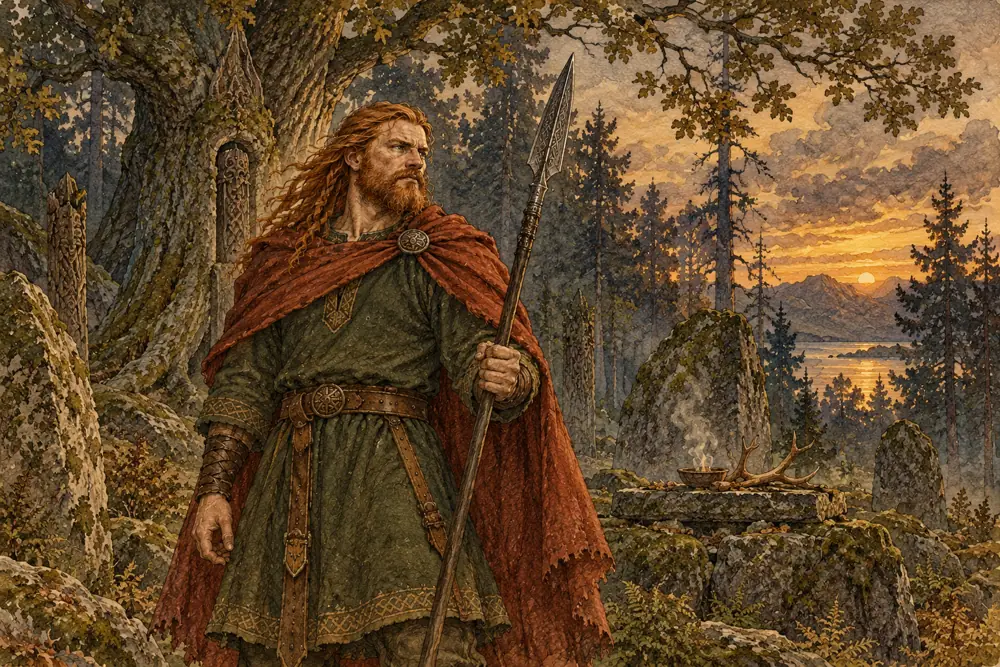
Helgi has won Sigrun, but the fighting surrounding their union has killed members of her family, including her father Hogni. Her brother Dag survives and has sworn oaths to Helgi. Marriage and agreement have therefore joined people whose recent history includes severe injury. In the prose linking the verses of the Second Lay of Helgi Hundingsbane, that settlement proves fragile. Dag seeks revenge for his father and sacrifices to Odin. The god gives him a spear, bringing divine assistance to an act that will break the obligations connecting the living relatives.
A killing in the grove
Dag finds Helgi at a place called Fjoturlund and drives the spear through him. The account is abrupt: it does not expand the event into a long, evenly matched duel or describe Odin appearing beside the attacker. Helgi falls, and Dag rides to tell Sigrun what he has done. His report combines acknowledgment of her husband’s excellence with an attempt to present the harm as something he did unwillingly. The contrast between deliberate preparation and regretful language is left for the listener to judge.
Sigrun refuses the excuse
Sigrun answers with curses directed at the oaths Dag swore. She wishes that his ship will not carry him, his horse will not save him and his sword will fail him until it turns against its own bearer. Dag responds by blaming Odin for setting relatives against each other. He offers land and treasure as compensation, but Sigrun does not treat these as an adequate replacement for Helgi. The dispute is not resolved by announcing that a god approved the revenge. Within the poem, divine involvement and human responsibility remain painfully entangled.
A divided portrait of Odin
After Helgi’s burial mound is made, the prose says that Odin receives him in Valhalla and shares authority with him there. The same god who supplied the fatal weapon now honors the dead man. This is not a simple moral system in which support belongs permanently to one deserving side. Nor does Dag’s accusation give an objective explanation of every misfortune: it is a character’s speech in an argument with his bereaved sister. The poem continues into the haunting meeting between Sigrun and Helgi after death, but that later episode should not erase the force of her refusal here. A treaty, kinship and payment have all failed to contain the demand for vengeance. The story asks readers to confront that failure rather than admire the spear merely because it belonged to Odin. It remains legendary poetry and its prose framing, not testimony establishing a historical killing at a securely identified grove.
Read behind the retelling
Sources & limits
Dag’s claim that Odin causes every evil is spoken by a character defending himself, not a neutral theological definition. The spear is identified as Odin’s; this passage need not be embellished with the name Gungnir or an invented duel.
Retold in contemporary English. Dialogue is summarized, not presented as a translation. How to read our sources and versions.
Another thread to follow
2 min read
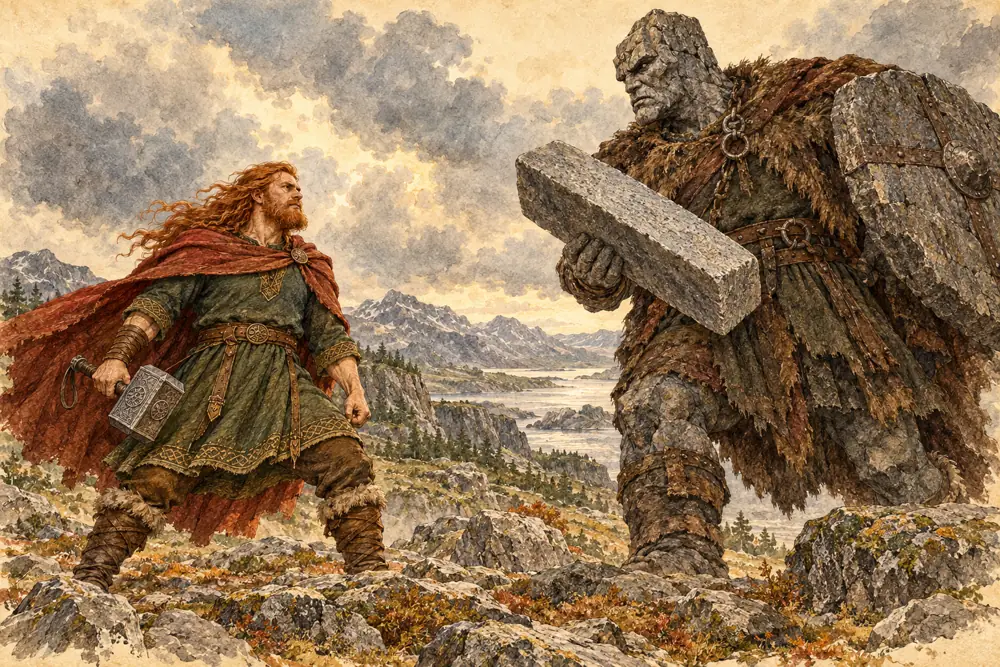
Thor and the stone-hearted Hrungnir
Hrungnir pursues Odin into Asgard, boasts beyond hospitality, and challenges Thor to meet him armed.
Read the story ↗
2 min read
Thor and the ferryman
Thor needs a ferry. Hárbarðr offers insults instead, and a verbal contest replaces the expected passage.
Read the story ↗
2 min read
The mead of poetry
The blood of Kvasir passes through murder, bargaining and deception before the poetic mead reaches the gods.
Read the story ↗