
A Norse story · 2 min read
Odin’s sword in the hall-tree
A wedding guest leaves a gift that nobody can buy.
An unnamed one-eyed stranger places a sword in the tree inside Volsung’s hall. Sigmund can draw it out; the new bridegroom cannot forgive him for keeping it.
A wedding around a living tree
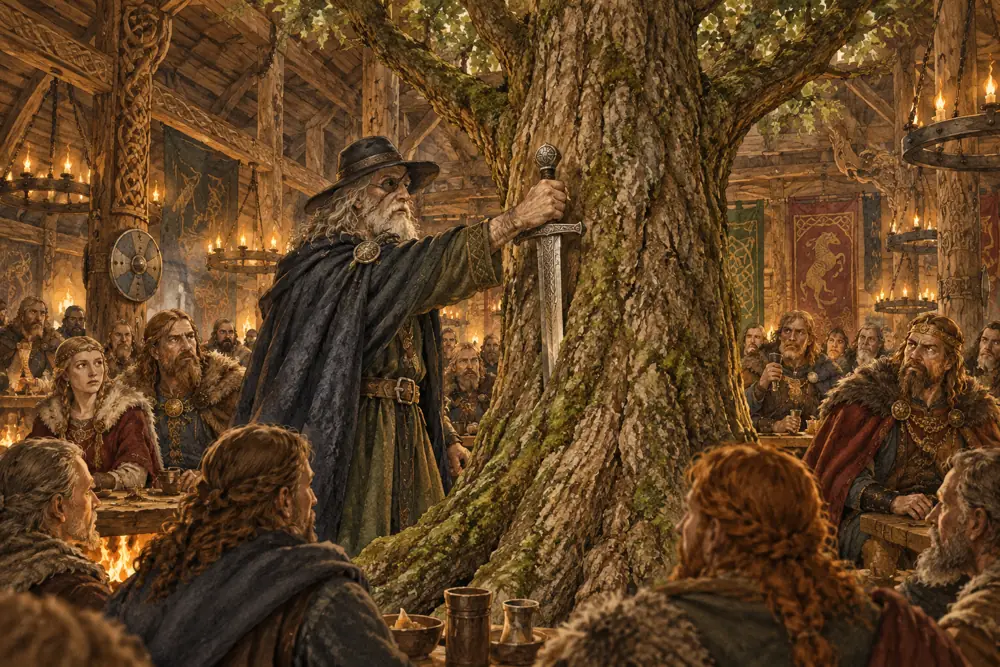
King Volsung has built his hall around a great tree, with its trunk inside the building and branches spreading above the roof. At the wedding of his daughter Signy to King Siggeir, the guests gather around fires in this extraordinary space. The marriage is not presented as Signy’s happy choice: she has submitted to her father’s decision despite her reluctance. That uneasiness matters, because the celebration is about to expose another conflict within the new alliance between the two royal households. The tree is called Barnstokkr, rendered Branstock in the older English translation.
The stranger’s challenge
During the evening, an old, imposing, one-eyed man enters. He wears a cloak and a hat pulled low, carries a sword and attracts the attention of everyone in the hall. Walking to the tree, he drives the blade into its trunk up to the hilt. Whoever can draw it out may keep it as his gift, he announces; its owner will never carry a better weapon. Then he leaves. The saga does not stage an introduction in which he announces his name. His appearance, action and connection with later events identify the visitor conventionally as Odin.
Strength is not enough
The guests immediately try their luck. The highest-ranking men go first, followed by the others, but the sword will not move. When Volsung’s son Sigmund takes the hilt, it comes free as easily as though it had been resting loose. Siggeir now offers to purchase it for three times its weight in gold. Sigmund refuses: Siggeir had the same opportunity to claim it from the tree, and money will not change the outcome. Possession here is framed as an extraordinary allocation, not an ordinary transaction between warriors who happen to admire the same weapon.
A gift with consequences
Siggeir hides his anger, but the narrator tells us that he begins considering revenge that very evening. The divine gift does not secure peace or protect the family from suffering. Instead, it becomes one cause of the hostility that will tear the wedding alliance apart. Much later, a one-eyed visitor intervenes again when Sigmund fights his last battle, and the sword breaks. Reading those scenes together reveals a disturbing pattern: the power that grants distinction can also withdraw it. This is a medieval heroic legend involving a god, not a record of a historical wedding or evidence that an excavated sword was this particular weapon. The episode’s force lies in the contrast between effortless selection and its painfully human consequences.
Read behind the retelling
Sources & limits
The visitor is unnamed in the entrance scene. His identification as Odin follows the saga’s recognizable divine pattern; do not present a later illustration as a contemporary portrait or archaeological record.
Retold in contemporary English. Dialogue is summarized, not presented as a translation. How to read our sources and versions.
Another thread to follow
2 min read
Thor and the stone-hearted Hrungnir
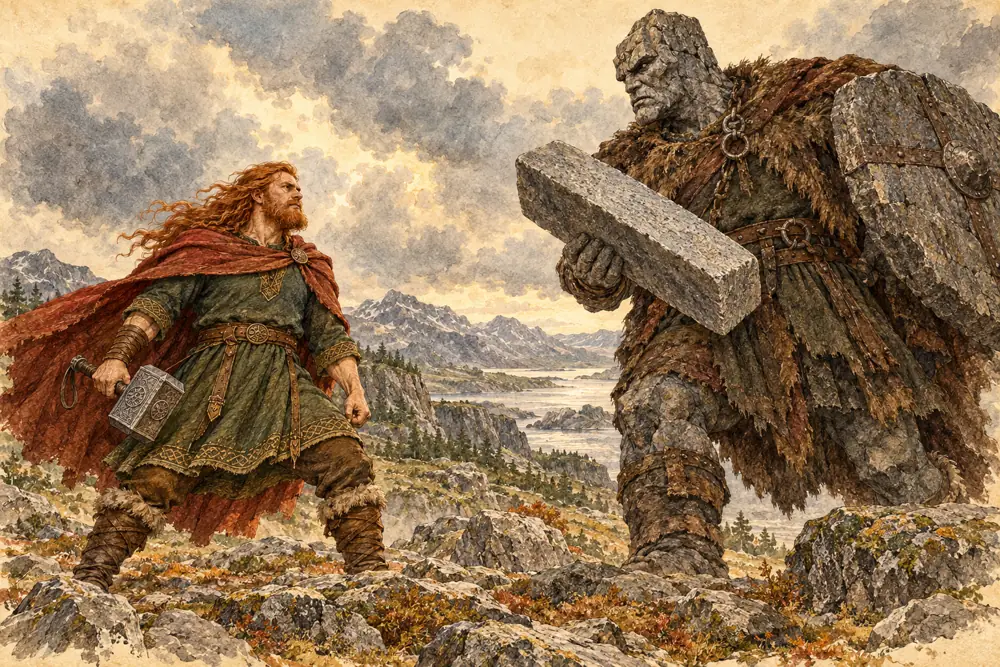
Hrungnir pursues Odin into Asgard, boasts beyond hospitality, and challenges Thor to meet him armed.
Read the story ↗
2 min read
Thor and the ferryman
Thor needs a ferry. Hárbarðr offers insults instead, and a verbal contest replaces the expected passage.
Read the story ↗
2 min read
The mead of poetry
The blood of Kvasir passes through murder, bargaining and deception before the poetic mead reaches the gods.
Read the story ↗