
A Norse story · 2 min read
Odin and Billing’s daughter
When the clever traveller is outwitted
A brief episode in Hávamál shows Odin pursuing a woman who repeatedly frustrates his expectations.
A different kind of defeat
Odin’s stories often celebrate his disguises, discoveries and victories in contests of knowledge. Hávamál also preserves a much less flattering memory. In the passage conventionally numbered 96–102, the speaker describes desire overcoming judgement. The woman is identified through Billing rather than by a personal name. Older translations commonly call her Billing’s daughter; the precise relationship conveyed by the Old Norse wording has also been debated. We should not supply a biography the poem does not preserve.
The promised meeting
Odin sees her resting and becomes absorbed in the prospect of winning her. She tells him to return later, when their meeting will remain secret. He leaves convinced that pleasure awaits him, treating the invitation as a promise that his own wishes will be fulfilled. On his return, however, the household is awake. Armed men and lights block the encounter. The setting has become the opposite of the private meeting he expected.
A dog on the bed
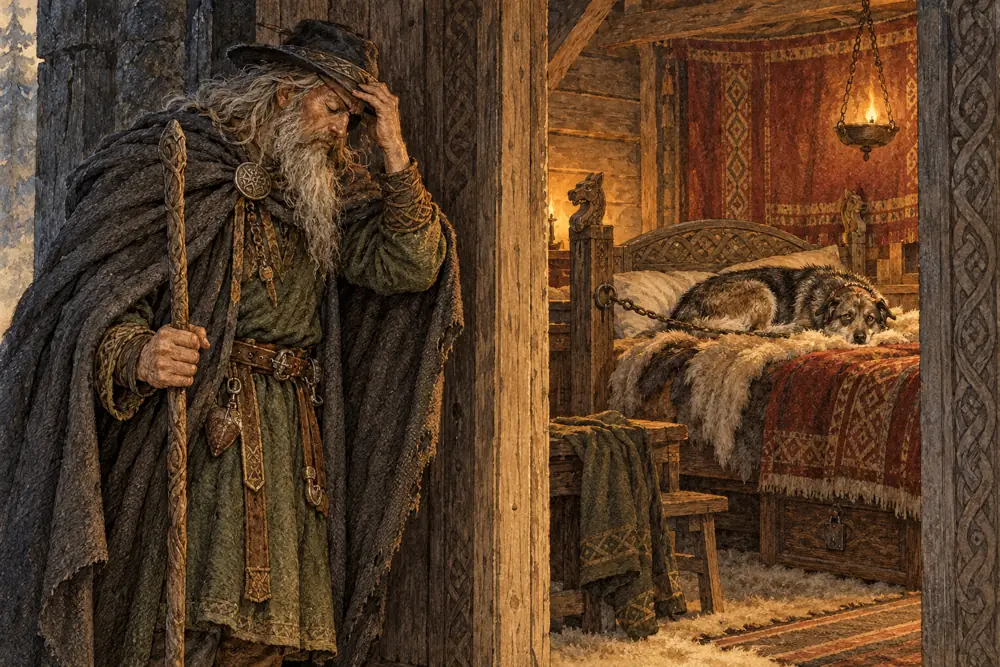
He tries again toward morning, when the household is asleep. This time he reaches the place where he expected to find the woman, only to discover a dog tied on the bed. The poem ends the incident with the speaker admitting his frustration and humiliation. There is no successful seduction, reconciliation or violent punishment in this surviving account. Adding one would reverse the point of the ending: Odin does not get what he wants.
Whose lesson is it?
The surrounding verses reflect on desire and on deception by both men and women, although they also contain sweeping hostile statements about women. Those statements are the voice of the medieval poem, not reliable descriptions of human nature. A modern reader can notice the woman’s successful refusal and Odin’s misplaced confidence without pretending the text speaks in modern terms. The episode is valuable precisely because a god associated with wisdom can recognise his own foolishness. Its few stanzas leave much unsaid, so an honest retelling preserves that small scale.
Read behind the retelling
Sources & limits
“Billing’s daughter” is a conventional English label; her exact relationship to Billing is uncertain. The poem’s gender stereotypes are historical literary material, not advice.
Retold in contemporary English. Dialogue is summarized, not presented as a translation. How to read our sources and versions.
Another thread to follow
2 min read
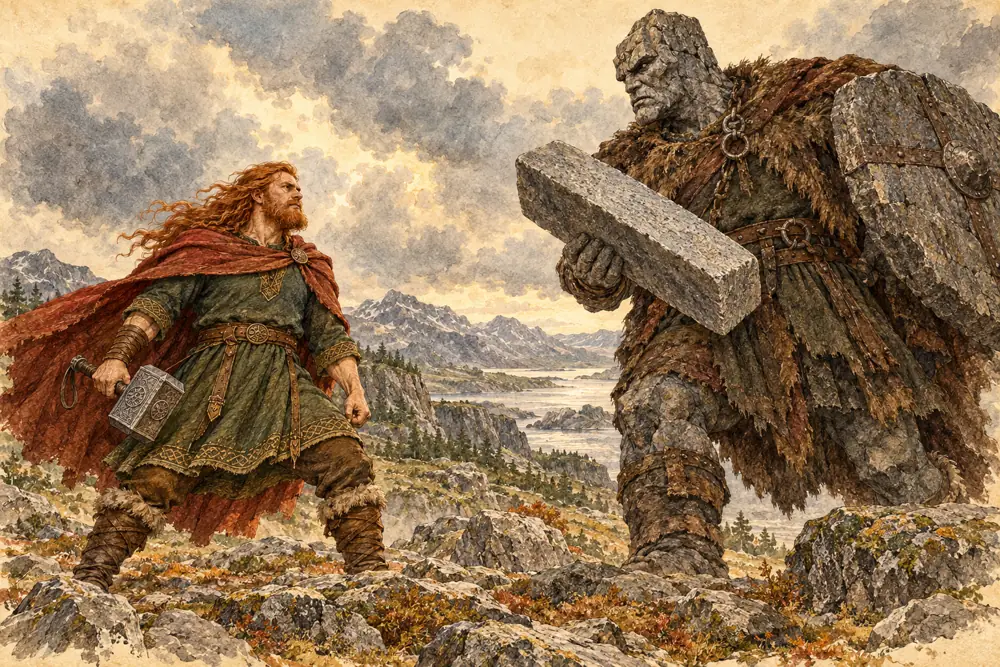
Thor and the stone-hearted Hrungnir
Hrungnir pursues Odin into Asgard, boasts beyond hospitality, and challenges Thor to meet him armed.
Read the story ↗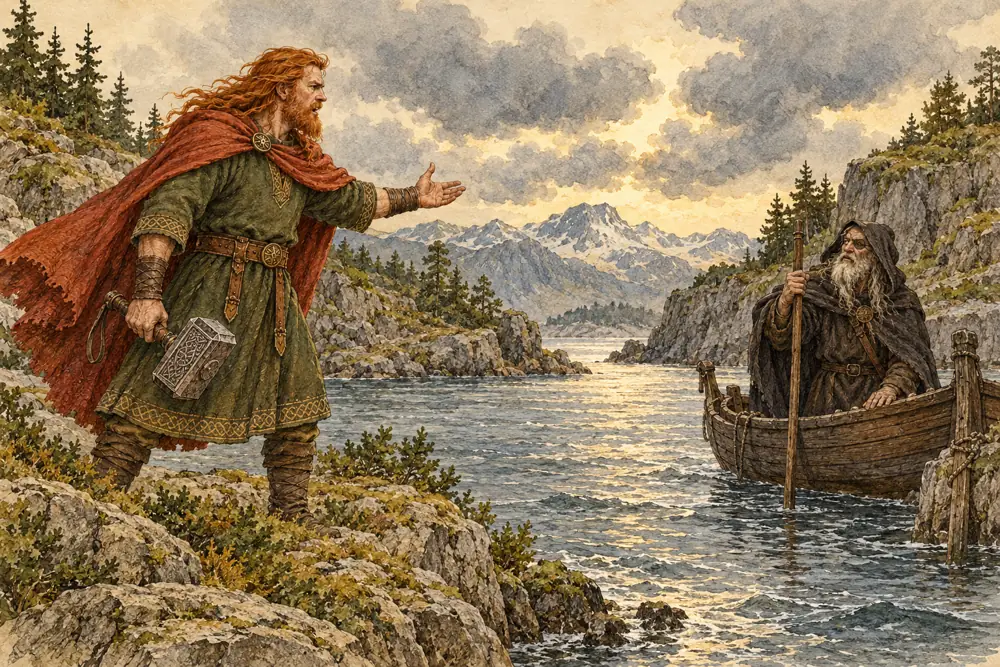
2 min read
Thor and the ferryman
Thor needs a ferry. Hárbarðr offers insults instead, and a verbal contest replaces the expected passage.
Read the story ↗
2 min read
The mead of poetry
The blood of Kvasir passes through murder, bargaining and deception before the poetic mead reaches the gods.
Read the story ↗