
A Norse story · 2 min read
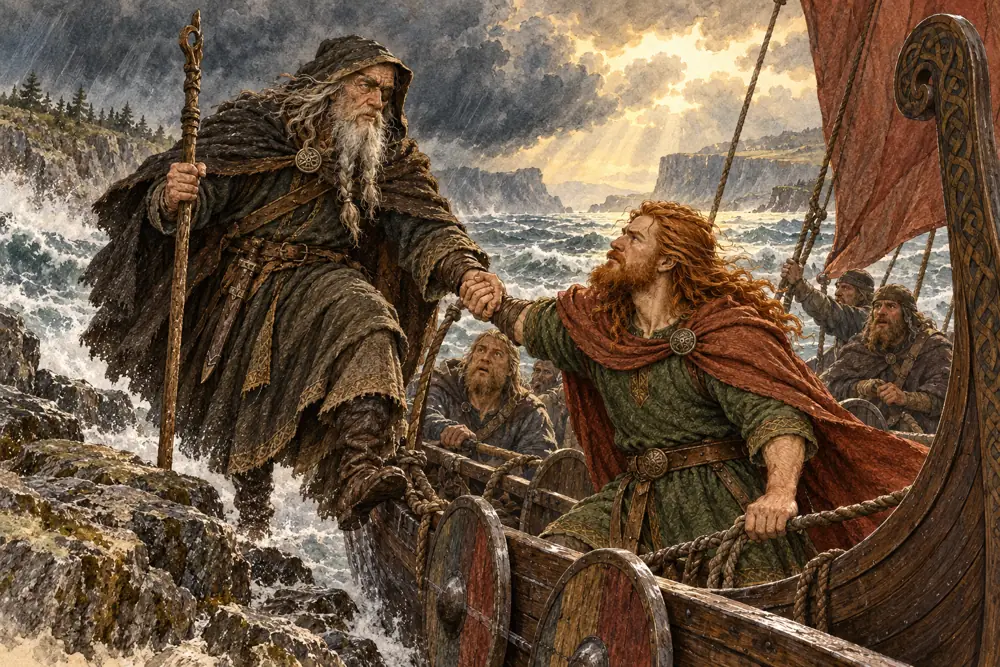
Odin boards Sigurd’s ship in a storm
A stranger on the headland brings calm weather and unsettling advice.
On his voyage to avenge his father, Sigurd takes aboard a stranger called Hnikar. The storm subsides, and Odin’s disguised counsel combines omens with practical instructions for battle.
Vengeance before the dragon
Regin wants Sigurd to pursue Fafnir’s treasure, but the young man first intends to avenge his father Sigmund and his grandfather Eylimi. King Hjalprek supplies a fleet for the expedition. In the prose around Reginsmál, the ships meet a dangerous storm near a headland. A man standing above the sea calls out to ask who travels in the struggling vessels. Regin identifies himself and Sigurd. The exchange is filled with poetic names for ships, making their difficulty audible through the contrast between powerful sea-going images and the threat of foundering.
The guest with several names
The stranger says that he has been called Hnikar and offers other names, including Feng and Fjolnir, names associated with Odin. He asks to travel with them. They bring the ship to land, take him aboard, and the storm subsides. The narrative places the change in weather immediately after his arrival rather than describing a technical explanation of the wind. Sigurd recognizes a source of knowledge and asks which signs are favorable for someone going into battle. The journey becomes a brief encounter with the god as adviser rather than a contest to expose his disguise.
Omens alongside practical counsel
Hnikar mentions a raven encountered on the road, eager fighters ahead of a traveler and a howling wolf among favorable signs. His advice also turns unexpectedly practical: do not face the low sun when fighting, because seeing clearly matters; prepare yourself, wash, comb your hair and eat in the morning, since no one knows where evening will find him. A stumble on the way to battle is ominous. These details belong to the poem’s mixture of sign-reading and counsel. They are not evidence that every warrior followed an identical checklist, and their appearance in a heroic poem should not be advertised as a proven system of predicting success.
Help is not innocence
Sigurd reaches his opponents and wins the violent confrontation. In Völsunga saga’s related account, the mysterious companion disappears before the campaign proceeds. The saga and the Eddic material arrange and describe portions of the episode differently, so their details should be identified rather than mechanically joined. Most importantly, the voyage is an expedition of revenge. Calmer weather does not make the subsequent killing harmless, and Odin’s assistance is not a guarantee of moral innocence for everyone on board. The episode stands between the god’s withdrawal of support from Sigmund and his aid to Sigmund’s son. That reversal is characteristic of the legend’s uneasy divine patronage. A modern portrait of Odin can introduce the story, but it is an imaginative image, not a depiction of a recorded shipboard encounter or proof of the clothing worn by its participants.
Read behind the retelling
Sources & limits
This primarily follows Reginsmál’s prose and stanzas 16–25. Völsunga saga offers a related arrangement. Omens are literary-historical material, not reliable predictions or advice for present-day risk-taking.
- Reginsmál, prose and stanzas 15–26 — Bellows translation, 1923
- Völsunga saga, chapter 17 — Morris and Magnússon translation
Retold in contemporary English. Dialogue is summarized, not presented as a translation. How to read our sources and versions.
Another thread to follow
2 min read
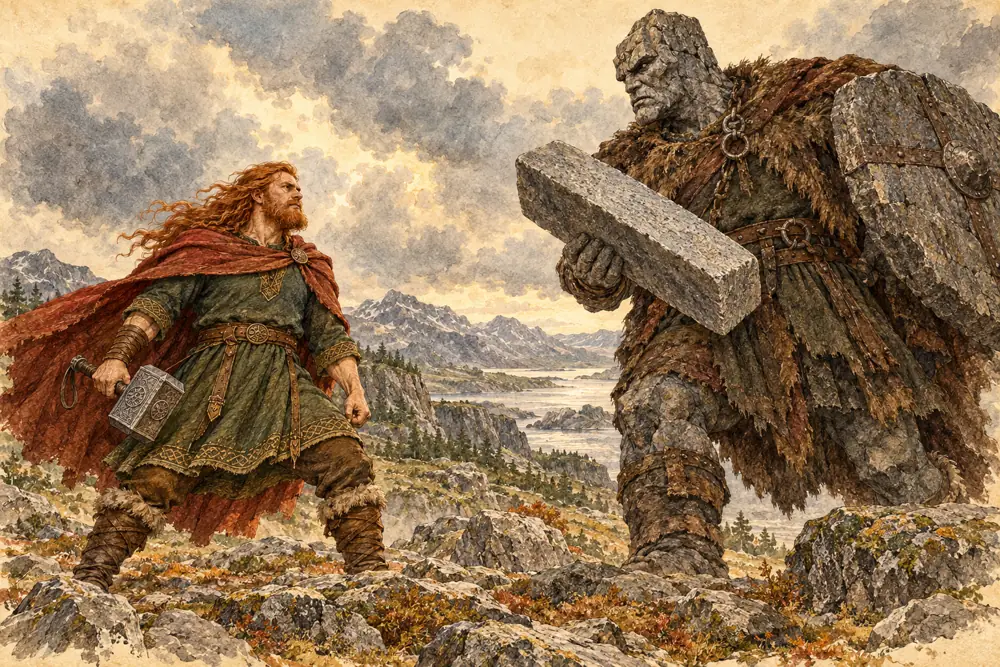
Thor and the stone-hearted Hrungnir
Hrungnir pursues Odin into Asgard, boasts beyond hospitality, and challenges Thor to meet him armed.
Read the story ↗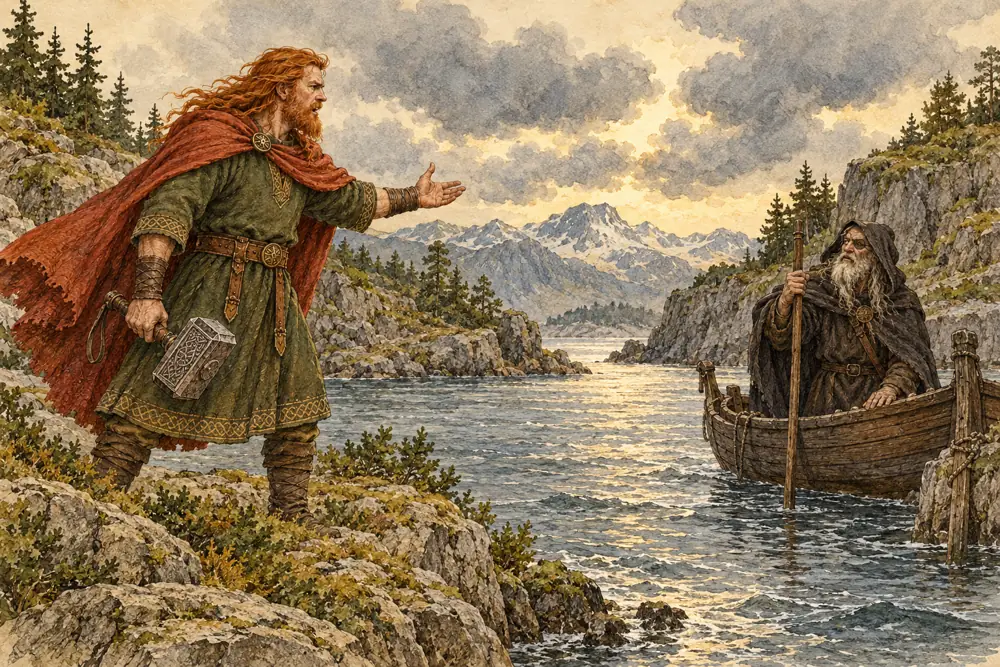
2 min read
Thor and the ferryman
Thor needs a ferry. Hárbarðr offers insults instead, and a verbal contest replaces the expected passage.
Read the story ↗
2 min read
The mead of poetry
The blood of Kvasir passes through murder, bargaining and deception before the poetic mead reaches the gods.
Read the story ↗