
A Norse story · 2 min read
When Odin breaks Sigmund’s sword
The giver of victory steps onto the other side of the battlefield.
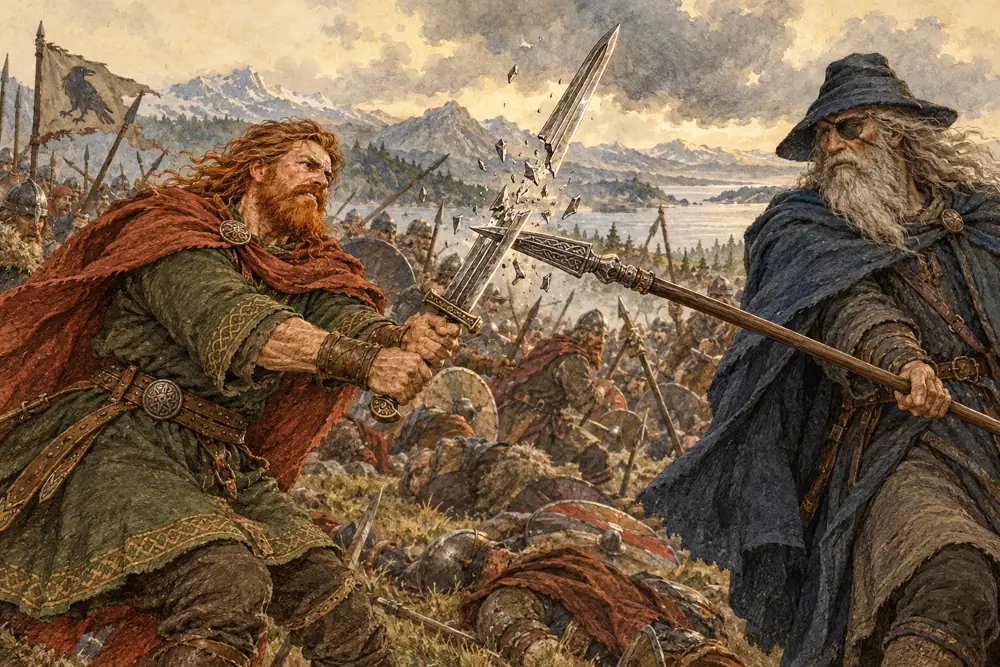
Sigmund’s last battle ends when a one-eyed stranger meets his sword with a pole weapon. The dying king understands that Odin’s support has ended, but asks that the broken blade be kept for his unborn son.
A marriage followed by war
Hjordis chooses the famous, aging Sigmund rather than his rival Lyngvi, a son of Hunding. Her father has allowed her to decide, but the rejected suitor does not accept the result peacefully. Lyngvi and his brothers gather an army and invade Sigmund’s country. Before battle, Hjordis withdraws into the woods with a serving woman and the family’s treasure. Sigmund and his father-in-law Eylimi face the attackers with a smaller force. The saga gives the conflict a human beginning: wounded pride and hostility between ruling households, not a divine command announced in advance.
The stranger in the fighting
Although old, Sigmund fights with extraordinary success. Armor and shields cannot stop him, and for a time the outcome remains uncertain. Then a one-eyed man in a blue cloak and low hat advances through the battle carrying a pole weapon. Sigmund strikes it with his sword, and the blade breaks in the middle. His fortune changes immediately. His followers fall around him, Eylimi is killed, and Sigmund receives the wounds that will end his life. The older translation calls the stranger’s weapon a bill; retellings often call it a spear. The important action is the breaking of the sword against the god’s weapon.
The wounded king’s interpretation
Hjordis returns among the dead during the night and finds her husband still alive. She asks whether he can recover, hoping that he might avenge her father. Sigmund refuses to pursue healing. He explains that Odin no longer intends him to wield a sword: his victories lasted while the god wished them to last. That statement belongs to Sigmund within the narrative. It should not be expanded into a universal rule explaining every death in Norse belief, nor softened into a comforting promise that divine favor always rewards deserving conduct.
What survives the defeat
Sigmund tells Hjordis to preserve the sword’s fragments for their unborn son. A new blade will be made from them, and the child will accomplish deeds that keep the family’s name alive. Hjordis remains with him until he dies at dawn. The story therefore ends neither with simple extinction nor with a reversal of death: the king is lost, while a material inheritance passes onward. Later the smith Regin reforges the fragments for Sigurd. Odin’s intervention has removed one champion without removing the family from the legend. The broken weapon connects two generations, but the transition costs Hjordis both husband and father. Keeping her actions in view prevents the scene from becoming merely a spectacular duel between a god and a warrior.
Read behind the retelling
Sources & limits
This follows Völsunga saga, chapters 11–12. The stranger is recognized as Odin through appearance and Sigmund’s own explanation; the story is not evidence for an actual historical battlefield or surviving sword.
Retold in contemporary English. Dialogue is summarized, not presented as a translation. How to read our sources and versions.
Another thread to follow
2 min read
Thor and the stone-hearted Hrungnir
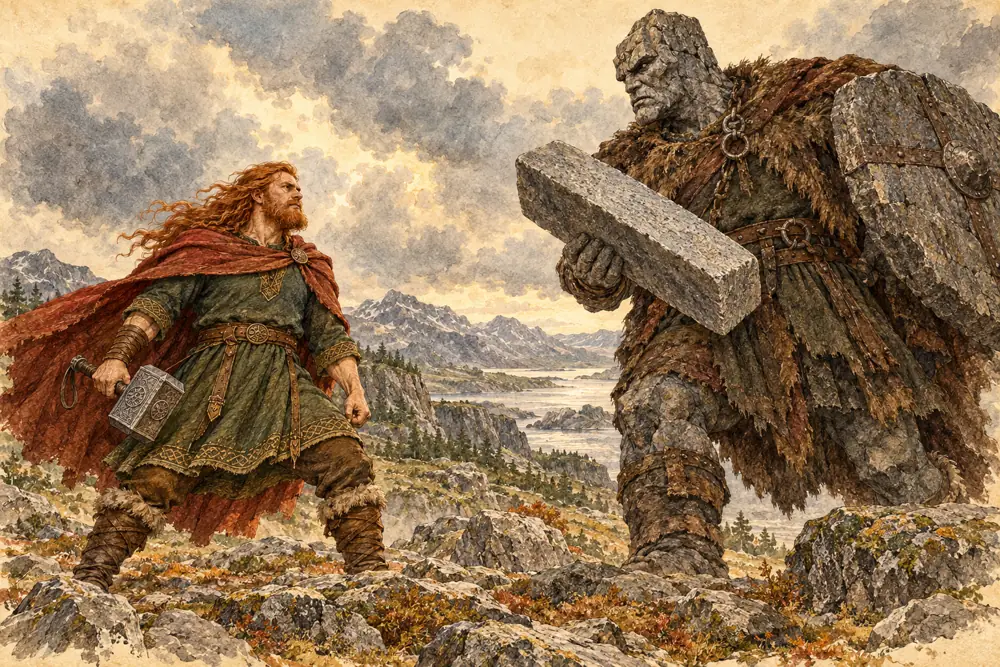
Hrungnir pursues Odin into Asgard, boasts beyond hospitality, and challenges Thor to meet him armed.
Read the story ↗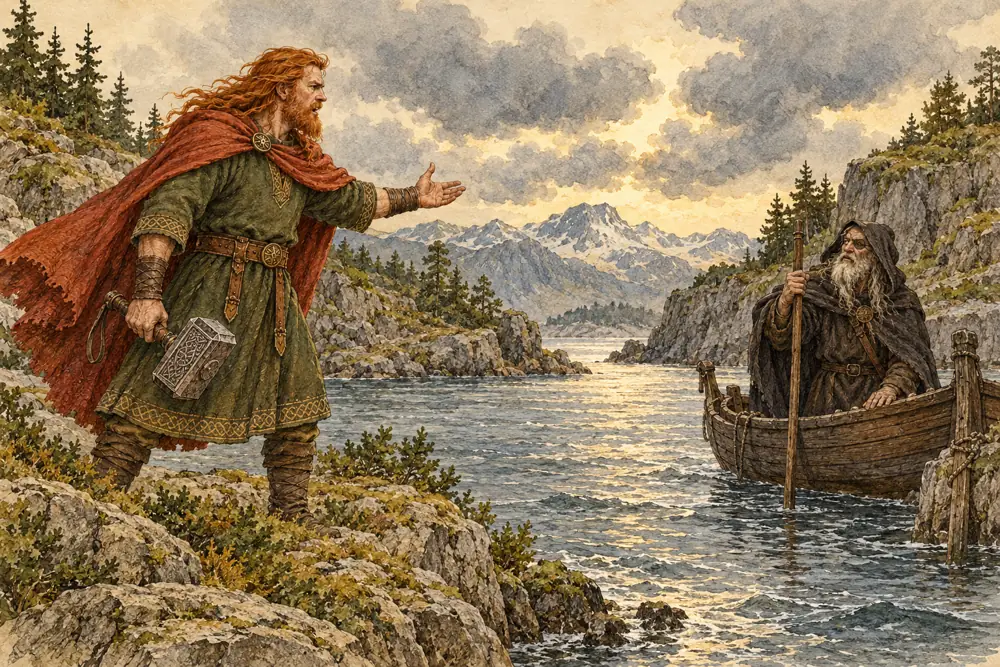
2 min read
Thor and the ferryman
Thor needs a ferry. Hárbarðr offers insults instead, and a verbal contest replaces the expected passage.
Read the story ↗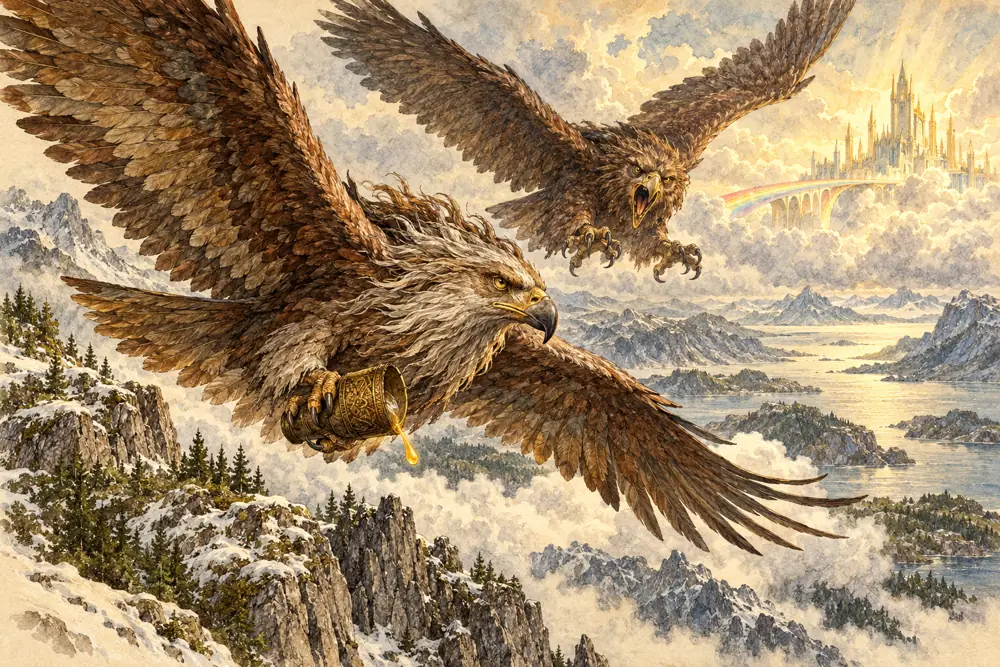
2 min read
The mead of poetry
The blood of Kvasir passes through murder, bargaining and deception before the poetic mead reaches the gods.
Read the story ↗