
Life & Society · Deep dive
Slavery, Manumission, and the Limits of Later Law
In Brief
Freedom was a legal and social transition whose terms differed between regions, and whose history is filtered through unequal sources.
On this page
Unfreedom had different forms, but real consequencesCaptivity began beyond the householdLaw described boundaries of belongingAtli and the narrative of earned freedomRelease did not have one regional meaningHonor could be built on another person’s exclusionUsing later law without turning it into a photographSourcesUnfreedom had different forms, but real consequences
Stefan Brink's study Thraldom emphasizes variation within Scandinavian slavery and other dependencies. A legally unfree person might perform low-status manual work or hold substantial practical responsibility, including managing an estate. Routes into bondage and out of it also varied. These distinctions are important because responsibility within a household did not necessarily confer freedom. An enslaver could rely on another person's skill while retaining coercive power over that person. The analytical task is therefore to distinguish occupation, social reputation, and legal position rather than treating them as interchangeable. Recognizing this variation does not soften enslavement into ordinary service: it explains why a person's apparent importance in a story or household cannot establish that they were free to leave.
Sources for this section: 1
Captivity began beyond the household
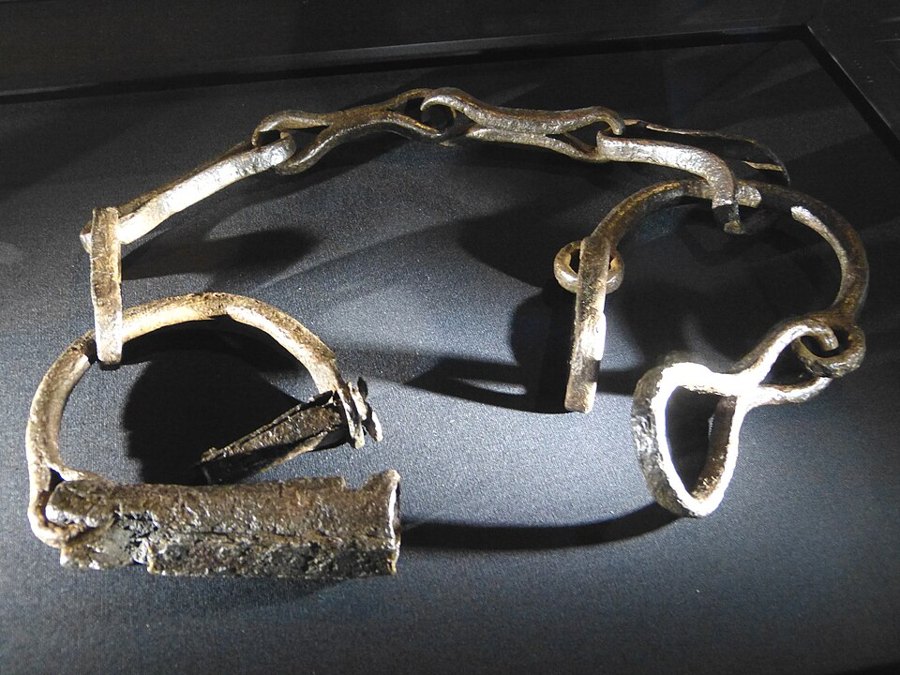
Ben Raffield's research on slave markets brings raids, forced movement, and sale back into a history sometimes reduced to domestic labor. He discusses the Annals of Ulster's account of an attack on Étar in 821 in which women were carried away. Such notices make the violence of acquisition explicit, even though the chronicles rarely follow those captives through their later lives. Raffield also stresses the archaeological difficulty of recognizing a market where people were sold. Trading could occur in spaces used for other activities rather than in a uniquely identifiable building. Consequently, the lack of an excavated structure labeled a slave market does not contradict written evidence for captive trading. It directs attention to processes that may leave dispersed and ambiguous traces.
Sources for this section: 2


Law described boundaries of belonging
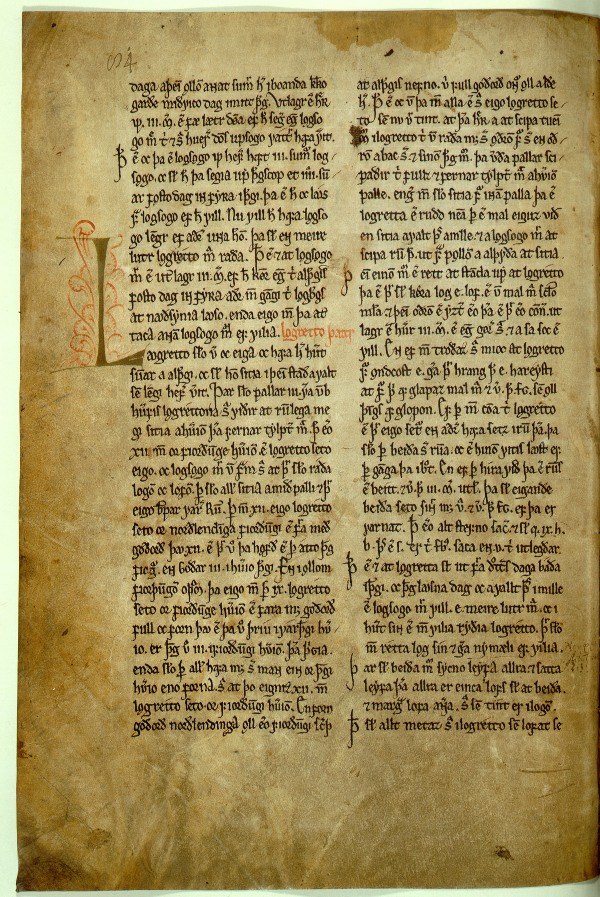
Stephen Pax Leonard's analysis of early Iceland highlights the language of legal attachment. In the medieval Icelandic legal tradition, a person's connection to a recognized household helped determine obligations and the place where legal action could be directed. The expression for manumission could describe someone being led into the law. Leonard contrasts this with Norwegian expressions emphasizing the giving of freedom. The distinction is revealing because release was more than an enslaver ceasing to demand work: it involved a person's recognized position within a community. This is evidence from legal terminology and its scholarly interpretation, not a surviving transcript of a ninth-century freeing ceremony. Its value lies in exposing how belonging could be defined institutionally.
Sources for this section: 3
Atli and the narrative of earned freedom
Jón Hnefill Aðalsteinsson compared versions of a story about Atli, an enslaved man belonging to Geirmundr heljarskinn. Atli housed a shipwrecked crew through the winter, and the narratives represent his action as enhancing his owner's reputation. Geirmundr then granted freedom and land or the farm Atli managed. Differences between the versions matter, but their shared arrangement is equally revealing: the story makes Atli's ability to provide hospitality serve the prestige of the man who owned him. It is a narrative about the past preserved in later texts, not a contemporary manumission certificate. Read carefully, it shows both how a freed person's rise could be remembered and how a story could keep the former enslaver at the center of that rise.
Sources for this section: 4
Release did not have one regional meaning
Aðalsteinsson's comparison of Icelandic and Norwegian traditions describes different consequences of manumission. In his account, Icelandic freed people's children were free, while Norwegian legal traditions retained reciprocal obligations between a freed person and the freedom-giver's family across further degrees of kinship. The comparison warns against importing one region's rules into another. It also separates release from immediate equality: ending direct ownership need not dissolve every relationship created under bondage. These legal provisions belong to the sources in which they are recorded, and their application in earlier centuries requires argument. For historical interpretation, the important point is that manumission could reorganize dependency rather than erase its social history in a single moment.
Sources for this section: 4
Honor could be built on another person’s exclusion
David Wyatt's synthesis of northern European slavery emphasizes how slaveholding supported hierarchies of honor, lineage, and belonging. He draws attention to enslavers and the social value attached to controlling others, rather than treating enslaved people as an incidental lower layer beneath an otherwise free society. That approach changes the interpretation of a prosperous household. Its apparent order and productive capacity might depend on relationships that distributed choice and protection unequally. A law, a boast, or an account of generosity can therefore reveal the viewpoint of those with authority while leaving the experience of the person subjected to it largely unheard. The historian has to identify that imbalance in the evidence instead of reproducing the source's judgment as a neutral description.
Sources for this section: 5
Using later law without turning it into a photograph
The sources discussed here answer different questions. Annals describe particular episodes of captive taking. Medieval legal terminology defines statuses and procedures. Settlement narratives construct memorable explanations for how individuals obtained land and standing. Modern comparative studies connect these materials while testing their limits. No single category can supply a complete account of slavery throughout the Viking world. In particular, a rule preserved in a later law collection is not proof that every earlier household followed it, and a story of successful release cannot establish how often freedom was granted. Keeping these distinctions visible makes manumission more historically intelligible: it was a change in a person's relationship to power, property, and community, whose terms varied and whose consequences could continue after formal release.
Sources for this section: 1, 2, 3, 4, 5
For the introductory context, read Enslavement belongs in the story.
For the introductory context, read Þingvellir: Law Spoken in a Shared Landscape.
The Evidence
The sources below support this article. Interpretations and limits are explained in the text; this is not an exhaustive research review.
- Brink, Thraldom: A History of Slavery in the Viking Age ↗
- Raffield, The slave markets of the Viking world ↗
- Leonard, Social Structures and Identity in Early Iceland ↗
- Aðalsteinsson, The Position of Freed Slaves in Medieval Iceland, Saga-BookXXII ↗
- Wyatt, Slavery in Northern Europe and the British Isles,500–1420 ↗