
Life & Society · Deep dive
Inheritance, Widows, and Public Commemoration
In Brief
The histories of Gerlög, Inga, and Odendisa show how family connections became visible in public monuments.
On this page
Inheritance written into a family storyLinking monuments without inventing a biographyWhy heirs paid for public memoryThe dead remained centralOdendisa and household authorityFamily land and the problem of later lawWhat widowhood could make visibleSourcesInheritance written into a family story
The Hillersjö inscription, U29, follows a chain of marriages, births, and deaths that ends with Gerlög inheriting through her daughter Inga. It makes the order of events essential to understanding the final ownership claim. Inga's husband Ragnfast died, then their son; Inga inherited through the child, and Gerlög eventually inherited from Inga. This is unusually detailed evidence for the movement of property through women in an eleventh-century family. The county museum's scientific commentary dates the carving stylistically to about 1060–1100. Its value lies in the sequence it preserves, rather than in a general declaration that every widow inherited automatically.
Sources for this section: 1
Linking monuments without inventing a biography
Other inscriptions at Snåttsta and Vreta connect Inga with Ragnfast and repeat the crucial statement that she inherited after her child. Reading several monuments together therefore strengthens an interpretation that one inscription alone might leave uncertain. The same records mention Ragnfast's sisters, Gyrid and Estrid. Their presence could have mattered to the presentation of family rights, but an actual inheritance lawsuit is not documented. Nor do the inscriptions tell us whether the relatives were friendly. A reconstructed family tree is a map of stated relationships, not a transcript of family life. Even an unnamed child's precise age at death remains unknown; the lack of a name is not an age measurement.
Sources for this section: 1

Why heirs paid for public memory
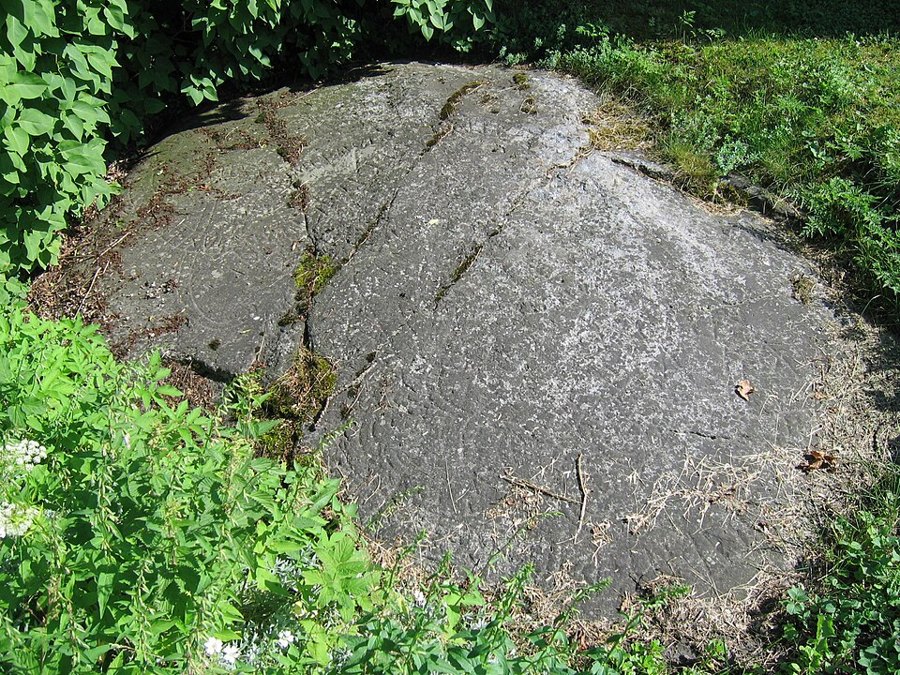
Birgit Sawyer's study of runestones argues that the people sponsoring monuments generally had close relationships with the dead and often an interest in their property. A surviving spouse might already share possessions with the deceased; an heir might acquire them after the death. Stating kinship publicly could therefore make a monument relevant to succession as well as remembrance. This interpretation explains why seemingly repetitive relationship formulas deserve attention. Naming a father, husband, brother, or child identified a particular connection, potentially intelligible to local people who knew the family. Sawyer's argument is an explanatory model for the pattern, not permission to translate every memorial formula into an undocumented legal dispute. The question is what a particular inscription actually states about possession, compared with what its commissioning circumstances merely suggest.
Sources for this section: 2
The dead remained central
Judith Jesch offers an important emphasis alongside property-based interpretation. She argues that the recurring naming of the deceased shows the fundamental memorial purpose of runestones, even where other functions were also present. Inheritance claims, political loyalties, Christian activities, and celebration of the living could accompany that purpose. These explanations need not compete for exclusive ownership of the monument. A family might establish a person's memory through exactly the relationships that also explained succession. This makes the combination historically meaningful: remembrance and practical claims could reinforce each other. For interpretation, it is useful to keep both the commemorated person and the commissioner in view. Treating the dead merely as a device in the survivor's property claim would discard one of the most consistent features of the inscriptions themselves.
Sources for this section: 3
Odendisa and household authority
The eleventh-century Hassmyra stone presents a woman from another direction: she is the person being remembered. Holmgöt commissioned it for his wife Odendisa, praising her ability to govern the farm, and the inscription also identifies her as Sigmund's sister. The Swedish National Heritage Board discusses the unusual term hifrøya, which it renders as a female head of a household. This is explicit public praise of domestic authority, not a list of inherited holdings. It adds a useful distinction to the inheritance cases. Management, ownership, and entitlement after a death are different forms of power, although they may overlap. Odendisa's memorial makes the first visible without specifying the other two. The husband's tribute and the brother's relationship together place her within more than one familial connection.
Sources for this section: 4
Family land and the problem of later law
Torun Zachrisson's research on odal rights draws attention to Viking Age inscriptions that explicitly refer to inherited family land. Such terminology occurs in the Mälaren region and southwestern Norway, while other monuments enumerate several generations of male ancestors. The distribution matters because later medieval law books cannot by themselves determine when a concept first existed. Earlier inscriptions show that people already articulated claims through inheritance and descent. They do not, however, give the complete procedures found in later legal writing. A word for inherited land establishes the relevance of family continuity; it does not establish every rule governing sale, redemption, or succession. Comparing runic language with later law is therefore a historical investigation of continuity and change, rather than a shortcut that imports a whole legal system into an earlier century.
Sources for this section: 5
What widowhood could make visible
These cases reveal why a death can bring women into the written record: the event created a need to explain a relationship, honor a household member, or identify the person now connected with property. That visibility should not be mistaken for a complete survey of women's lives. Gerlög and Inga are unusually legible because multiple deaths generated a complicated succession; Odendisa is visible through praise chosen by survivors. Their monuments answer different questions. The most reliable comparison distinguishes a stated inheritance, an interpretation of why someone commissioned a stone, and a tribute to a person's qualities. Keeping those categories separate allows a stronger conclusion: women could occupy consequential positions in property transmission and public remembrance, while the exact rights and circumstances must still be reconstructed case by case.
Sources for this section: 1, 3, 4
For the introductory context, read Women, Keys, and Household Authority.
The Evidence
The sources below support this article. Interpretations and limits are explained in the text; this is not an exhaustive research review.