
Modern mead · Ingredients and choices
A guide to mead styles
Mead is a family of fermented honey drinks, not a single flavour. A useful way to explore it is to ask four questions: what went into it, how sweet is it, how strong is it, and does it have bubbles? Those questions also help you choose a first recipe without mistaking a modern brewing label for a historical Viking drink.
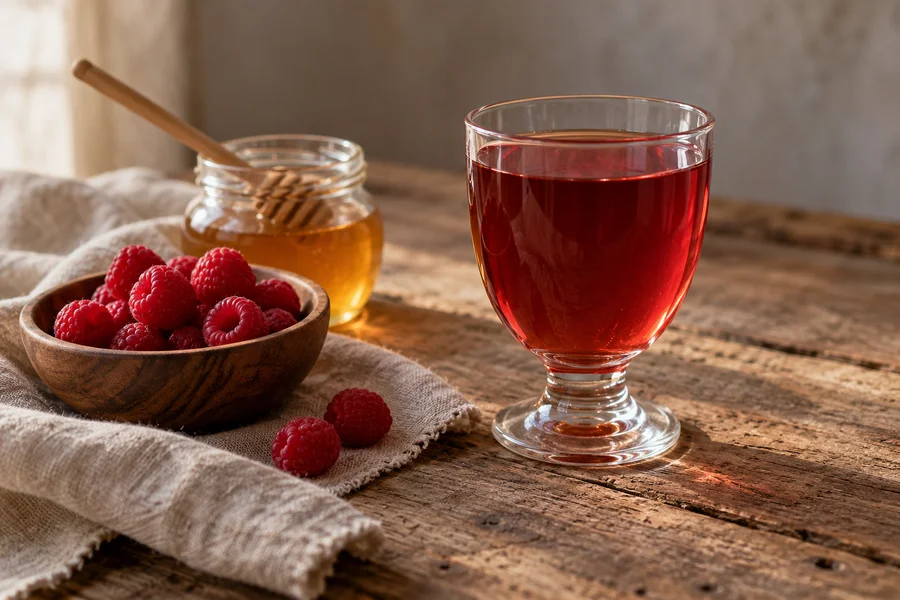
Begin with the ingredients
These names provide a practical modern vocabulary. Competition categories help judges compare drinks; they are not a complete map of every regional tradition or a list of Viking-era recipes.
| Name | What it tells you |
|---|---|
| Traditional mead | Honey and water form the fermentable base. |
| Melomel | Fruit mead; raspberry and blueberry versions belong here. |
| Cyser | An apple-and-honey mead. |
| Pyment | A grape-and-honey mead. |
| Metheglin | Mead flavoured with culinary herbs or spices. |
| Fruit and spice mead | Combines the two ingredient families. |
| Braggot | Includes malt or beer as well as honey. |
| Hopped mead | Contains hops; hops alone do not make a braggot. |
| Bochet | Uses heated or caramelized honey. |
Sweetness, strength and bubbles are separate choices
Dry, semi-sweet and sweet describe the finish. Still and sparkling describe carbonation. Neither tells you whether fruit was used. A raspberry mead can therefore be dry and still, or sweet and sparkling. Honey aromas can remain in a dry drink even after much of its sugar has fermented. Strength is another axis: do not read a flavour name as an alcohol measurement. In the 2026 BJCP system, hopped meads fit the experimental category.
Choose a flavour direction before choosing additions
For a first batch, write one clear intention: honey first, apple first, berry first, or a light herbal accent. Our classic recipe offers a baseline; compare another batch against it using notes taken at the same serving temperature. Record the honey variety, ingredient weights, yeast, dates and gravity readings. Changing one major ingredient at a time makes the result easier to understand. Recipe descriptions below are design intentions, not results from a test brew.
Fruit is part of the fermentation
The raspberry recipe uses strained, heated fruit before fermentation. The apple recipe begins with pasteurized juice. Both count those liquids inside the stated starting volume. Do not add five litres of water on top of five litres of ingredients. Fruit sweetness at the start is not a promise of sweetness in the glass: yeast can ferment its sugars too. Record the gravity after all fermentable ingredients have been mixed. Fruit solids and later additions make simple alcohol estimates less reliable.
Herbs, hops and heated honey
Our spiced recipe and new hopped recipe offer different directions. The hop recipe uses a small, measured tea addition before fermentation; it is an original modern formulation, not a reconstructed ancient technique. Bochet offers another route through the treatment of the honey itself, producing caramelized character rather than relying on fruit. Regional traditions also deserve their own context: Polish mead, for example, has named forms associated with honey-to-water ratios. A short style guide should open that subject rather than present Scandinavia as the whole history of mead.
Keep history and modern recipes distinct
This vocabulary describes drinks made and judged today. It does not establish which combination was drunk at a particular Viking settlement. Our separate history article examines mead in the Viking Age and the limits of the evidence. These recipes use commercial yeast, measured nutrients and modern equipment; they are practical contemporary projects inspired by the broader subject, not archaeological reconstructions.
Read Mead in the Viking Age: honey, feasts and evidence
The practical choices shared by these recipes
All six recipes in this collection aim for still mead. Use cleaned and sanitized equipment, an airlock, measured fermentation temperatures and a hydrometer. Nutrition depends on the named product and the must: one nutrient powder cannot automatically replace another gram for gram. A recipe calendar is a planning aid, not evidence that fermentation has finished.
Before you bottle
A quiet airlock is not a completion test. Repeated gravity readings support the decision, but unchanged gravity can also occur when fermentation stalls. A sweet or unexpectedly high-gravity batch needs investigation, not a sealed bottle. These recipes add no priming sugar, honey or juice at bottling. Sweeten only the portion being served immediately; a sweet bottled version needs a separate, validated stabilization process. Refermentation in a sealed bottle can create dangerous pressure.
Choose a recipe
Start with classic honey mead for a baseline, blueberry or raspberry for a fruit-led experiment, apple for a cyser, or spiced and hopped mead for measured seasoning. Each recipe explains its starting volume, equipment and checkpoints. Expect losses to sediment and sampling; a five-litre starting batch does not promise five litres in bottles.