Gods & companions
Odr
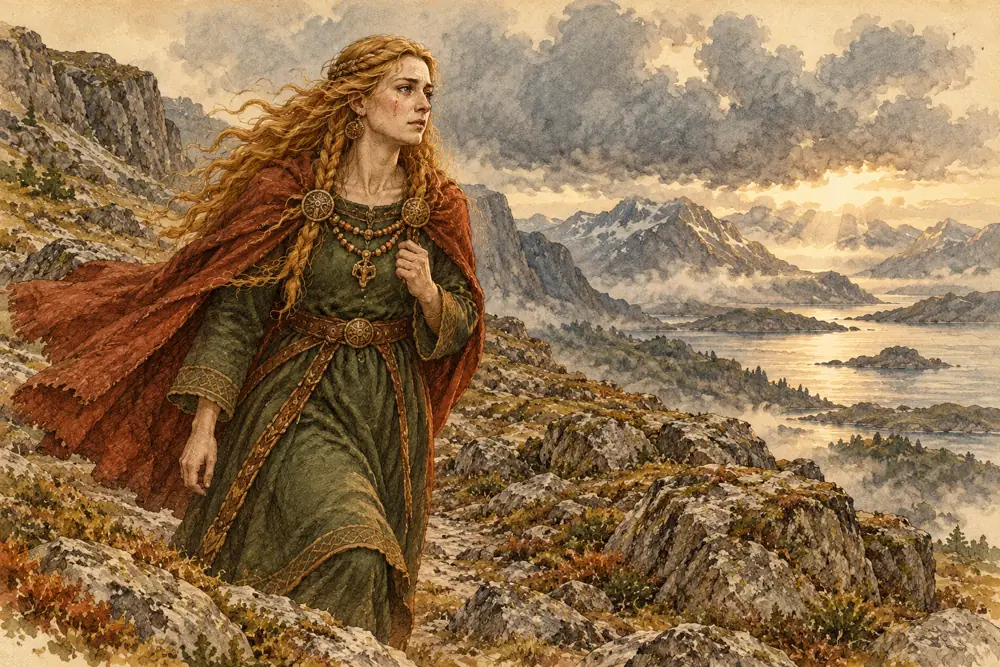
The absent husband Freyja searches for
Odr is Freyja’s husband. His journeys and absence explain her search and her tears of gold in Snorri’s account.
Explore the stories ↓
A story told through absence
Gylfaginning says Odr travels far away and Freyja seeks him among different peoples, using different names. Their daughter is Hnoss. The account does not narrate the journey from Odr’s perspective or explain exactly why he leaves. That silence gives the story its poignancy, but it also limits what a source-based profile can claim.
A comparison is not an identification
The relationship between Odr and Odin has been discussed because of similarities in their names and other possible connections. The surviving passage nevertheless names Odr as Freyja’s husband; it does not simply state that he is Odin in disguise. Modern retellings may choose that interpretation, but they should identify it as a choice.
His absence changes Freyja’s names
The short account makes Odr’s journeys the reason for another journey: Freyja travels among unfamiliar peoples searching for him. Snorri connects her several names with that search. Odr therefore affects the mythology through what others do in response to his absence, not through a narrated series of his own exploits. The text gives neither a map of his route nor a message explaining where he has gone.
A family remembered through precious things
Their daughter Hnoss is described as exceptionally beautiful, and Snorri relates her name to precious objects. Freyja’s tears for Odr become red gold. These connections turn family relationships into language poets can use for valuable things. They do not establish that Odr is a god of gold, wealth or merchant travel. Nor does the surviving notice provide a reunion that closes the story. Its emotional and poetic force rests on an absence left unresolved in the account we possess.
Read behind the retelling
Sources & limits
Odr’s identification with Odin is an interpretation, not an explicit statement in the cited passage.
Retold in contemporary English. Dialogue is summarized, not presented as a translation. How to read our sources and versions.
Follow the thread